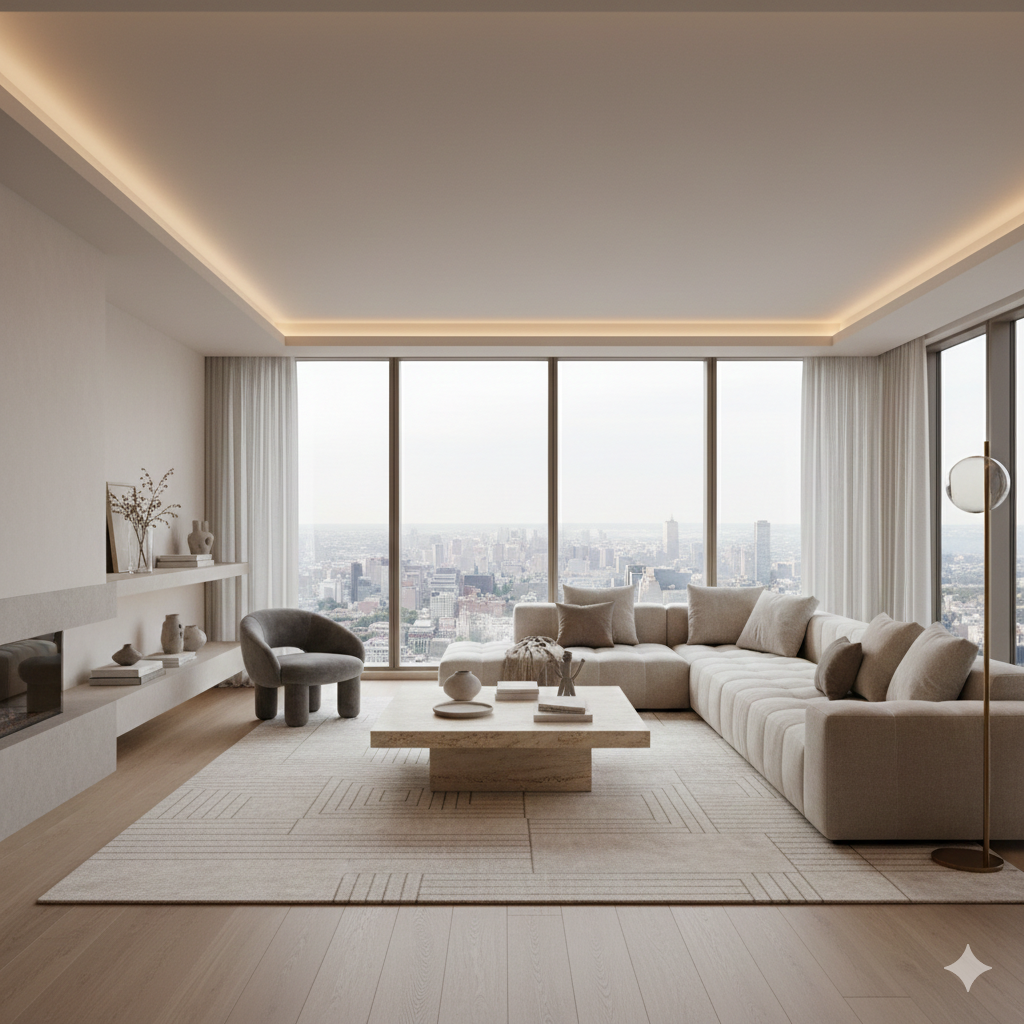
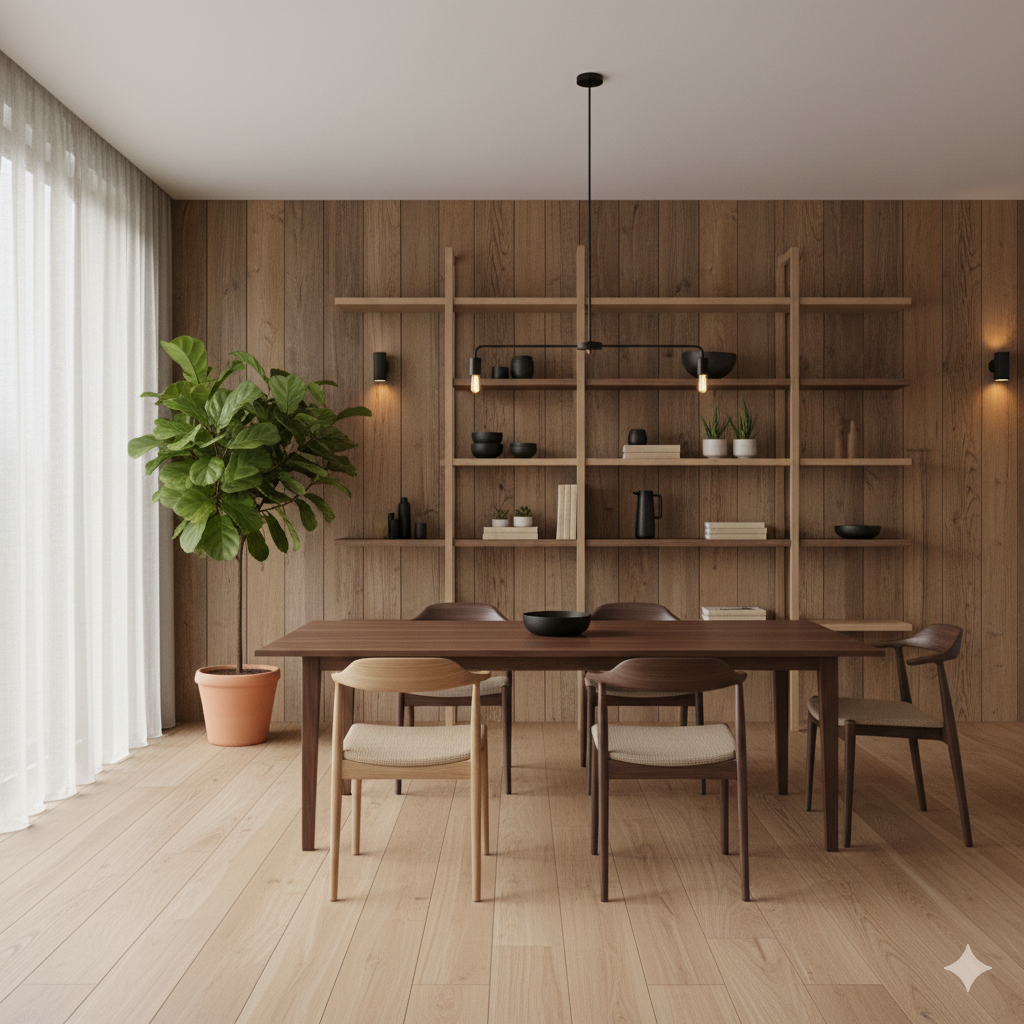
Trends can be exhilarating, but they also date a home quickly. Timeless interior design offers a more enduring alternative—spaces that feel composed, welcoming, and quietly luxurious year after year. Rather than chasing novelty, a sophisticated interior style relies on proportion, restraint, and materials that improve with age. The result is an elegant home design that adapts gracefully as your needs change, without requiring constant reinvention.
Classic Principles of Timeless Interior Design
What Makes an Interior Design Style Timeless?
A timeless interior design scheme is not defined by a single era or signature look. It is defined by decisions that remain visually convincing over time: thoughtful scale, a coherent palette, and furnishings chosen for craftsmanship rather than spectacle. These homes tend to prioritize comfort and usability, so they feel relevant across decades and lifestyles.
Timelessness also comes from editing. When every object competes for attention, the room becomes noisy and quickly feels dated. In classic home decor, the emphasis shifts to fewer, better pieces—items that look intentional, sit well within the architecture, and allow the space to breathe.
Key Elements: Balance, Proportion, and Harmony
Balance is the quiet discipline behind rooms that feel calm. It can be symmetrical—matching lamps flanking a sofa—or asymmetrical, where visual weight is distributed through shape, height, and color. Either approach works when it is deliberate and consistent.
Proportion ensures furnishings relate to the room and to one another. A timeless living room idea often starts with scale: a sofa that fits the wall, side tables that sit near seat height, and artwork sized to the furniture beneath it. Oversized or undersized pieces create tension that rarely reads as refined.
Harmony is the final layer, achieved through repetition and continuity. Repeating a metal finish, echoing a curve in multiple pieces, or carrying a tone of wood through different zones creates cohesion. These ageless decorating tips may seem subtle, but together they form the backbone of enduring style.
Neutral Color Palettes That Endure
Classic Neutral Color Schemes for Every Room
A neutral color palette remains the most reliable foundation for timeless interiors because it supports variety without visual fatigue. Warm whites and creamy ivories brighten spaces while maintaining softness. Greige—balanced between gray and beige—offers a tailored look that adapts to both traditional and contemporary furnishings.
For living rooms, layered neutrals create an inviting setting for enduring furniture styles and artwork. In bedrooms, muted sand, oatmeal, and pale taupe promote calm and pair beautifully with natural textiles. In kitchens, off-white cabinetry with stone counters reads crisp but not stark, especially when warmed by wood floors or brass hardware.
Neutrals do not mean monotony. The most classic schemes include a gentle contrast—ivory against camel, stone against espresso, or chalky white with charcoal accents—so the room gains definition without relying on short-lived color trends.
How to Layer Neutrals for Depth and Warmth
Layering neutrals is primarily an exercise in texture and undertone. Start by choosing a dominant neutral that suits the home’s natural light. North-facing rooms often benefit from warmer whites and creamy tones, while sun-filled spaces can handle cooler stones and soft grays without feeling cold.
Next, build depth through varied materials: a linen sofa, a wool rug, a leather chair, and a matte-painted wall each reflect light differently. This interplay creates dimension even when colors are closely related. Introduce contrast through understated pattern—herringbone, pinstripes, or a tonal geometric weave—rather than bold motifs that quickly signal a time period.
Finally, use darker neutrals as anchors. A walnut console, bronze lamp, or charcoal frame gives the eye a resting point and elevates the overall composition. When done well, a neutral color palette feels layered, not flat—an essential trait of timeless interior design.
Furniture and Materials That Never Go Out of Style
Iconic Furniture Styles Worth Investing In
Investment pieces earn their place through comfort, proportion, and craftsmanship. A well-made sofa with clean lines—whether gently rolled arms or a tailored track arm—can move between homes and evolve with new textiles and accessories. Similarly, a classic dining table in solid wood, sized correctly for the room, remains a lifelong asset.
Several enduring furniture styles consistently work within elegant home design:
- Mid-century silhouettes with refined proportions and tapered legs, used sparingly for crispness and lightness.
- Traditional staples such as Windsor chairs, pedestal tables, and wingback seating, valued for their familiarity and structure.
- Transitional pieces that blend classic forms with simplified detailing, ideal for a sophisticated interior style that avoids extremes.
When choosing statement items, prioritize timeless shapes over novelty. Curves can be timeless when they are restrained; exaggerated forms often feel trend-driven. Upholstery in solid, textured fabrics—rather than loud prints—extends longevity and supports flexible styling over time.
Durable, Classic Materials: Wood, Stone, Linen, and Leather
Materials determine whether a room will mature gracefully or wear out prematurely. Classic interior materials have a proven track record not only aesthetically, but functionally. Solid wood, for example, can be refinished, repaired, and re-styled; it also adds warmth that offsets cooler surfaces.
Stone—marble, limestone, soapstone, and well-chosen quartzites—delivers permanence and visual depth. The key is selecting patterns that read natural and understated rather than overly dramatic. In textiles, linen and wool offer tactile richness and a relaxed sophistication; they look better with gentle wear and are easy to integrate into classic home decor.
Leather remains a cornerstone of timeless interior design when chosen thoughtfully. Opt for full-grain or top-grain leather in warm cognac, saddle, or deep brown for a patina that improves with age. Avoid overly glossy finishes, which can feel artificial and less enduring.
Finishing Touches: Decor, Lighting, and Layout
Timeless Lighting Choices for Every Space
Lighting is both practical infrastructure and visual jewelry. Timeless lighting choices share a common trait: they are simple in form, proportionate to the room, and made in finishes that age well. Think linen or paper shades, glass globes, aged brass, bronze, and matte black used with restraint.
Layered lighting is essential for an elegant home design. Combine ambient lighting (a chandelier or flush mount), task lighting (reading lamps, under-cabinet lights), and accent lighting (picture lights, sconces) to create a room that adapts throughout the day. In living areas, wall sconces and table lamps add softness that overhead lighting alone cannot provide—one of the most reliable timeless living room ideas for instant refinement.
Choose fixtures that echo the home’s architecture. A classic lantern works beautifully in an entry with traditional detailing, while a streamlined globe pendant can suit both historic and contemporary spaces. The goal is continuity, not contradiction.
Styling Decor and Layout for a Lasting, Elegant Look
Layout is the most overlooked element of sophisticated interior style, yet it shapes daily experience. Begin with circulation: pathways should feel intuitive, with furniture arranged to encourage conversation and comfort. Anchor seating on a rug sized large enough for front legs to rest on it; this creates cohesion and prevents the room from feeling scattered.
Decor should be curated rather than accumulated. A few substantial pieces—an oversized ceramic vessel, a framed print with generous matting, a sculptural bowl—tend to read more timeless than many small accessories. When selecting art, choose works that resonate personally. Genuine connection outlasts fashion, and it keeps classic home decor from becoming generic.
Use repetition to unify spaces: matching frames, a consistent metal finish, or a recurring textile tone. Then introduce contrast sparingly for vitality—one deep color, one bold artwork, or one patterned rug can be enough. These ageless decorating tips help maintain restraint while ensuring the home feels lived-in rather than staged.
https://www.teepublic.com/t-shirt/50082227-tiger?store_id=2851997
Bohemian Interior Design: Free-Spirited and Creative Homes
Industrial Interior Design Ideas with Urban Charm
Conclusion
Timeless interior design is less about a strict aesthetic and more about enduring decisions—balanced composition, a well-layered neutral color palette, and investment in enduring furniture styles and classic interior materials. When lighting is considered, decor is edited, and layout supports real life, the home achieves a quiet authority that trends cannot replicate. With these principles, you can create an elegant home design that remains current precisely because it is not chasing the moment.

my Puzzle
Zoo-Doku