
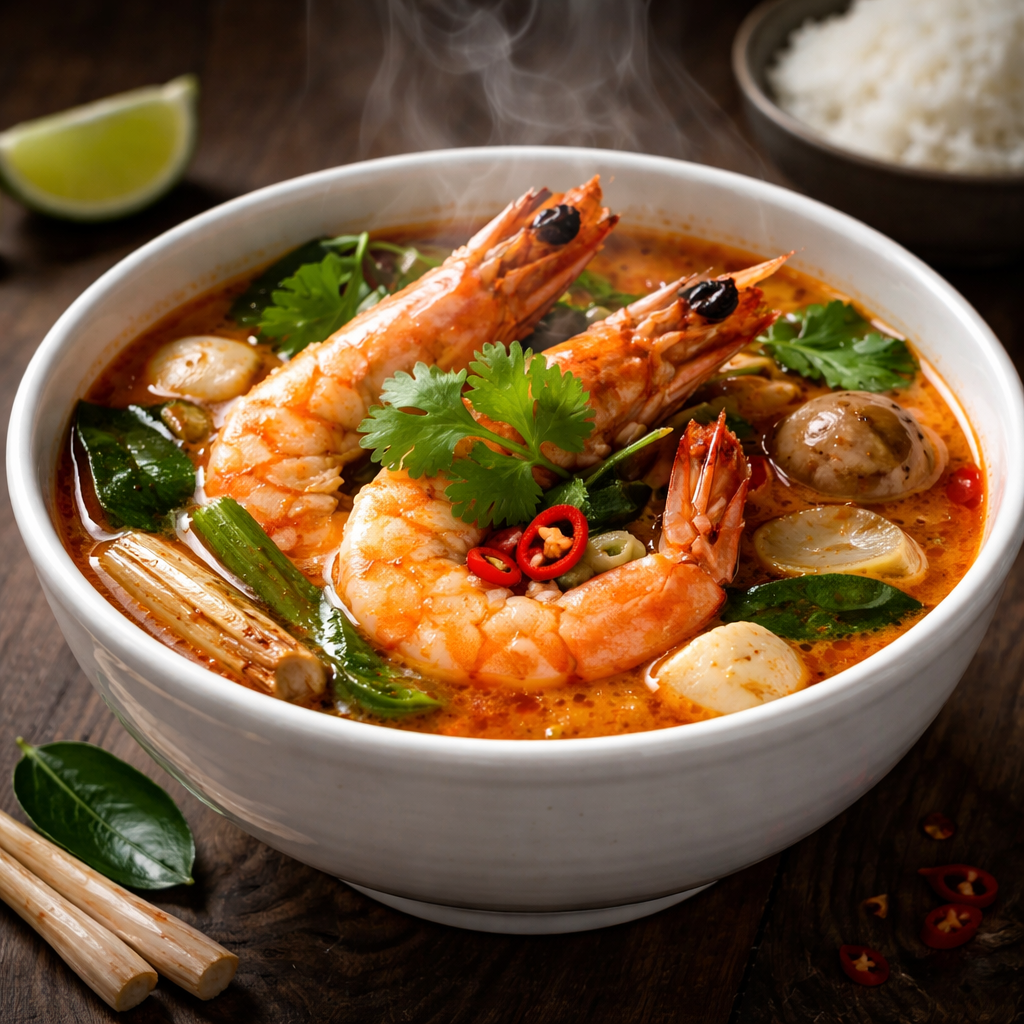
The Ultimate Hot & Sour Thai Soup Guide
Discover the secrets of authentic Tom Yum Soup. Learn how to balance spicy, sour, and aromatic herbs with our easy step-by-step recipe for this iconic Thai classic.
Tom Yum Soup is one of Thailand’s most celebrated culinary creations—an aromatic, spicy, and sour broth that captures the essence of authentic Thai cuisine. Its balance of bold flavors, delicate herbs, and fresh seafood or meat has made it a favorite in restaurants and home kitchens around the world. This guide explores what makes Tom Yum special, how to prepare a truly authentic version at home, and why this Thai soup is as nourishing as it is delicious.
What is Tom Yum Soup?
Tom Yum is a traditional Thai soup known for its bright, tangy profile and distinctive herbal fragrance. The name itself reflects its character: “Tom” refers to boiling, and “Yum” describes the hot-and-sour flavor profile typical of Thai salads and broths. Together, they denote a spicy, sour soup, often enriched with shrimp (Tom Yum Goong), chicken, or mixed seafood.
Unlike creamy Western soups, Tom Yum relies on a clear, intensely flavored broth. The fresh herbs are bruised, simmered, and often left in the bowl, contributing aroma rather than being eaten directly. The result is a complex yet refreshing soup that showcases quintessential Thai soup flavors: spicy, sour, salty, and slightly sweet.
Traditional Ingredients
Authentic Tom Yum Soup ingredients are simple but highly specific. Their interplay defines the soul of the dish:
- Lemongrass: Gives a bright, lemony aroma with an herbal edge. Only the lower stalk is used, typically bruised and cut into sections.
- Galangal: A rhizome related to ginger, but with a sharper, pine-like citrus fragrance. It is sliced and simmered to infuse the broth.
- Kaffir lime leaves: Torn or bruised leaves lend an intensely citrusy, floral character impossible to replicate with regular lime.
- Thai bird’s eye chilies: Provide the signature fiery heat. They may be left whole, slit, or pounded depending on desired intensity.
- Fish sauce: Contributes salinity and deep umami, forming the backbone of Thai seasoning.
- Lime juice: Added at the end of cooking to preserve its fresh acidity, balancing heat and salt.
- Protein: Most commonly shrimp (Tom Yum Goong), but chicken, fish, or mixed seafood are also popular.
- Mushrooms: Traditionally straw mushrooms, though oyster or button mushrooms are often used in homemade Tom Yum.
- Cilantro & spring onion: Scattered on top for a fresh, green finish.
In some versions, a small amount of Thai chili paste (nam prik pao) or evaporated milk is added, creating the creamier “Tom Yum Nam Khon.” The classic clear version, “Tom Yum Nam Sai,” remains the benchmark for an authentic Thai soup guide.
Cultural Significance in Thai Cuisine
Tom Yum Soup holds a central place in Thai culinary culture. It is not just a starter but often a shared centerpiece in family meals, eaten alongside rice and several other dishes. Its bold flavor profile complements milder curries and stir-fries, creating the balance that defines a traditional Thai table.
Beyond everyday dining, Tom Yum appears in celebrations, family gatherings, and restaurant tasting menus that highlight authentic Thai cuisine. Many Thai people also associate Tom Yum with comfort and wellness, particularly when feeling under the weather. The warming broth, aromatic herbs, and chilies are believed to invigorate the body and clear the sinuses, reinforcing its status as both a beloved dish and a practical home remedy.
How to Make Authentic Tom Yum Soup
Preparing an easy Tom Yum Soup at home is entirely achievable if you respect its key principles: use fresh herbs, build flavor gradually, and balance seasoning right before serving. The following recipe keeps close to tradition while remaining approachable.
Step-by-Step Recipe Guide
Serves: 3–4
Time: Approximately 30–35 minutes
Ingredients:
- 4 cups (1 liter) water or light chicken/vegetable stock
- 3 stalks lemongrass, lower part only, bruised and cut into 2–3 cm pieces
- 4–6 slices fresh galangal (or frozen)
- 5–7 kaffir lime leaves, torn
- 8–10 Thai bird’s eye chilies, lightly bruised (adjust to heat tolerance)
- 200–250 g shrimp, peeled and deveined (or mixed seafood)
- 150–200 g mushrooms, halved or quartered
- 3–4 tbsp fish sauce, to taste
- 2–3 tbsp freshly squeezed lime juice, or more to taste
- 1–2 tbsp Thai chili paste (nam prik pao), optional for deeper color and flavor
- 1–2 tsp sugar (optional, to balance acidity)
- Fresh cilantro and sliced spring onions, for garnish
Method:
- Prepare the aromatic base.
Bring the water or stock to a gentle boil in a medium pot. Add lemongrass, galangal, kaffir lime leaves, and the bruised chilies. Reduce to a simmer and cook for 8–10 minutes to allow the fragrance to infuse the broth. - Add mushrooms.
Add the mushrooms and simmer for another 3–4 minutes until they begin to soften. This contributes subtle earthiness to the broth. - Season the broth.
Stir in fish sauce and, if using, Thai chili paste. Taste and adjust saltiness with additional fish sauce if needed. At this stage, the soup should be aromatic, salty, and slightly spicy. - Cook the protein.
Add shrimp or other seafood to the simmering liquid. Cook gently for 2–3 minutes, just until the shrimp turn opaque and pink. Avoid overcooking to maintain a tender texture. - Balance with lime.
Turn off the heat before adding lime juice. This preserves its fresh, bright character. Start with 2 tablespoons, then taste and adjust with more lime or a pinch of sugar to create a harmonious hot-and-sour balance. - Garnish and serve.
Ladle the soup into bowls, including some of the herbs for aroma. Garnish with chopped cilantro and sliced spring onion. Serve immediately while hot.
This Tom Yum Soup recipe captures the hallmarks of Thai soup flavors: an invigorating acidity, a warming heat, and a layered herbal complexity. The key is to adjust fish sauce, lime juice, and chilies at the end so the broth tastes vivid, not overwhelming.
Common Variations and Substitutes
While purists favor traditional components, certain adaptations can make homemade Tom Yum more accessible without losing its character.
Popular Variations:
- Tom Yum Goong: The most iconic version, featuring shrimp as the main protein.
- Tom Yum Gai: Prepared with chicken pieces instead of seafood.
- Tom Yum Talay: A mixed seafood variation using fish, squid, mussels, and shrimp.
- Tom Yum Nam Khon: A richer version with a splash of evaporated milk or coconut milk and extra chili paste, yielding a slightly creamy, reddish broth.
Practical Substitutions:
- Lemongrass substitute: If fresh is unavailable, use frozen or high-quality dried lemongrass. Avoid replacing it with lemon alone; instead, combine a mild lemon zest with dried lemongrass to approximate the aroma.
- Galangal substitute: Ginger can be used in an emergency, though the flavor will not be identical. Use a smaller quantity, as ginger is more pungent.
- Kaffir lime leaves substitute: A blend of lime zest and a small amount of lime juice can help mimic the citrus note, but the fragrance will be less pronounced.
- Chilies: If Thai bird’s eye chilies are unavailable, use another small hot chili variety. Adjust quantity according to heat level.
- Fish sauce alternative: For vegetarian versions, use light soy sauce combined with a dash of seaweed-based seasoning to provide umami.
For an easy Tom Yum Soup tailored to vegetarian or vegan preferences, omit fish sauce and seafood, use vegetable stock, and incorporate tofu or mixed mushrooms as the primary protein source.
Health Benefits of Tom Yum Soup
Beyond its distinctive flavor, Tom Yum offers notable health advantages. Its clear broth, lean proteins, and medicinal herbs make it a thoughtful choice for those seeking both enjoyment and nourishment in their meals.
Nutritional Value and Ingredients
Tom Yum Soup is naturally light yet nutritionally dense. Its ingredients contribute a broad spectrum of vitamins, minerals, and beneficial compounds:
- Low in calories and fat: The absence of heavy cream or thickening agents keeps this Thai spicy soup relatively low in energy while still satisfying.
- Protein from seafood or poultry: Shrimp and other seafood provide high-quality protein, iodine, selenium, and omega-3 fatty acids. Chicken adds lean protein and B vitamins.
- Vitamins and minerals from herbs: Lemongrass, galangal, and kaffir lime leaves contain antioxidants and various phytochemicals that support overall health.
- Fiber and micronutrients from mushrooms: Mushrooms contribute B vitamins, potassium, and small amounts of fiber.
- Minimal added sugars: Any sweetness typically comes from small, optional amounts of sugar, which can be reduced or omitted.
When prepared with moderate amounts of fish sauce and without excessive chili paste or coconut milk, Tom Yum Soup can be part of a balanced eating pattern, supporting weight management and general well-being.
https://www.teepublic.com/t-shirt/53246542-yoga?store_id=2851997
Immune-Boosting Properties
Many Tom Yum health benefits are associated with its warming spices and aromatic herbs, traditionally used in Southeast Asian kitchens for their therapeutic potential:
- Lemongrass: Commonly used in herbal infusions, it contains antioxidants and is valued for its soothing and digestive properties.
- Galangal: Related to ginger, galangal has been studied for its anti-inflammatory and antioxidant activity, which may help support immune resilience.
- Chilies: Capsaicin, the compound responsible for heat, can promote circulation and often helps clear nasal passages, offering comfort during colds.
- Lime juice: Provides vitamin C and additional antioxidants, contributing to immune function and overall vitality.
- Hot broth: Warm liquids are traditionally used to ease sore throats, hydrate the body, and provide comfort during illness.
While Tom Yum Soup is not a cure-all, its combination of herbs, spices, and light broth makes it a sensible, supportive choice during cold seasons or whenever a restorative meal is desired.
Tom Yum Soup: Tips for Enhancing Flavor
Achieving restaurant-quality Tom Yum at home depends on technique as much as on ingredients. Small adjustments in timing, seasoning, and serving can dramatically elevate the final result.
Serving Suggestions
Tom Yum is typically enjoyed as part of a larger meal rather than as a standalone dish, yet thoughtful serving enhances its appeal:
- Serve immediately: The soup is at its best when hot and freshly seasoned. Over time, the lime can lose brightness and the seafood may toughen.
- Leave herbs visible: Do not strain out lemongrass, galangal, and kaffir lime leaves. While not eaten, their presence signals authenticity and contributes ongoing aroma.
- Adjust bowl-by-bowl: Provide extra lime wedges, sliced fresh chilies, and fish sauce at the table so each person can fine-tune the flavor.
- Control the heat level: For guests sensitive to spice, reduce the number of chilies in the pot and offer chili oil or fresh chilies on the side.
- Use proper bowls: Deep, heat-retaining bowls help keep the broth hot longer, ensuring the full expression of Thai soup flavors.
For a refined presentation, top each bowl with a few whole shrimp, a sprinkle of cilantro, and a thin ring of red chili or a kaffir lime leaf for contrast.
Pairing with Other Dishes
Tom Yum Soup pairs naturally with a variety of Thai dishes, forming a balanced and engaging meal:
- Steamed jasmine rice: The most classic accompaniment. The rice softens the intensity of the spicy soup and makes the meal more substantial.
- Stir-fried vegetables: Light stir-fries with garlic and oyster sauce or soy-based seasoning provide a mild counterpoint to the soup’s boldness.
- Thai salads (Yum or Som Tum): Green papaya salad or herb-laden meat salads share a similar hot-and-sour profile, creating continuity across courses.
- Mild curries: A creamy green or yellow curry served with rice complements the clear, tangy broth of Tom Yum, offering contrast in texture and body.
- Grilled meats or seafood: Charred chicken, pork, or fish seasoned with simple marinades add smoky notes that harmonize with the soup’s acidity.
For those exploring an Authentic Thai cuisine experience at home, consider a menu that includes Tom Yum as the opening course, followed by a curry, a stir-fried vegetable dish, and steamed rice. This combination mirrors the variety and balance typical of a Thai family meal.
Conclusion
Tom Yum Soup is far more than a spicy, sour broth; it is a distilled expression of Thai culinary philosophy. Through the interplay of lemongrass, galangal, kaffir lime leaves, chilies, and lime, it delivers intensity without heaviness, complexity without clutter. When prepared thoughtfully at home, it becomes both an accessible introduction to Thai soup flavors and a reliable, restorative dish for any season.
By understanding its traditional ingredients, following a structured recipe, and applying subtle adjustments to seasoning and serving, anyone can master a homemade Tom Yum that honors its origins. Along the way, the healthful qualities of its herbs, spices, and light broth offer an additional reason to return to this iconic Thai soup again and again.
How to Make Teriyaki Chicken: Teriyaki easy Homemade Recipe
Sashimi vs. Sushi: Everything You Need to Know About Sashimi
Crystal Collector
Combat Protocol
WASD – Move
Mouse – Look around
Left Click – Fire Weapon
R – Reload
Eliminate all hostile units in the sector!
(Works better on computer)