
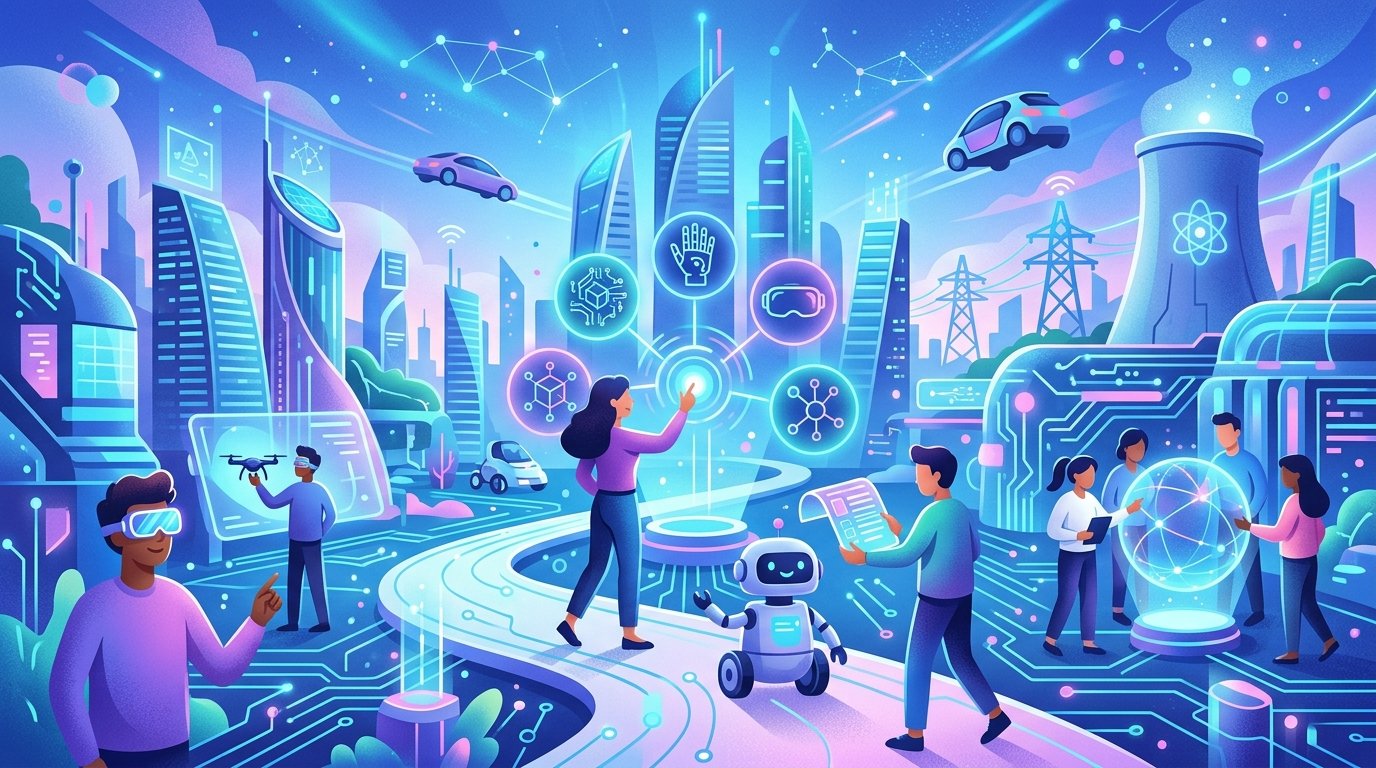
Technology moves fast — sometimes so fast it feels like science fiction is quietly becoming science fact. Whether you’re a casual smartphone user or a self-described tech enthusiast, the next few years are going to bring changes that touch almost every part of daily life. From the way we work and learn to how we stay healthy and connect with each other, the 2030 horizon looks both exciting and a little mind-bending. Here are ten bold (but grounded) predictions for what tech will look like by the end of this decade — and what they might mean for you.
1. AI Becomes Your Everyday Co-Pilot
Artificial intelligence — software that can learn, reason, and make decisions — is already in your phone’s camera, your email spam filter, and your streaming recommendations. By 2030, expect AI to be far more deeply woven into daily routines. Think of it less like a search engine you query and more like a knowledgeable assistant that proactively helps you manage your calendar, draft emails, summarise documents, and even flag when you might be overcommitting at work.
- For students: AI tutors could adapt lessons to your exact pace and learning style.
- For professionals: Routine administrative tasks — reports, scheduling, data entry — may largely be handled by AI tools.
- For everyone: Learning to work with AI, rather than fearing it, will become a genuinely useful life skill.
Tip: Start experimenting with AI tools today. The people who thrive in 2030 will be the ones who spent the late 2020s getting comfortable with these tools, understanding their limits, and knowing when a human touch is still needed.
2. Healthcare Gets Smarter and More Personal
One of the most meaningful shifts will happen in medicine. Wearable devices — gadgets you wear on your body, like a smartwatch — are already tracking heart rate and sleep. By 2030, wearables are likely to monitor things like blood sugar levels, stress hormones, and early warning signs of illness, all in real time and without a needle in sight.
Combined with AI that can analyse vast amounts of health data, doctors will have a much richer picture of your health before you even sit down for an appointment. Personalised medicine — treatment plans tailored to your specific biology rather than a one-size-fits-all approach — will move from specialist hospitals into everyday healthcare.
What this means for you: Your annual check-up might feel less like a snapshot and more like reviewing a year’s worth of continuous data. Being an active participant in your own health data — understanding what your devices are recording and sharing — will become increasingly important.
3. The Way We Work Will Be Permanently Reinvented
Remote and hybrid work opened a door that is unlikely to fully close. By 2030, virtual workspaces — digital environments where colleagues from around the world can collaborate as if in the same room — will be far more sophisticated and accessible. Spatial computing (technology that blends digital information with the physical world around you, like augmented reality glasses) may replace or supplement video calls for many teams.
Automation will reshape job roles too. Rather than replacing all jobs, technology tends to change what jobs involve. Roles that once required hours of manual data processing will free up workers to focus on creative thinking, complex problem-solving, and human relationships — things machines still struggle with.
- Invest time in skills like critical thinking, communication, and adaptability.
- Embrace digital literacy — understanding how the tools you use actually work.
- Stay curious; the most valuable workers in 2030 will be lifelong learners.
4. Clean Energy and Smart Homes Will Go Mainstream
Technology and sustainability are increasingly inseparable. By 2030, smart home systems — devices in your house that communicate with each other and learn your habits — will be far more common and affordable. Your home will know when energy prices are lower and automatically run your dishwasher or charge your electric vehicle at the most efficient time, saving you money without you lifting a finger.
Battery technology is improving rapidly, making renewable energy sources like solar more practical for ordinary households. The grid — the large network that delivers electricity to homes and businesses — will become smarter and more flexible, better able to handle power generated from millions of individual homes and small businesses rather than just a handful of large power plants.
Practical tip: If you’re making home improvements now, it’s worth considering smart-compatible appliances and energy-efficient upgrades. The infrastructure you install today is likely to integrate well with the even smarter systems arriving later this decade.
5. Transportation and Connectivity Will Shrink the World Further
Self-driving vehicles — cars and delivery robots that navigate without a human driver — will be a common sight in many cities by 2030, even if widespread personal ownership is still evolving. Meanwhile, faster and more reliable internet connectivity will reach more rural and remote parts of the world, opening up economic and educational opportunities for communities that have historically been left behind by the digital revolution.
5G (the current generation of fast mobile internet) is already rolling out globally, and the groundwork for even faster networks is being laid. More connected devices, faster data, and lower delays will make everything from remote surgery to real-time language translation increasingly viable in everyday settings.
A Final Thought: Staying Human in a High-Tech World
The most important thing to remember about all of these changes is that technology is a tool — powerful, yes, but ultimately shaped by the choices we make as individuals, communities, and societies. The future isn’t something that simply happens to us; it’s something we participate in building.
Key takeaway: You don’t need to be a tech expert to navigate 2030 successfully. Stay curious, keep learning, ask questions about the tools in your life, and remember that the skills that make us most human — empathy, creativity, and critical thinking — will always be in demand, no matter how clever the machines become.
Discover More from Didier Lancelot
Amazon Author page: amazon.com/author/didierlancelot
Narmer Store: narmerstore.org
AI and Technology Ebooks
- Creative AI: Animated Drawings, Manga & Illustrations
- Build a Game with AI: The No-Code Guide
- AI Image Generation Made Easy
- Build a Website with AI: The No-Code Guide
- How to Connect AI to Your Blog: The Ultimate Automation Guide
- AI Productivity Habits: Get More Done in Less Time
- AI Avatars Made Easy
- The Book of AI Prompts: 100+ Proven Prompts
- Make Music with AI: Suno, Udio and AI Music Generators
- Click to Cash
- The Automated Edge: Outwork, Outpace, and Outperform with AI
- AI Side Hustle: How to Make Money with ChatGPT and AI Tools
- Work Smarter with AI
Health, Lifestyle and Home Ebooks
- Hidden Superfoods: The World’s Most Powerful Healing Foods
- Spanish Food: The Complete Cookbook for Authentic Home Cooking
- The Science of Happiness Explained
- The Psychology of Success
- The Secret Sauce of Consistency: What the Experts Don’t Tell You About Fitness
- The Complete Home Bartender’s Guide: Link 1 | Link 2
- Natural Beauty, Made Simple: Easy DIY Organic Skincare Recipes
- Garden Made Simple: Easy, Beginner-Friendly Techniques
- The Dog Training Bible