
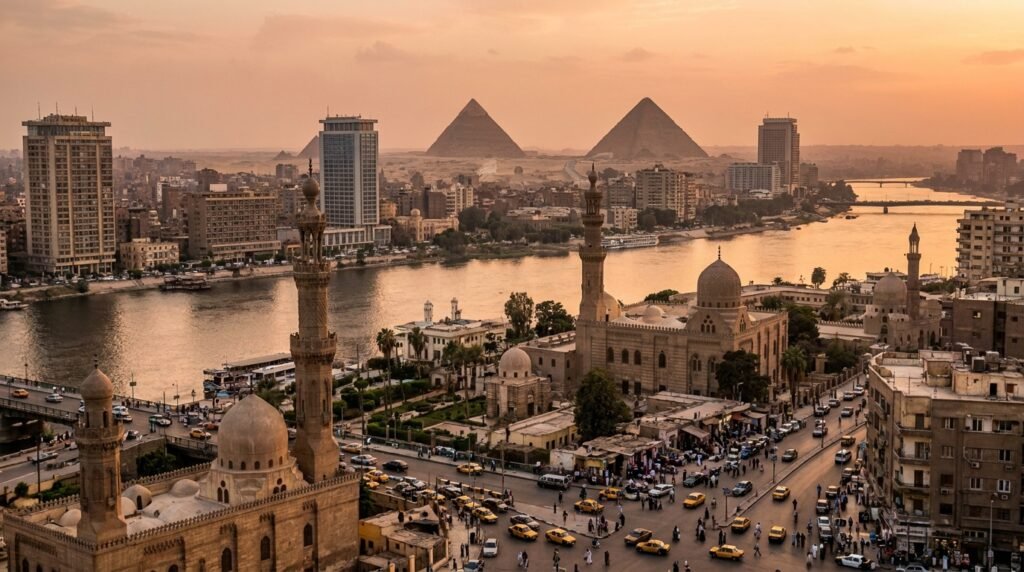
Cairo, the sprawling capital of Egypt, stands at the crossroads of antiquity and modernity. It is a city where millennia-old monuments coexist with a dynamic urban landscape, bustling souks, and a thriving cultural scene. For travelers planning a journey through Egypt, Cairo is both a natural starting point and an essential destination. This guide presents a detailed overview of the city, its unmissable sights, vibrant culture, and practical travel advice to help you make the most of your visit.
Overview of Cairo
Historical Significance of Cairo
Cairo’s history is layered and complex, reflecting centuries of political, religious, and cultural evolution. Although the pyramids predate the city by thousands of years, Cairo emerged as a major urban center in the 10th century when the Fatimids founded Al-Qahira, “The Victorious.” Over time, it became the heart of the Islamic world, home to venerable institutions such as Al-Azhar Mosque and University, one of the oldest universities in continuous operation.
Throughout the Middle Ages, Cairo flourished as a hub of trade linking Africa, the Mediterranean, and the East. Its strategic position on the Nile enabled the city to control important commercial routes. Mamluk sultans and Ottoman governors embellished Cairo with mosques, madrasas, and caravanserais, many of which still define the historic urban fabric. The 19th and early 20th centuries brought modernization, European-style boulevards, and cultural institutions that cemented Cairo’s role as the intellectual and political center of the Arab world.
Today, Cairo’s historic significance is evident in its layered architecture, from Pharaonic artefacts housed in its museums to medieval Islamic monuments and Belle Époque buildings. The city serves as a living archive, allowing visitors to traverse multiple epochs in a single day.
Tunis Travel Guide: Discover the Mosaics, Medina, and Modern Tunisia
Chefchaouen Travel Guide: Exploring Morocco’s Vibrant Blue Pearl
Marrakech Travel Guide: Discover the Magic of the Red City
Essaouira Travel Guide: Discover the Coastal Gem of Morocco
Istanbul Travel Guide: A Journey Through History, Culture, and Modern Life
Ultimate Hvar Island Travel Guide: In Croatia
Dubrovnik Travel Guide: Explore the Pearl of the Adriatic’s Beauty
Mykonos Travel Guide: Windmills, Whitewashed, and Hidden Gems
Santorini Travel Guide: Top Attractions, Oia & Best Time to Visit
Athens Travel Guide: Top Attractions, Acropolis, & Best Time to Visit
Monaco Travel Guide: Top Attractions & Best Time to Visit
Cannes Travel Guide: Top Attractions and Best Time to Visit
Venice Travel Guide: Top Attractions and Hidden Gems
The Ultimate Florence Travel Guide: Art, History, and Dining
Geographical Location and Climate
Cairo is situated in northern Egypt, just south of the Nile Delta, where the river spreads into multiple branches before flowing into the Mediterranean Sea. The city straddles both banks of the Nile, with the older districts clustered on the eastern side and newer neighborhoods expanding westward onto the Giza Plateau and beyond. This geographical position has long made Cairo a nexus between Upper and Lower Egypt, as well as a gateway to the wider region.
The climate is classified as arid desert, characterized by hot, dry summers and mild winters. From June to August, daytime temperatures can soar above 35°C (95°F), particularly in areas away from the river breeze. Winters, from December to February, are more temperate, often ranging between 10°C and 20°C (50°F–68°F), making this period particularly appealing for sightseeing.
Sandstorms known as khamsin may occur in spring, bringing dust-laden winds and reduced visibility. Rainfall is scarce and usually brief, with most precipitation occurring between November and March. Travelers should expect intense sunlight for much of the year and plan accordingly with sun protection, hydration, and light, breathable clothing.
Must-See Attractions in Cairo
The Pyramids of Giza
No visit to Cairo is complete without experiencing the Pyramids of Giza, one of the last surviving wonders of the ancient world. Located on the outskirts of the city, this monumental complex includes the Great Pyramid of Khufu, the Pyramid of Khafre, the Pyramid of Menkaure, and a series of smaller subsidiary pyramids and tombs. These towering structures, built more than 4,500 years ago, embody the engineering prowess and religious vision of the Old Kingdom pharaohs.
Visitors can walk around the plateau to appreciate different perspectives of the pyramids and the surrounding desert. Certain pyramids occasionally allow entry to the interior chambers, where narrow passages lead to burial rooms once filled with grave goods. For many, the Great Sphinx—guarding the plateau with its enigmatic gaze—provides a powerful visual symbol of ancient Egypt’s enduring mystique.
To fully appreciate the site, it is advisable to arrive early in the morning or late in the afternoon, when the light is softer and temperatures are more manageable. Guided tours can offer deeper insights into the history, construction techniques, and religious symbolism embedded in the complex. For a memorable experience, consider viewing the pyramids at sunset or attending the evening sound-and-light show, which illuminates the monuments and recounts their history.
The Egyptian Museum
The Egyptian Museum, historically located in Tahrir Square, has long been the principal repository of Pharaonic treasures. While Egypt is in the process of expanding and redistributing its collections to new institutions, such as the Grand Egyptian Museum in Giza, the Tahrir museum remains an iconic destination that encapsulates the country’s archaeological wealth.
Inside, visitors encounter an extraordinary array of artefacts: monumental statues, intricate jewelry, mummies, sarcophagi, papyri, and everyday objects spanning thousands of years. Among the highlights, the treasures of Tutankhamun—golden funerary masks, ornate chariots, and ritual objects—offer a glimpse into royal life and the elaborate funerary practices of the New Kingdom. Equally compelling are the collections of Middle Kingdom sculptures, Old Kingdom reliefs, and Greco-Roman period artefacts, each illustrating a distinct phase of Egypt’s long history.
To navigate the museum effectively, it is wise to allocate several hours and prioritize specific sections, such as the Tutankhamun galleries, the royal mummies (if accessible), and the Old Kingdom masterpieces. Engaging a licensed guide or using an audio guide can greatly enhance understanding, turning a simple walk through the galleries into a coherent narrative of ancient Egyptian civilization.
Exploring Cairo’s Culture and Cuisine
Traditional Egyptian Dishes to Try
Cairo’s culinary landscape is a rich reflection of Egypt’s history and geography. Traditional dishes combine legumes, grains, vegetables, and meats in hearty, flavorful preparations. One of the most beloved street foods is koshari, a satisfying mix of rice, lentils, macaroni, and chickpeas, topped with crispy onions and a tangy tomato sauce. This quintessential Egyptian comfort food is both affordable and widely available in dedicated koshari restaurants.
Another staple is ful medames, slow-cooked fava beans seasoned with olive oil, lemon, cumin, and sometimes garlic. Often served with bread, it forms a cornerstone of the Egyptian breakfast. Alongside ful, you may encounter taameya—Egyptian falafel made from fava beans rather than chickpeas—fried to a crisp exterior and soft, herbaceous interior.
For those seeking meat-based dishes, molokhia—a green soup made from jute leaves and typically served with rice and chicken or rabbit—offers a distinctive texture and flavor. Grilled kebabs and kofta (minced meat skewers) are commonly found in local eateries, often accompanied by salads, dips, and freshly baked baladi bread. To conclude a meal, consider sampling Egyptian desserts such as basbousa (a semolina cake soaked in syrup), om ali (a bread pudding with nuts and raisins), or syrup-soaked konafa with cheese or cream.
Local Markets and Shopping Experiences
Cairo’s markets offer immersive insight into local life, craftsmanship, and commerce. The most famous is Khan El Khalili, a historic bazaar in Islamic Cairo, where narrow alleys are lined with shops selling brass lamps, silver jewelry, hand-blown glass, spices, perfumes, and traditional textiles. Walking through the souk, visitors encounter a sensory tapestry of colors, scents, and sounds, from the clinking of metalworkers’ tools to the aromas of cardamom and incense.
Bargaining is customary in many of these markets, and visitors should be prepared to negotiate respectfully. Taking time to compare prices and quality helps ensure a fair purchase, whether you are acquiring a handwoven rug, a copper coffee pot, or a papyrus painting. Beyond Khan El Khalili, other local markets and modern shopping centers cater to diverse tastes, offering everything from designer brands to contemporary Egyptian fashion and design.
For a more localized experience, neighborhood markets selling fresh produce, spices, and household goods reveal the daily rhythms of Cairo’s residents. Exploring these areas allows travelers to see beyond the major attractions and connect with the city’s everyday life, from early-morning bread deliveries to evening gatherings at tea shops.
Tips for Traveling in Cairo
Best Time to Visit Cairo
The most comfortable periods to visit Cairo are during the cooler months, from October to April. During this time, temperatures are generally moderate, making it easier to explore outdoor sites such as the Giza Plateau, Islamic Cairo, and the Nile corniche. December and January can see a slight drop in temperature, especially in the evenings, but the weather remains pleasant for most activities.
Spring and autumn, particularly March to April and October to early November, offer a good balance of mild weather and fewer crowds compared with peak holiday periods. Travelers visiting in late spring should be aware of the potential for brief sandstorms, which may temporarily affect visibility and air quality.
Visiting in the height of summer is possible but requires careful planning. Sightseeing is best done early in the morning or late in the afternoon, with midday reserved for indoor attractions, rest, or leisurely meals. Adequate hydration, sun protection, and light, breathable clothing are essential during this season.
Transportation Options in the City
Cairo offers a variety of transportation options, each with its own advantages. The Cairo Metro is one of the most efficient ways to move around the city, avoiding the often heavy traffic on the roads. It is relatively inexpensive, covers key districts, and continues to expand. Metro stations connect central neighborhoods, including downtown, with areas in Giza and other suburbs, making it a practical choice for many visitors.
Taxis are widely available, ranging from traditional white taxis to modern ride-hailing services accessed via mobile applications. Ride-hailing platforms are often preferred by travelers due to transparent pricing and easier communication about destinations. When using regular taxis, it is advisable to agree on a fare before departure or ensure the meter is used, especially for longer journeys.
For shorter distances, walking can be rewarding in certain districts, particularly around downtown Cairo and some historic quarters, though pedestrians should remain vigilant in traffic. Private car services and organized tours offer additional convenience, especially for visiting sites on the outskirts, such as the pyramids or newer suburban districts. Regardless of the chosen mode of transport, allowing extra time for journeys is prudent, as congestion is a common feature of Cairo’s urban life.
In conclusion, Cairo is a city of extraordinary depth, where ancient monuments, Islamic architecture, and modern neighborhoods converge along the banks of the Nile. Its historic legacy, combined with a vibrant gastronomic scene and lively markets, offers a multifaceted experience for travelers. With thoughtful planning—choosing the right season, understanding transportation options, and prioritizing key attractions—visitors can navigate the city with confidence and uncover the many layers that make Cairo one of the most compelling destinations in the Middle East and North Africa.
https://www.teepublic.com/t-shirt/50453002-penguin?store_id=2851997
CrystalCollector
Combat Protocol
WASD – Move
Mouse – Look around
Left Click – Fire Weapon
R – Reload
Eliminate all hostile units in the sector!
(Works better on computer)