
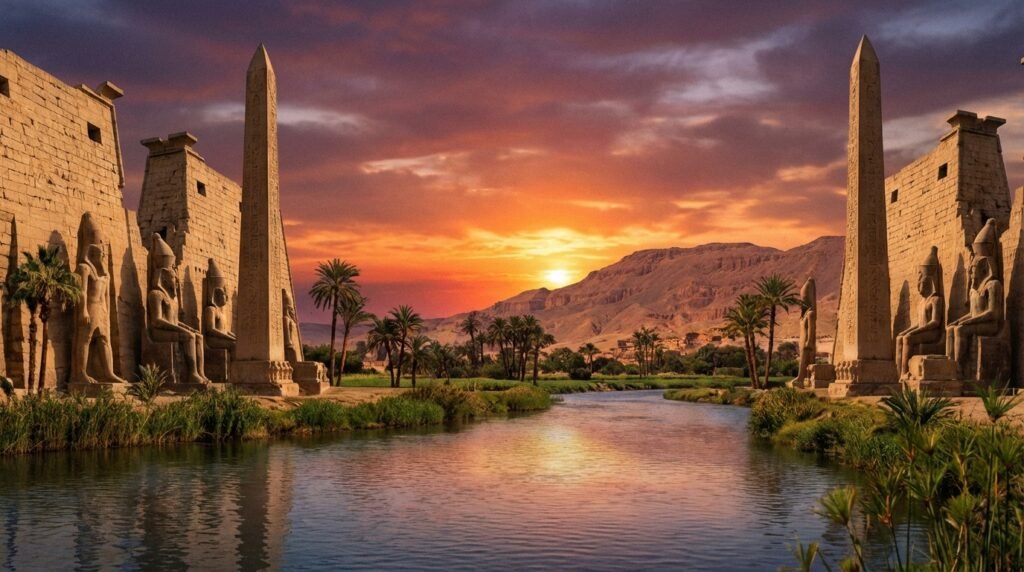
Luxor, often described as the world’s greatest open-air museum, condenses millennia of history into a single cityscape. Straddling the Nile in Upper Egypt, it stands on the site of ancient Thebes, once the flourishing capital of the New Kingdom. Today, Luxor captivates travelers with monumental temples, elaborately decorated tombs, and a vivid contemporary culture that thrives alongside its archaeological wonders. Whether you are a history enthusiast, a cultural traveler, or a curious first-time visitor, Luxor offers a profound encounter with the legacy of Ancient Egypt.
Discovering Luxor: The Jewel of Ancient Egypt
A Brief History of Luxor
Luxor’s story stretches back over 4,000 years. Known in antiquity as Waset and later as Thebes, it rose to prominence during the Middle and New Kingdoms, when Pharaohs shifted their power base from Memphis in the north to this strategic location along the Nile. The city became a religious and political hub, deeply associated with the worship of Amun-Ra, king of the gods.
During the New Kingdom (circa 1550–1070 BCE), Thebes reached its zenith. Pharaohs such as Hatshepsut, Thutmose III, Amenhotep III, and Ramesses II commissioned colossal temples and intricately decorated tombs. Monumental architecture spread along both banks of the river: temples on the east, symbolizing life and worship, and necropolises on the west, representing the realm of the dead.
Over subsequent centuries, Thebes endured invasions, internal strife, and shifting political centers. Yet its sacred structures retained their significance well into the Greco-Roman period. When Napoleon’s scholars documented the ruins in the late 18th century, they ignited modern Egyptology and renewed interest in Luxor’s ancient heritage.
Significance in Ancient Egyptian Civilization
Luxor played a central role in the religious and ceremonial life of Ancient Egypt. As the cult center of Amun-Ra, it hosted elaborate festivals, including the famed Opet Festival, during which statues of the gods were paraded along the Nile between Karnak and Luxor Temple to renew the divine power of the Pharaoh and the land.
The city was also a seat of immense political authority. Many of Egypt’s most influential rulers were crowned in Luxor’s temples, legitimizing their reigns through proximity to the gods. The Sacred Lake, pylons, obelisks, and processional avenues testify to the immense wealth and organizational capacity of the state.
Luxor’s necropolises, especially the Valley of the Kings and Valley of the Queens, reveal the Egyptians’ complex beliefs about the afterlife. Tombs were engineered as eternal houses, filled with texts, scenes, and artifacts designed to guide and sustain the deceased in the next world. Together, these landscapes form an unmatched archive of ancient religious thought, artistic achievement, and engineering prowess.
Top Attractions in Luxor
The Valley of the Kings
The Valley of the Kings, located on the west bank of the Nile, is arguably Luxor’s most iconic site. This arid valley, carved into the Theban hills, served as the royal necropolis for New Kingdom Pharaohs and high elites. Instead of the towering pyramids of earlier periods, rulers opted for concealed rock-cut tombs, designed to thwart grave robbers and protect precious burial goods.
To date, more than 60 tombs have been discovered in the valley, ranging from simple shafts to vast, multi-chambered complexes decorated from floor to ceiling. The tomb of Tutankhamun, discovered nearly intact in 1922 by Howard Carter, brought worldwide fame to the site and transformed the study of ancient funerary practices. Although Tutankhamun’s burial is relatively modest compared with others, the wealth of artifacts found within illuminated everyday life and royal ritual in unparalleled detail.
Visitors today can explore a rotating selection of tombs, usually including those of renowned rulers such as Ramesses IV, Ramesses IX, or Merenptah. Inside, vivid wall paintings depict the journey through the underworld, divine protectors, and the deceased king’s transformation into an eternal, resurrected being. The sophisticated use of color, hieroglyphic texts, and symbolic motifs makes each tomb a remarkable work of art as well as a sacred space.
https://www.teepublic.com/t-shirt/50453003-hedgehog?store_id=2851997
To enhance your visit, it is advisable to begin early in the morning when temperatures are lower, and the light accentuates the stark beauty of the valley. Audio guides and certified Egyptologists can clarify the significance of the scenes and inscriptions, turning the visit into a deep dive into ancient cosmology.
Karnak Temple Complex
The Karnak Temple Complex, on the east bank of the Nile, is among the largest religious structures ever built. Rather than a single temple, Karnak is an expansive aggregation of sanctuaries, pylons, obelisks, and courtyards dedicated primarily to Amun-Ra, but also to Mut and Khonsu, forming the Theban Triad. Construction spanned over 1,500 years as successive kings expanded and embellished the site.
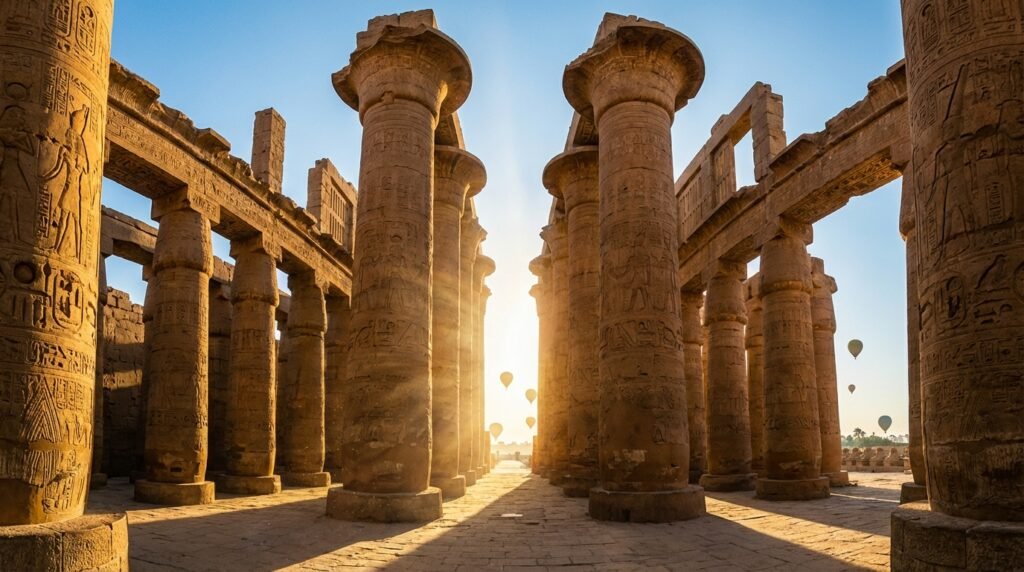
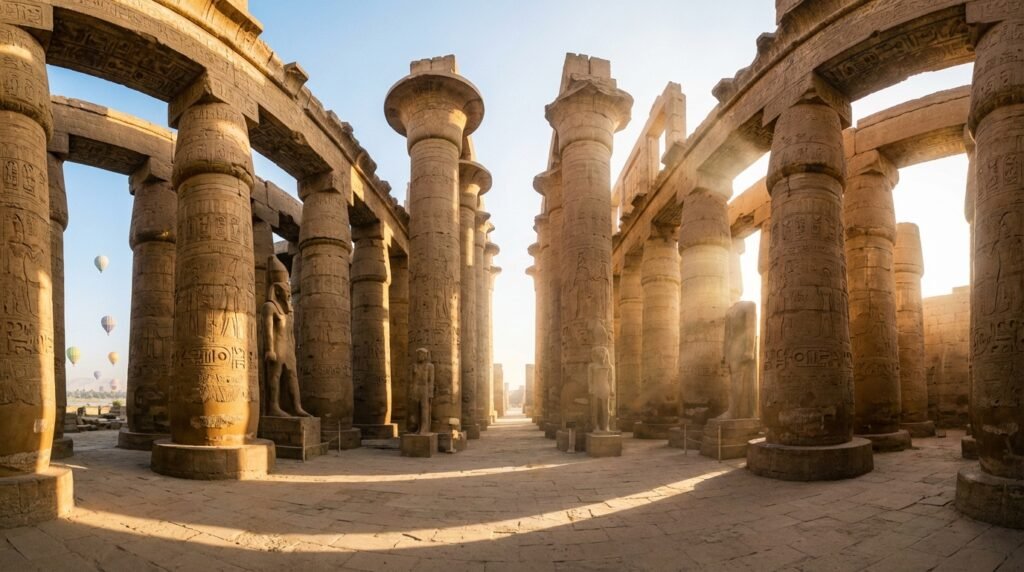
One of Karnak’s most striking features is the Great Hypostyle Hall in the Precinct of Amun-Ra. This vast hall contains 134 colossal papyrus-shaped columns, some rising over 20 meters. Sunlight filters through the stone forest, illuminating carved scenes of royal triumphs and religious ceremonies. The scale impresses even seasoned travelers, conveying both awe and a sense of the divine grandeur envisioned by ancient architects.
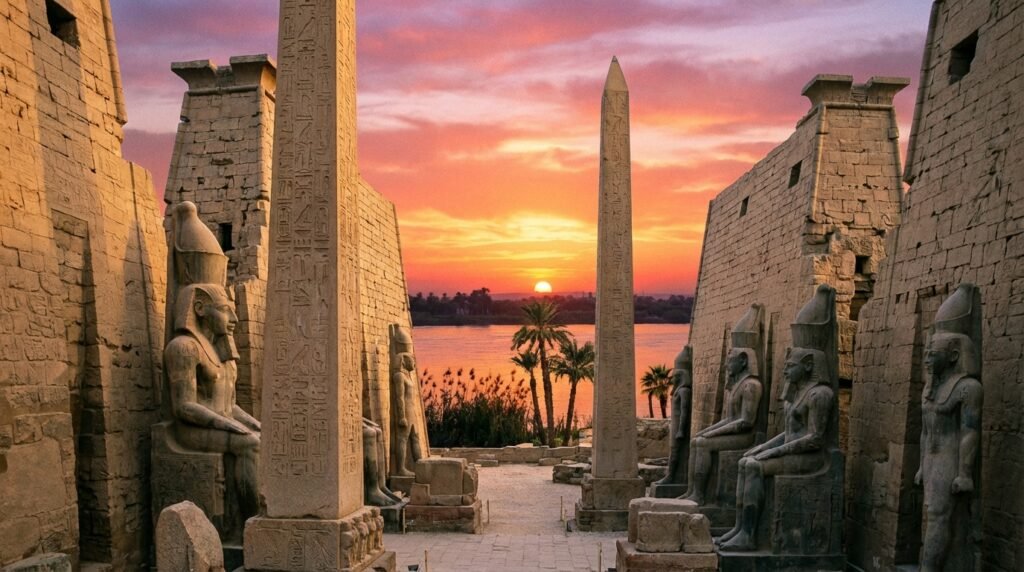
Elsewhere in the complex, the Sacred Lake served purificatory rituals, and the Avenue of Sphinxes once connected Karnak to Luxor Temple several kilometers away. Obelisks commissioned by powerful rulers such as Hatshepsut stand like stone needles against the sky, inscribed with glorifying texts. Each area reveals a different phase in Egyptian history, as older structures were reused, modified, or overshadowed by later additions.
To fully appreciate Karnak, allow several hours to wander through its precincts. Interpretive panels, professional guides, and detailed guidebooks help decode the layers of construction. In the evening, sound and light shows are often held at the temple, providing a dramatic retelling of its history projected against the monumental architecture.
Visiting Luxor: Practical Travel Tips
Best Time to Visit Luxor
Luxor lies in a desert climate, characterized by long, hot summers and mild, pleasant winters. The ideal period to visit is between late October and early April, when daytime temperatures are more comfortable, typically ranging from 20°C to 30°C. During these months, sightseeing is far more enjoyable, especially at exposed sites such as the Valley of the Kings and the temples on the west bank.
High summer, from June to September, can be extremely hot, with temperatures often surpassing 40°C. While it is still possible to visit, travelers must be prepared for early morning excursions, ample hydration, and frequent breaks in shaded or air-conditioned environments. This period sometimes offers lower accommodation rates, appealing to budget-conscious visitors willing to manage the heat.
Shoulder seasons—April to early May and late September to October—can offer a balance of moderate temperatures and fewer crowds. Regardless of the time of year, it is advisable to start major visits early in the day, wear breathable clothing, apply high-SPF sunscreen, and carry water. Planning your itinerary around the cooler hours ensures a more comfortable and rewarding experience.
Local Transportation Options
Luxor is compact enough that many central attractions on the east bank, such as Luxor Temple and the main souk, can be reached on foot from hotels along the Nile. For longer distances or to cross the river, a range of transportation options is available, each offering a distinct experience of the city.
Taxis are widely available and remain one of the most convenient ways to navigate Luxor. Fares are often negotiable, so discussing the price before departure is advisable. Many drivers are familiar with the main archaeological sites and can provide point-to-point transfers or wait while you explore. For greater flexibility, some travelers hire a private car with driver for a half-day or full-day tour.
Traditional horse-drawn carriages, known locally as “caleches,” offer a slower, more atmospheric way to traverse the corniche and historic areas. While these rides can be enjoyable, it is important to agree on the route and price beforehand. Travelers who prefer independent exploration may also rent bicycles from local shops, particularly suitable for rides along the quieter west bank roads.
To cross the Nile, public ferries and private motorboats operate throughout the day. The short crossing from the east to the west bank not only connects you to the necropolises and mortuary temples but also provides impressive views of the river and city skyline. For longer journeys, such as travel from Luxor to Aswan, trains and Nile cruises offer comfortable and scenic options, integrating transportation with sightseeing.
Experiencing Luxor’s Culture and Cuisine
Traditional Egyptian Dishes to Try
Beyond its archaeological splendors, Luxor invites visitors to discover Egyptian cuisine, shaped by the Nile, the desert, and centuries of cultural exchange. Many dishes are simple in composition yet rich in flavor, reflecting the agricultural bounty of the region.
One staple you will encounter is koshari, a hearty combination of rice, lentils, pasta, chickpeas, and crispy onions, topped with a tangy tomato sauce and optional chili. Originally a working-class meal, it has become a national favorite, offering a satisfying vegetarian option. Another classic is ful medames, slow-cooked fava beans seasoned with lemon, cumin, and olive oil, commonly eaten for breakfast with fresh flatbread.
In Luxor, proximity to the Nile ensures access to fresh fish. Grilled Nile tilapia or catfish, marinated with garlic, herbs, and lemon, often appears on local menus. Meat dishes such as kofta (spiced minced meat skewers) and shawarma (thinly sliced, marinated meat served in bread) are widely available as well. Many restaurants also offer molokhia, a green leafy soup thickened with finely chopped jute leaves, served with rice or bread.
To complete the culinary experience, try traditional desserts like basbousa, a semolina cake soaked in scented syrup, or umm ali, a warm bread pudding with nuts and raisins. Complement your meal with strong Egyptian coffee or sweet mint tea, both integral to local hospitality. Eating at family-run restaurants or simple eateries away from the main tourist routes often yields the most authentic flavors.
Cultural Events and Festivals in Luxor
Luxor’s contemporary culture is as engaging as its ancient monuments. Throughout the year, the city hosts events and festivals that highlight music, arts, and living traditions rooted in the region’s history.
Among the most notable is the Luxor African Film Festival, typically held in late winter or early spring. It brings filmmakers, critics, and audiences together to celebrate African cinema, with screenings, workshops, and discussions held across various venues. For visitors, the festival offers insight into regional creativity and social issues through a cinematic lens.
The ancient Opet Festival has, in recent years, inspired modern cultural re-enactments and ceremonies. While not a daily occurrence, special events sometimes feature processions, traditional music, and symbolic references to the historical journey between Karnak and Luxor Temple. These occasions illuminate how ancient heritage continues to influence contemporary identity.
On a smaller scale, local cultural life unfolds in everyday spaces. Evening strolls along the corniche reveal families socializing, vendors selling snacks, and feluccas gliding along the river. Traditional music and folkloric performances may be offered at hotels, cultural centers, or during special holiday periods such as Ramadan and national celebrations. Attending these events, even informally, provides a glimpse into the rhythms of modern Luxor.
Markets also play a cultural role. The main souk, with its array of spices, textiles, handicrafts, and souvenirs, is not only a place to shop but also a living theatre of negotiation, storytelling, and local interaction. Respectful engagement—asking questions, learning a few Arabic phrases, and observing customs—deepens your understanding of the community that lives alongside the temples and tombs.
Conclusion
Luxor stands at the crossroads of past and present, where monumental temples rise above a modern city and the Nile continues to sustain life as it has for thousands of years. Its archaeological sites—particularly the Valley of the Kings and the Karnak Temple Complex—offer a concentrated encounter with Ancient Egypt’s religious, artistic, and political achievements. At the same time, the city’s cuisine, festivals, and everyday scenes reveal a dynamic culture that continually reinterprets its heritage.
By selecting the right season, planning transportation carefully, and allowing time to savor local food and cultural events, visitors can experience Luxor in a nuanced, rewarding way. The city does more than showcase ruins; it invites reflection on continuity, memory, and the enduring human desire to build, to believe, and to leave a legacy. For travelers drawn to history and culture, Luxor remains an essential destination that lingers in the imagination long after the journey ends.
Tunis Travel Guide: Discover the Mosaics, Medina, and Modern Tunisia
Chefchaouen Travel Guide: Exploring Morocco’s Vibrant Blue Pearl
Essaouira Travel Guide: Discover the Coastal Gem of Morocco
Marrakech Travel Guide: Discover the Magic of the Red City
Cappadocia Travel Guide: Fairy Chimneys, and Underground Cities
Istanbul Travel Guide: A Journey Through History, Culture, and Modern Life
Ultimate Hvar Island Travel Guide: In Croatia
Ultimate Kotor, Montenegro Travel Guide
Dubrovnik Travel Guide: Explore the Pearl of the Adriatic’s Beauty
Mykonos Travel Guide: Windmills, Whitewashed, and Hidden Gems
Santorini Travel Guide: Top Attractions, Oia & Best Time to Visit
Holiday in London: Travel Guide, and Top Attractions
The Ultimate Florence Travel Guide: Art, History, and Dining
Venice Travel Guide: Top Attractions and Hidden Gems
Cannes Travel Guide: Top Attractions and Best Time to Visit
Monaco Travel Guide: Top Attractions & Best Time to Visit
Athens Travel Guide: Top Attractions, Acropolis, & Best Time to Visit
Slither Arcade
Features
- Classic Gameplay: Grow your snake by eating apples while avoiding self-collision.
- Dynamic Difficulty: The game speed increases as you eat more food.
- Juicy Polish: Screen shakes on eating, pulsing food animations, and high-score tracking.
- Responsive Controls: Use Arrow keys, WASD, or swipe on touch devices/mouse.
- Visuals: Custom-generated stylized assets and a minimalist neon background.
How to play:
- Controls: Use Arrow Keys or WASD to change direction. On mobile, Swipe in the direction you want to turn.
- Objective: Eat the glowing red apples to grow and increase your score. The game ends if you collide with your own tail.
The snake wraps around the screen edges, allowing for strategic maneuvers! Enjoy your game.Controls Reminder: The golden apple slows time for 5 seconds
CrystalCollector
Combat Protocol
WASD – Move
Mouse – Look around
Left Click – Fire Weapon
R – Reload
Eliminate all hostile units in the sector!
(Works better on computer)