
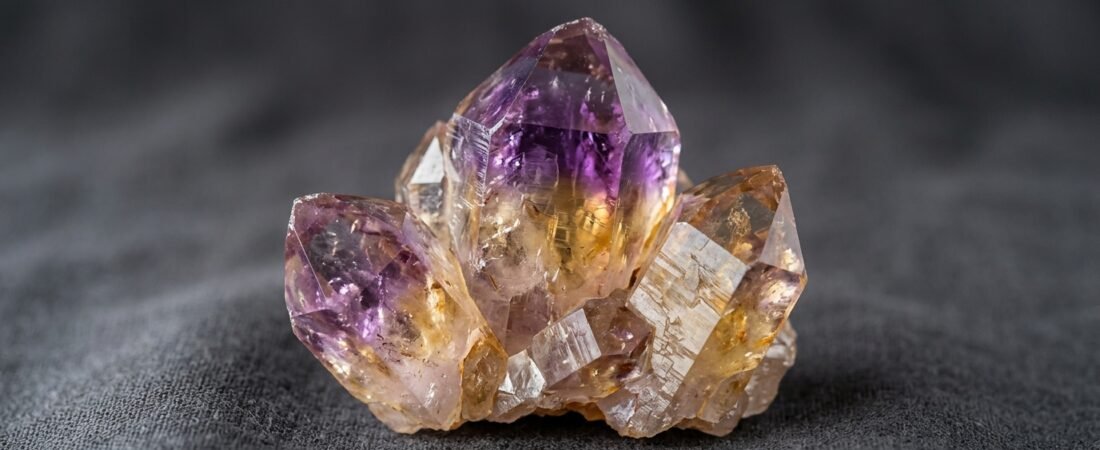
Few gemstones manage to captivate both scientists and spiritual practitioners in equal measure, but Ametrine is a remarkable exception. A natural fusion of amethyst and citrine within a single crystal, it presents a striking interplay of violet and golden hues that can shift dramatically depending on the light. Beyond its visual appeal, Ametrine carries a rich historical legacy, a compelling geological story, and a wide range of metaphysical associations that have drawn crystal enthusiasts for centuries. Whether you are drawn to it for its beauty, its reputed healing properties, or its spiritual resonance, this guide covers everything you need to know about this extraordinary dual-toned stone.
What Is Ametrine and Where Does It Come From?
Ametrine is a naturally occurring variety of quartz that displays both the purple coloration of amethyst and the warm yellow or orange tones of citrine simultaneously. Its name is a direct portmanteau of the two minerals it combines, and it is sometimes referred to as trystine or bolivianite. While synthetic versions have been produced in laboratories, naturally formed Ametrine remains one of the most visually distinctive gemstones available on the market today.
The Geological Origins and Formation of Ametrine
The formation of Ametrine is a geological phenomenon that requires a very specific set of conditions. Both amethyst and citrine are forms of crystalline quartz, with their different colors resulting from iron impurities within the crystal lattice. In amethyst, iron undergoes oxidation in a way that produces violet hues, while in citrine, a different oxidation state of iron yields yellow and orange tones. For Ametrine to form naturally, both oxidation states must coexist within the same crystal during its growth — a process made possible by temperature gradients within the host rock during crystallization.
This unusual combination occurs almost exclusively in Bolivia, within a single deposit known as the Anahi mine, located in the Santa Cruz department near the Brazilian border. The mine sits in a remote region and has been the world’s primary — and effectively only — commercial source of natural Ametrine for decades. Small quantities have been reported from India and Brazil, but these occurrences are exceedingly rare. The geographic exclusivity of the stone adds to both its rarity and its cultural mystique.
On the Mohs hardness scale, Ametrine registers at 7, identical to other quartz varieties, making it reasonably durable for use in jewelry and everyday handling. Its crystal system is trigonal, and it typically forms in prismatic shapes with the characteristic zoning between its two color regions appearing either as a sharp boundary or a gradual transition across the stone.
The History and Cultural Significance of Ametrine
The history of Ametrine is intertwined with the colonization of South America. According to historical accounts, the Anahi mine was introduced to Europeans in the seventeenth century when a Spanish conquistador named Felipe de Urriola y Goitia received the mine as part of a dowry upon marrying a princess of the Ayoreo-Totuade tribe named Anahi. When he returned to Spain, he allegedly brought Ametrine stones with him, presenting them to the Spanish queen. The mine then fell into obscurity for several centuries before being rediscovered and reopened commercially in the 1960s.
For the indigenous Ayoreo people, the stone held spiritual and cultural significance. Its dual coloration was seen as a symbol of balance and duality — a concept that would later be echoed in the metaphysical traditions that developed around the crystal in the Western world.
During the 1970s and 1980s, Ametrine gained increasing recognition in the gemstone trade as the Anahi mine expanded its output. Gem cutters quickly discovered that the stone lent itself beautifully to creative faceting techniques, particularly cuts designed to display both colors simultaneously or to blend them optically. Today, Ametrine is appreciated as much by gemologists and jewelers as it is by crystal healers and collectors.
Ametrine Healing Properties and Metaphysical Meaning
Within crystal healing traditions, Ametrine is regarded as one of the most potent dual-energy stones available. Because it contains the energetic properties attributed to both amethyst and citrine, it is believed to offer a uniquely harmonized vibration that addresses multiple dimensions of well-being simultaneously. It is worth noting that these associations are rooted in spiritual belief and metaphysical tradition rather than scientific evidence, and Ametrine should never be used as a substitute for professional medical care.
Physical and Emotional Healing Benefits of Ametrine
In the tradition of crystal healing, Ametrine is frequently associated with the integration of opposites — a property that is thought to manifest on both the physical and emotional levels. Practitioners believe the stone may support the body’s natural processes by encouraging clarity and focus, which in turn can reduce the mental fatigue often associated with stress and indecision.
On an emotional level, Ametrine is said to be particularly supportive for those experiencing internal conflict, whether between logic and intuition, ambition and contentment, or fear and confidence. The amethyst component is traditionally associated with calm and clarity of mind, while the citrine portion is linked to optimism, motivation, and a sense of personal power. Together, these qualities are believed to foster emotional equilibrium — helping individuals move through periods of transition without becoming overwhelmed.
Crystal healers also attribute to Ametrine a capacity for dispelling negativity, both internally generated and absorbed from one’s environment. Some traditions suggest it may aid concentration during demanding mental work, making it a favored stone among students, writers, and professionals who require sustained intellectual effort. These remain matters of belief within the crystal healing community, not medically validated claims.
Spiritual Properties and Chakra Connections of Ametrine
The Ametrine crystal meaning in spiritual contexts is deeply connected to the idea of unity within duality. Because it bridges two distinct energies, it is often described as a stone of balance and synthesis — one that helps the spiritual seeker integrate seemingly contradictory aspects of existence into a coherent whole.
In terms of chakra healing, Ametrine is believed to work primarily with two energy centers. The amethyst portion of the stone resonates with the crown chakra, located at the top of the head, which is traditionally associated with spiritual awareness, higher consciousness, and connection to the divine. The citrine aspect, meanwhile, is connected to the solar plexus chakra, situated in the upper abdomen, which governs personal will, confidence, and manifestation. By stimulating both chakras simultaneously, Ametrine is thought to create a channel between earthly intention and spiritual wisdom — a quality that makes it particularly valued in meditative and ritual practice.
Some practitioners also work with Ametrine to support the third eye chakra, associating the stone with heightened intuition and the development of psychic perception. This positions it alongside other powerful intuition-focused crystals. For those interested in how other composite quartz varieties serve similar purposes, the metaphysical traditions surrounding tourmalinated quartz offer an instructive comparison in how dual-natured stones are understood within crystal healing frameworks.
How to Use Ametrine in Your Daily Life
Incorporating Ametrine into a daily routine does not require elaborate rituals or specialized knowledge. Its versatility makes it accessible to beginners and experienced practitioners alike. From wearable forms to meditative tools, there are numerous practical ways to work with this stone’s reputed energy.
Wearing Ametrine Jewelry for Maximum Benefits
One of the most straightforward and aesthetically rewarding ways to benefit from Ametrine is through jewelry. Rings, pendants, earrings, and bracelets featuring this gemstone allow for sustained contact with the crystal throughout the day, which practitioners believe amplifies its energetic influence over time.
Pendant necklaces are particularly popular, as wearing Ametrine close to the chest positions it near the heart and solar plexus — two energetically significant areas according to chakra theory. Rings worn on the dominant hand are thought by some practitioners to project the stone’s energy outward, while those on the non-dominant hand are believed to draw its energy inward for personal reflection and emotional processing.
Beyond metaphysical considerations, Ametrine jewelry is simply beautiful. Its bicolor nature means that no two stones are identical, and skilled gem cutters often create fantasy cuts or specialty faceting that maximizes the visual interplay between the purple and yellow zones. When selecting Ametrine jewelry, look for pieces where both color regions are clearly visible and well-defined, as this tends to yield the most striking aesthetic result.
For those who appreciate the distinctive character of naturally occurring quartz inclusions, it may be worth exploring the world of other visually complex quartz varieties. The energetic and visual qualities attributed to rutilated quartz, for instance, similarly reward close attention to craftsmanship and natural formation.
Meditation and Crystal Healing Practices With Ametrine
In meditative practice, Ametrine is often used as a focal object or held in the hands during sessions intended to bring mental clarity and spiritual attunement. Its dual-color composition makes it particularly well-suited to practices aimed at integrating mind and spirit, or at bridging concrete goals with higher values and purpose.
A common technique involves holding the stone in both hands while seated comfortably, with eyes closed, and directing the breath toward a sense of balance between two opposing forces — ambition and peace, action and stillness, desire and acceptance. Practitioners report that this exercise feels especially resonant when performed with Ametrine due to the stone’s visual symbolism of unity.
Crystal grids are another popular application. Ametrine is frequently placed at the center of a grid as a master stone, with supporting crystals arranged around it to amplify specific intentions. For sessions focused on clarity and manifestation, clear quartz points are often paired with Ametrine to direct and intensify its energy.
Placing an Ametrine crystal on a desk or workspace is a widely practiced use among those who believe in its concentration-enhancing qualities. Some practitioners also place it under a pillow or on a bedside table to encourage vivid, insightful dreaming — a practice drawn from amethyst traditions that is extended to Ametrine given its shared violet component.
How to Choose, Cleanse, and Care for Your Ametrine Crystal
Acquiring and maintaining a quality Ametrine requires a degree of discernment. Given the stone’s commercial value and the prevalence of synthetic or misrepresented specimens on the market, it is important to approach purchase with informed expectations. Similarly, proper care ensures that the stone retains both its physical beauty and, according to crystal healing beliefs, its energetic vitality.
Tips for Buying Authentic and High-Quality Ametrine
The most immediate indicator of quality in an Ametrine stone is the clarity and distribution of its dual coloration. A high-quality specimen will exhibit well-saturated, clearly distinguishable zones of violet and golden yellow, with minimal brownish or muddy transition areas. The color boundary can be either sharp or gradual — both are natural — but the individual colors themselves should be vivid rather than washed out.
Transparency is another important factor. Fine gem-grade Ametrine tends to be eye-clean, meaning no visible inclusions disrupt the stone’s clarity when viewed with the naked eye. Lower-grade specimens may still carry metaphysical appeal for crystal healing purposes, but they will typically command lower prices in the market.
When purchasing Ametrine, consider the following:
- Buy from reputable dealers who can confirm the stone’s origin, ideally from the Anahi mine in Bolivia.
- Request certification or provenance documentation when purchasing high-value pieces.
- Be cautious of stones sold at unusually low prices, which may indicate synthetic or glass imitations.
- Examine the color under different light sources, as genuine Ametrine will show its dual colors consistently rather than appearing as a single hue.
- When buying rough or tumbled stones for healing purposes, a less perfect appearance is perfectly acceptable and often preferable for those seeking a more natural connection to the material.
Laboratory-created Ametrine does exist and is not inherently inferior for ornamental purposes, but it lacks the geological story and rarity that make natural specimens so compelling. If authenticity matters to you — whether for metaphysical or collector reasons — always clarify with the seller whether the stone is natural or synthetic.
Best Methods to Cleanse and Recharge Your Ametrine Stone
Within crystal healing traditions, regular cleansing is considered essential for maintaining a stone’s energetic effectiveness. The belief is that crystals absorb ambient energies over time and benefit from periodic clearing to restore their natural vibrational state. For Ametrine, several methods are widely recommended, though some require more care than others given the stone’s composition.
Running water is among the simplest and most accessible cleansing methods. Holding Ametrine under cool, clean running water — ideally from a natural source but tap water is widely used — for one to two minutes while setting a clear intention for purification is a common practice. Because Ametrine rates 7 on the Mohs scale, brief exposure to water is generally safe, though prolonged soaking should be avoided to prevent any potential impact on surface luster over time.
Moonlight cleansing is another favored approach, particularly among those who wish to simultaneously recharge the stone. Placing Ametrine on a windowsill or outdoors during a full moon allows it to absorb lunar energy overnight. This method carries no risk of physical damage and is compatible with the stone’s connection to spiritual and intuitive qualities.
Sound cleansing, using singing bowls, tuning forks, or bells, is an excellent method for those who prefer not to use water or who are cleansing multiple stones simultaneously. The vibrations generated by these instruments are believed to dislodge stagnant or discordant energies from the crystal.
Selenite is frequently used in crystal healing communities as a passive cleansing tool. Placing Ametrine on a selenite charging plate or beside a selenite wand overnight is thought to draw out accumulated energies without requiring any active effort.
Methods to exercise caution with include prolonged direct sunlight, which can fade the purple amethyst zones over time due to ultraviolet sensitivity, and salt water, which can be mildly abrasive to crystal surfaces. For recharging, sound, moonlight, and proximity to other high-vibration crystals such as clear quartz are considered the safest and most effective options.
Conclusion
Ametrine stands apart in the mineral world as a stone of genuine rarity and remarkable visual beauty. Its geological origins in a single Bolivian mine, its centuries-old cultural history, and its dual nature as both amethyst and citrine make it a compelling subject for anyone drawn to the world of crystals. In metaphysical traditions, it is valued as a harmonizing force — one that bridges the spiritual with the material, the intuitive with the rational, and the contemplative with the active.
Whether you are drawn to Ametrine for its aesthetic qualities, its reputed spiritual properties, or its fascinating geological story, working with this stone thoughtfully — choosing it carefully, wearing or displaying it with intention, and caring for it properly — can offer a rewarding experience on multiple levels. As with all crystal practices, approach it with curiosity and an open mind, and let the stone speak to you in its own quiet, dual-toned language.
About the Author
Didier Lancelot is an independent author and creator of the Everyday AI Series, with books on wellbeing, natural living, cooking and practical technology. Explore all his books on his Amazon Author page or visit Narmer Store.