
What Is Prasiolite? Origins, Formation, and Physical Properties
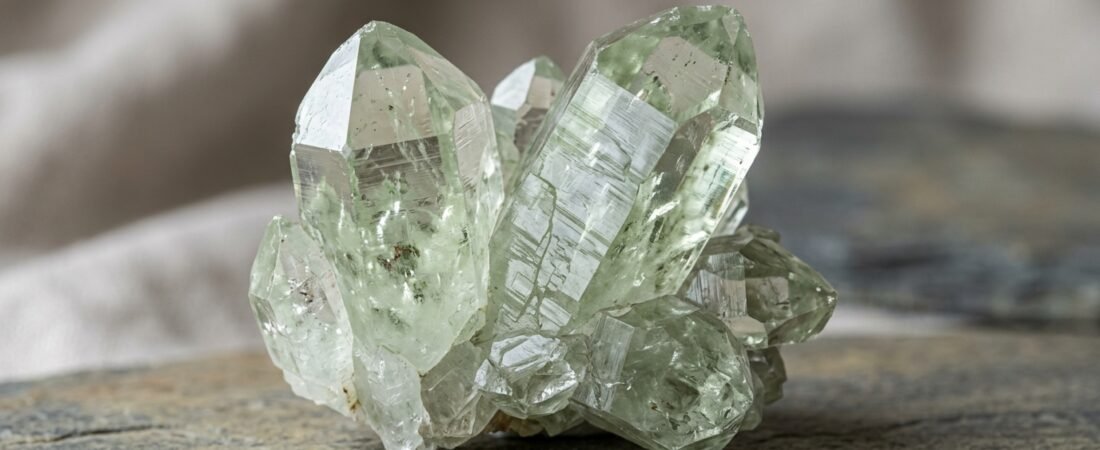
Among the lesser-known members of the quartz family, prasiolite stands out for its distinctive pale-to-medium green hue and quiet, understated elegance. Unlike the bold saturation of emerald or the vivid brilliance of peridot, prasiolite carries a soft, almost translucent green that speaks to both subtlety and depth. It belongs to the macrocrystalline branch of quartz, sharing its fundamental silicon dioxide composition with amethyst, citrine, and rock crystal, yet possessing a color and character entirely its own.
The name itself derives from the Greek words prason, meaning leek, and lithos, meaning stone — a fitting description for a gemstone whose green tones range from the palest celadon to a warm, herbaceous green reminiscent of fresh foliage. This etymological root also points to how visually distinctive the stone has been considered throughout history, even when its metaphysical and commercial recognition remained limited.
Despite its relative obscurity in mainstream gem markets, prasiolite has attracted significant attention from crystal collectors, energy healers, and jewelry designers who appreciate both its rarity and its resonant symbolism. Understanding where it comes from and how it forms is essential to appreciating what makes this gemstone genuinely special.
How Prasiolite Forms and Where It Is Found in Nature
Prasiolite forms through a process closely linked to the geological conditions that govern all varieties of quartz. As silica-rich hydrothermal fluids move through fractures and cavities in igneous and metamorphic rock, they slowly deposit crystalline structures over thousands — sometimes millions — of years. The resulting crystals inherit their color from trace mineral impurities and from exposure to natural radiation within the earth.
In the case of prasiolite, the green coloration is produced primarily by iron content within the crystal lattice, which, when exposed to natural heat or radiation over geological time, shifts the stone’s optical character from purple or colorless to green. This is why prasiolite is so rare in its naturally occurring form: the precise combination of iron concentration, geothermal heat, and radiation required to produce a stable green color is exceptionally uncommon.
Truly natural prasiolite is found in only a handful of locations worldwide. The Montezuma mine in Minas Gerais, Brazil, is the most historically significant source and remains the primary origin point for authenticated natural specimens. Small quantities have also been documented in Thunder Bay, Canada, and in Poland’s Lower Silesia region, where iron-rich amethyst deposits occasionally yield naturally green-tinted specimens.
Because natural prasiolite is so scarce, the majority of stones sold on the commercial market are produced through heat treatment or irradiation of amethyst or colorless quartz. When amethyst from specific deposits — particularly those with sufficient iron content — is heated to temperatures between 400 and 500 degrees Celsius, its purple color transforms into the characteristic leek-green of prasiolite. This process is stable and widely accepted within the gemological community, though it is important for buyers to understand the distinction between treated and naturally occurring material.
Prasiolite vs. Green Amethyst: Understanding the Key Differences
The terms prasiolite and green amethyst are frequently used interchangeably, creating considerable confusion among both consumers and enthusiasts. While the two names often refer to the same stone, their implications differ in ways that matter both scientifically and commercially.
Strictly speaking, “green amethyst” is a trade name rather than a mineralogical classification. Gemological institutions, including the Gemological Institute of America, generally discourage the use of the term “green amethyst” because amethyst, by definition, refers specifically to the purple variety of quartz. Applying the word amethyst to a green stone is therefore technically inaccurate, even when the green color is derived directly from amethyst through heat treatment. The correct mineralogical designation for the green-colored variety of macrocrystalline quartz is prasiolite.
That said, in the retail and crystal healing markets, “green amethyst” persists as a popular descriptor because it immediately communicates both the color and the gemological family of the stone. For practical purposes, the two terms typically describe the same material: a pale to medium green, transparent to translucent macrocrystalline quartz, most commonly produced by heating iron-bearing amethyst.
Where they do differ meaningfully is in origin. A stone labeled prasiolite may refer specifically to naturally occurring green quartz, whereas green amethyst almost always refers to heat-treated material. For collectors prioritizing natural specimens, this distinction carries real value. For those drawn to the stone’s metaphysical properties or visual appeal, the difference is largely academic, as the energetic and aesthetic qualities attributed to both are considered equivalent within crystal healing traditions.
It is also worth comparing prasiolite with other green gemstones to clarify its unique position in the mineral world. Unlike green tourmaline or tourmalinated quartz, which derive their character from complex mineral inclusions, prasiolite achieves its color through the transformation of its own iron content. This internal origin of color gives prasiolite a certain purity of character that resonates with many collectors and energy workers alike.
Prasiolite Meaning, Symbolism, and Spiritual Significance
Beyond its geological identity, prasiolite carries a rich tapestry of symbolic and spiritual meaning that has evolved across cultures and centuries. Its green color alone places it within a universal symbolic framework: green has long been associated with nature, growth, renewal, and the heart’s deepest longings. Prasiolite embodies these themes with a quiet authority that distinguishes it from more aggressively colored green stones.
In contemporary crystal healing and spiritual practice, prasiolite is often described as a stone of transformation and self-connection. Its energy is thought to bridge the physical and spiritual dimensions, helping those who work with it to align their outer actions with their inner values. This quality of integration — of bringing disparate parts of the self into coherent harmony — is perhaps the most consistently cited attribute of prasiolite across different healing traditions.
Historical and Cultural Significance of Prasiolite Across Civilizations
Prasiolite’s documented history is more limited than that of amethyst or citrine, partly because naturally occurring specimens are so rare that they rarely appeared in sufficient quantities to attract widespread cultural attention in ancient times. Nevertheless, its parent stone, amethyst, carries an extraordinarily rich historical legacy that informs how prasiolite has come to be understood today.
In ancient Greek and Roman culture, amethyst was prized as a stone of sobriety, clarity, and divine connection. The Greeks believed it could prevent intoxication and sharpen the mind, while Roman soldiers wore it as a protective talisman in battle. As a transformed form of amethyst, prasiolite inherits this legacy of mental clarity and spiritual protection, reinterpreted through the lens of its green coloration to emphasize growth, vitality, and heart-centered awareness.
In esoteric and alchemical traditions, green stones were often associated with Venus, the planet governing love, beauty, and the natural world. Green quartz specifically was believed to carry the vital force of the earth, channeling the regenerative power of spring and connecting the wearer to the cycles of nature. These beliefs, though they emerged in contexts where prasiolite was not explicitly named, laid the philosophical groundwork for how the stone is understood in modern metaphysical practice.
In more recent history, prasiolite gained commercial and cultural visibility in the latter half of the twentieth century, largely through the Brazilian gemstone trade. Its entry into jewelry and crystal markets coincided with a broader awakening of interest in green gemstones as alternatives to the more expensive emerald, and its spiritual reputation grew in tandem with the rising popularity of crystal healing in Western New Age movements.
Prasiolite Chakra Connections and Metaphysical Properties
Within the framework of chakra philosophy — a system of energy centers drawn from ancient Indian yogic and Ayurvedic traditions — prasiolite is most strongly associated with the heart chakra, known in Sanskrit as Anahata. Located at the center of the chest, the heart chakra governs compassion, love, emotional balance, and the capacity for genuine connection with others. Green stones are traditionally linked to this energy center, and prasiolite’s soft, enveloping green resonates particularly well with its qualities.
Many practitioners also associate prasiolite with the third eye chakra (Ajna), citing its lineage from amethyst — a stone traditionally linked to higher perception, intuition, and spiritual insight. This dual association gives prasiolite a bridging quality: it is believed to connect the emotional wisdom of the heart with the perceptual clarity of the higher mind, creating a channel through which personal truth can be both felt and understood.
The solar plexus chakra (Manipura) is occasionally mentioned in connection with prasiolite as well, particularly in traditions that emphasize its role in supporting personal empowerment and the cultivation of self-worth. In this reading, prasiolite is seen not merely as a stone of love and compassion toward others, but as an ally in developing a grounded and confident sense of self.
Metaphysically, prasiolite is described by crystal healing practitioners as a stone that facilitates spiritual awakening through the body rather than away from it. Unlike some high-vibration stones that are thought to draw consciousness upward and away from physical reality, prasiolite is believed to encourage a grounded spirituality — one rooted in the natural world, present-moment awareness, and the wisdom of the heart. This makes it a particularly valued stone for those navigating periods of personal transformation, grief, or the search for greater authenticity in their lives.
Prasiolite Healing Properties and Benefits for Mind, Body, and Spirit
The healing traditions surrounding prasiolite are varied and nuanced, drawing from both the broader symbolism of green quartz and the specific energetic qualities attributed to this stone in contemporary crystal healing practice. It is important to approach these traditions with the understanding that they represent systems of belief and spiritual practice rather than medically validated treatments. That said, many individuals report meaningful personal benefits from working with prasiolite, whether through meditation, intention-setting, or the simple act of wearing or holding the stone.
What makes prasiolite particularly compelling as a healing stone is the coherence of its attributed qualities across different traditions. Whether one approaches it through chakra work, color therapy, or intuitive crystal practice, the same core themes emerge: transformation, compassion, clarity, and the courage to live in alignment with one’s deepest values.
Emotional and Mental Healing Benefits of Prasiolite
On an emotional level, prasiolite is widely regarded in crystal healing traditions as a stone of self-love and inner strength. Its energy is described as gentle yet persistent — not the kind of bold, electric charge associated with some other crystals, but a quiet, steady support that helps dissolve emotional resistance and open the heart to new possibilities.
For those dealing with grief, heartbreak, or prolonged periods of emotional numbness, prasiolite is believed to act as a gentle catalyst for reconnection — both with the self and with the world. It is thought to ease the process of releasing old wounds without forcing or rushing the healing process, making it an appropriate companion for those in therapy, recovery, or any form of structured inner work.
Mentally, prasiolite is associated with clarity of thought and the ability to see situations from a higher perspective. Crystal practitioners often recommend it for those who feel overwhelmed by complexity, as it is believed to help quiet the analytical mind and access a more intuitive, integrative form of understanding. This quality connects naturally to its association with the third eye chakra and positions prasiolite as a useful stone for decision-making and creative problem-solving.
The stone is also thought to support the development of compassion — not as a passive softness, but as an active, discerning quality that enables one to engage with others from a place of genuine empathy while maintaining healthy boundaries. In this sense, prasiolite is seen as particularly valuable for caregivers, counselors, teachers, and anyone whose work involves sustained emotional engagement with others.
Several traditions also highlight prasiolite’s role in supporting personal transformation. Like its cousin ametrine, which is celebrated for integrating opposing energies, prasiolite is believed to help individuals reconcile different aspects of themselves — the rational and the intuitive, the personal and the universal, the past and the present — into a more coherent and authentic whole.
Physical Healing Properties and How to Use Prasiolite Effectively
In holistic and energy healing traditions, prasiolite is associated with a range of physical benefits, though these are always understood as complementary to — never replacements for — conventional medical care. Practitioners who work with prasiolite for physical wellbeing typically focus on its believed relationship with the endocrine and immune systems, as well as its reputed ability to support the body’s natural detoxification processes.
Some traditions link prasiolite to the health of the lungs and respiratory system, connecting its green energy to the breath and to the life-sustaining quality of oxygen. Others emphasize its support for the digestive and metabolic systems, associating it with the solar plexus and the body’s capacity to assimilate both physical nourishment and new experiences.
For those wishing to work with prasiolite intentionally, there are several practical approaches. Meditating with a prasiolite crystal held in the left hand — traditionally considered the receptive hand — or placed over the heart center is one of the most commonly recommended methods. This practice is thought to facilitate the opening of the heart chakra and encourage a state of calm, inward attention conducive to emotional processing and spiritual insight.
Wearing prasiolite as jewelry — particularly as a pendant near the heart or as a ring on the left hand — allows for sustained energetic contact throughout the day. This is believed to create a consistent field of the stone’s energy around the wearer, supporting emotional stability and heart-centered awareness in the midst of daily life.
Placing prasiolite in living spaces, particularly in areas used for rest, creative work, or meditation, is another approach favored by crystal practitioners. The stone is thought to infuse an environment with its regenerative, clarifying energy, creating a space conducive to reflection and authentic connection.
Crystal grids incorporating prasiolite alongside other heart-centered or high-vibration stones — such as rose quartz, clear quartz, or rutilated quartz — are also popular among experienced practitioners. The intentional geometric arrangement of stones in a grid is believed to amplify their individual energies, creating a synergistic field that supports specific healing intentions. For those interested in working with quartz varieties in combination, understanding the individual properties of each stone is essential; the distinct qualities of rutilated quartz, for example, offer a fascinating complement to prasiolite’s gentler, more inward-focused energy.
How to Choose, Cleanse, and Care for Your Prasiolite Crystal
Acquiring and maintaining a prasiolite crystal — whether as a raw specimen, a tumbled stone, or a piece of finished jewelry — requires some foundational knowledge. Given the prevalence of treated and misidentified material in the gemstone market, informed purchasing is particularly important. Equally, understanding how to properly care for and energetically maintain a prasiolite stone ensures that it continues to serve its intended purpose over time.
Tips for Buying Authentic Prasiolite Jewelry and Raw Stones
The first and most important step in purchasing prasiolite is working with reputable sellers who are transparent about the origin and treatment history of their stones. Because naturally occurring prasiolite is rare, the majority of commercially available specimens are heat-treated amethyst. This is not inherently problematic — treated prasiolite is a legitimate and beautiful gemstone — but sellers who describe heat-treated stones as “natural prasiolite” without disclosure are being misleading, and such practices should raise immediate concern.
When examining prasiolite, look for a color that is pale to medium green, typically with a slight yellowish or grayish undertone. Deeply saturated green stones sold as prasiolite should be viewed with skepticism, as the natural color range of the stone is relatively muted. Exceptionally vivid specimens may have been dyed, which compromises both their value and energetic integrity in the view of many crystal practitioners.
Clarity is another useful indicator of quality. High-quality prasiolite is typically transparent to semi-transparent, with a vitreous luster and minimal visible inclusions. While some natural inclusions are normal and even desirable in raw specimens as evidence of authenticity, a stone with a cloudy, milky appearance or unusual surface texture may warrant closer inspection.
For prasiolite jewelry, pay attention to the setting as well as the stone itself. Prasiolite is most commonly set in sterling silver, which complements its cool green tones beautifully, though gold settings are also used. Ensure that the stone is securely and appropriately mounted, with no visible gaps between the stone and the setting that might indicate poor craftsmanship or an ill-fitting cut.
Purchasing from specialist crystal retailers, established gemstone dealers, or certified gemologists offers the greatest assurance of quality and authenticity. At reputable sellers, certificates of origin and treatment disclosure are standard, and staff can answer informed questions about specific specimens.
Best Methods to Cleanse, Charge, and Store Prasiolite
Crystal cleansing is a practice rooted in the belief that stones absorb and accumulate energies from their environment and from the people who handle them. Regular cleansing is thought to restore a crystal to its optimal energetic state, ensuring that it continues to function as intended. For prasiolite, several cleansing methods are particularly well suited to the stone’s nature and physical properties.
Running water cleansing — holding the stone under cool, clean flowing water for one to two minutes while setting a clear intention for purification — is one of the simplest and most effective methods. Prasiolite, as a variety of quartz, is generally stable enough to tolerate brief water exposure, though prolonged submersion should be avoided. After water cleansing, the stone should be thoroughly dried before storage.
Smoke cleansing, using the smoke of dried herbs such as white sage, cedar, or palo santo, is another widely practiced method. Passing the prasiolite through a stream of aromatic smoke is believed to clear stagnant or discordant energies from the stone’s field. This method is particularly appropriate for those who prefer to avoid water contact with their crystals.
Sound cleansing — using the vibration of a singing bowl, tuning fork, or bell to envelop the stone in resonant sound — is considered highly effective for quartz varieties. The belief is that sound vibration disrupts and disperses accumulated energies, returning the stone to a clear and coherent state.
For charging — the process of restoring or enhancing the stone’s energetic vitality — moonlight is the most commonly recommended method for prasiolite. Placing the stone on a windowsill or outdoors under the light of the full moon overnight is thought to deeply replenish its energy. Direct sunlight, while effective for some crystals, should be used with caution for prasiolite: prolonged exposure to intense sunlight can cause the stone’s color to fade, as the heat-induced green of treated specimens may be somewhat light-sensitive.
Burying prasiolite in clean earth for twenty-four to forty-eight hours is a traditional method for deep energetic grounding and renewal. If this approach is chosen, the stone should be placed in a small cloth pouch or container to prevent surface scratching, and the burial site should be marked to ensure retrieval.
Regarding storage, prasiolite should be kept away from prolonged direct sunlight and stored separately from harder minerals that could scratch its surface. Prasiolite registers a hardness of approximately 7 on the Mohs scale, making it relatively durable, but fine mineral dust and sharper gemstones can still cause superficial damage over time. Wrapping individual pieces in soft cloth or storing them in padded compartments is ideal.
Cleaning prasiolite jewelry is straightforward: warm soapy water applied with a soft brush, followed by thorough rinsing and drying, is sufficient for regular maintenance. Ultrasonic and steam cleaners should be avoided, particularly for heat-treated specimens, as extreme vibration or sudden temperature changes can cause internal fractures or color instability.
Conclusion
Prasiolite occupies a distinctive and quietly compelling place within the world of gemstones and crystal healing traditions. Its rare natural occurrence, its origins in the alchemical transformation of amethyst, and its soft but resonant green color all contribute to a character that is simultaneously grounded and spiritually evocative. Whether one is drawn to it for its aesthetic elegance, its metaphysical associations, or the simple desire to work with a less widely known member of the quartz family, prasiolite rewards attention and intentional engagement.
Understanding the distinction between naturally occurring specimens and heat-treated material, knowing how to identify quality stones, and learning how to care for and work with prasiolite effectively all deepen the relationship between stone and keeper. The traditions surrounding this gemstone speak consistently of transformation, compassion, clarity, and heart-centered living — qualities that remain relevant and valuable in any era.
As with all crystal healing practices, the most important element is personal intention and openness. Prasiolite, with its quiet, integrative energy, is a stone that tends to meet practitioners exactly where they are — offering not dramatic revelation, but the steady, sustaining support of a deeper kind of knowing.
About the Author
Didier Lancelot is an independent author and creator of the Everyday AI Series, with books on wellbeing, natural living, cooking and practical technology. Explore all his books on his Amazon Author page or visit Narmer Store.