
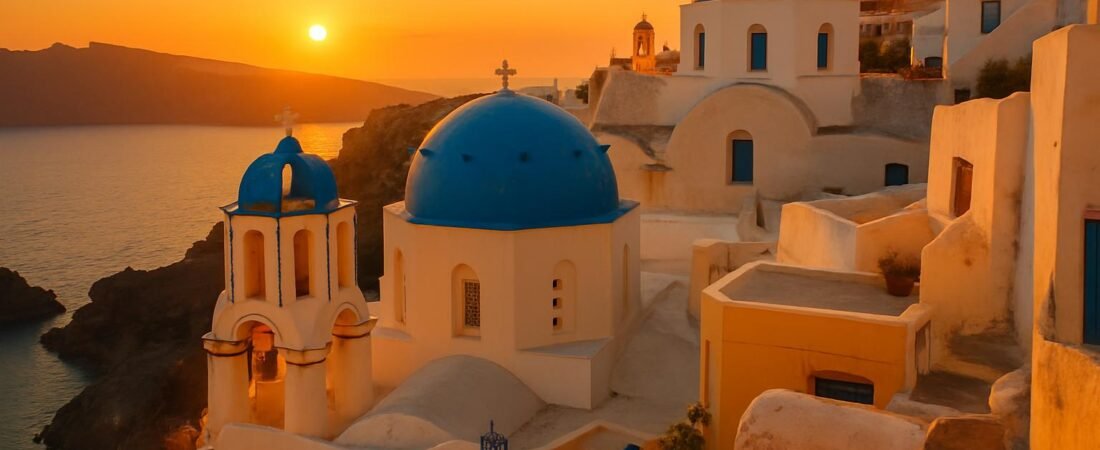
The Magic of Santorini: An Island Painted in Blue and White
Santorini is one of those places that feels almost too cinematic to be real. Perched on the rim of a volcanic caldera in the Aegean Sea, the island is a swirl of blue-domed churches, whitewashed houses and narrow lanes dropping down to inky-blue water. It’s the kind of view that makes you stop mid-step, forget your plans and just stare.
If you’ve ever dreamed of a Greek island that blends drama, romance and a hint of myth, Santorini is that dream in widescreen. From its legendary sunsets to its black-sand beaches and cliff-hugging villages, this is a destination that’s as much about feeling as it is about seeing.
Oia and Fira: Where the Cliffs Catch the Sunset
The two stars of Santorini’s show are the cliffside towns of Oia and Fira, draped along the caldera like white ribbons.
Oia: The postcard-perfect village
Oia is the Santorini you’ve seen on postcards: sugar-cube houses stacked like building blocks, winding alleys, and those famous blue-domed churches framed against the sea. As afternoon light softens, people gather on terraces and along the stone walls to watch the sun slide behind the horizon. The sky goes from gold to pink to deep violet, and for a few minutes, the whole village seems to hold its breath.
What to expect in Oia:
- Cliffside views: Countless viewpoints of the caldera, many accessible just by wandering.
- Chic boutiques and galleries: Ideal for picking up Greek-designed jewelry, ceramics and art.
- Romantic dining: Terraces with candlelit tables and sea views, perfect for long, lingering dinners.
Fira: Lively heart of the island
Fira, the island’s capital, is more energetic. Here you’ll find a mix of cliffside bars, traditional tavernas, churches and small museums. Whitewashed lanes zigzag past viewpoints where cruise ships look like toy boats far below.
What to expect in Fira:
- Vibrant nightlife: Rooftop bars, late-night cafes and music that drifts over the caldera.
- Cable car & donkey paths: Steep paths lead down to the old port, while a cable car offers a more relaxed ride.
- Museums and culture: Small but absorbing museums trace the island’s volcanic and ancient history.
If you enjoy combining scenery with urban energy, Fira’s atmosphere will feel a little like a Greek counterpart to the buzzing creative hillsides of Valparaiso’s street-art neighborhoods—but with a caldera instead of murals as your backdrop.
Beyond the Blue Domes: Beaches, Villages and Vineyards
Santorini may be famous for its clifftop views, but the island’s beauty runs deeper than its Instagram angles. Volcanic history has sculpted unusual beaches, fertile soil and dramatic landscapes waiting just beyond the main tourist trail.
Volcanic beaches and the caldera
This is not an island of endless white sand. Instead, you’ll discover beaches in shades of black and red:
- Kamari and Perissa: Long black-sand beaches on the east and southeast coasts, lined with umbrellas, sunbeds and relaxed beach bars.
- Red Beach (near Akrotiri): A small bay with red cliffs and dark pebbles, accessible by a short walk. It’s dramatic but conditions can vary; check local advice before visiting.
- Caldera cruises: Boat trips around the caldera let you see Santorini’s cliffs from sea level, swim in hot springs and watch the sunset from the water.
Traditional villages inland
Away from the caldera rim, Santorini’s inland villages offer a slower, more local rhythm:
- Pyrgos: A hillside village crowned by a castle ruin, with quiet lanes, old churches and panoramic views.
- Megalochori: A charming tangle of alleys, bell towers and neoclassical mansions, perfect for aimless exploring.
These less-touristed towns are where you’re more likely to find locals chatting in doorways, kids playing in squares and tiny cafes serving strong coffee and homemade sweets.
Wine, food and volcanic flavors
There’s a reason Santorini is beloved by wine lovers. The island’s volcanic soil and fierce winds have shaped a unique style of viticulture. Vines are often trained into basket shapes close to the ground to protect them, and the signature white grape, Assyrtiko, produces crisp, mineral-rich wines that pair beautifully with seafood.
Food-wise, expect dishes that make the most of hyper-local ingredients: cherry tomatoes, fava (yellow split-pea purée), capers, eggplant and fresh catch from the Aegean. If you’ve ever enjoyed trying regional specialties on trips like a rustic Andean meal after hiking the Inca Trail to Machu Picchu, you’ll appreciate how Santorini’s food reflects its rugged landscape.
What It Feels Like to Be There
Part of Santorini’s pull is the way it makes everyday moments feel cinematic. Morning light bounces off whitewashed walls and church domes; bougainvillea spills in magenta waves over staircases; cats stretch out on sun-warmed stone steps. Even a simple walk to buy bread can lead you past a breathtaking viewpoint.
There’s a constant play of contrast: blinding white houses cut against cobalt water, black volcanic rock meeting pale terraces. The island feels compact yet layered; you might spend a day exploring just a few streets and still find new corners and vistas around each turn.
In high season, expect crowds and a festive, international mood—couples on honeymoons, friends posing for photos, cruise passengers rushing to catch the sunset. In shoulder seasons, Santorini softens. A cool breeze comes off the sea, the light shifts, and the island feels a little more local, a little more reflective.
Practical Tips for Visiting Santorini
Best time to go
- Shoulder seasons (April–early June, late September–October): Often the sweet spot. Warm weather, swimmable sea late in the spring and early autumn, and fewer crowds than peak summer.
- Summer (late June–August): Hottest, busiest and most expensive. Fantastic for swimming and nightlife but be prepared for crowds, especially in Oia at sunset.
- Winter (November–March): Much quieter, some hotels and restaurants close, and the island can feel more local. Weather is cooler and less predictable.
How to get there
- By air: Santorini (Thira) has an airport with frequent flights from Athens and, in season, from various European cities. Flight schedules change, so check current routes when planning.
- By ferry: Regular ferries connect Santorini with Athens (Piraeus) and other Cycladic islands. Journey times and frequency vary by season and vessel type; book ahead in high season and confirm timetables close to your travel date.
Getting around the island
- Buses: Public buses link major points like Fira, Oia, Kamari and Perissa. They’re budget-friendly but can be crowded at peak times.
- Rental cars and ATVs: Offer freedom to explore beaches and inland villages. Roads are narrow and parking can be tight in popular areas.
- On foot: Walking is the best way to experience the clifftop villages. There’s also a scenic footpath between Fira and Oia that takes several hours and offers spectacular views.
What to bring and wear
- Comfortable walking shoes: Cobblestones, stairs and uneven paths are part of the charm; sandals with good grip or lightweight sneakers are ideal.
- Sun protection: A hat, sunglasses and high-SPF sunscreen are essential; the sun reflects off white surfaces and the sea.
- Light layers: Evenings, especially in shoulder seasons, can get breezy.
- Swimwear and a cover-up: For beach days and caldera cruises.
Booking tips and budget level
- Accommodation: Caldera-view hotels in Oia and Fira are classic but command a premium, especially in summer. Inland villages or beachside areas like Kamari can offer better value.
- Reservations: For peak season, book accommodation, ferries and popular restaurants well in advance. For boat trips and tours, reserve ahead, but always reconfirm details and cancellation policies.
- Budget level: Overall, Santorini leans mid-range to luxury. You can find more budget-conscious options, especially away from the caldera cliffs, but dining and activities tend to reflect the island’s popularity.
- Check official sources: Ferry schedules, flight routes, opening hours for small museums or archaeological sites, and any seasonal closures can change—verify on official websites or with local operators just before your trip.
Ready for Your Own Santorini Sunset?
Santorini is a place where nature and architecture conspire to create almost impossibly beautiful scenes: blue domes against whitewashed walls, terraces hovering over deep blue water, and sunsets that turn the whole caldera into a living painting.
Whether you come for a romantic escape, a once-in-a-lifetime photography trip, or a slow exploration of Greek island life, Santorini has a way of staying with you long after the sun has dipped below the horizon. Start sketching out your dates, keep an eye on those ferry and flight timetables, and get ready to step into one of the world’s most iconic island landscapes.
About the Author
Didier Lancelot is an independent author and creator of the Everyday AI Series, with books on technology, travel, cooking, wellness and personal growth written in plain language. Explore all his books on his Amazon Author page or visit Narmer Store.