
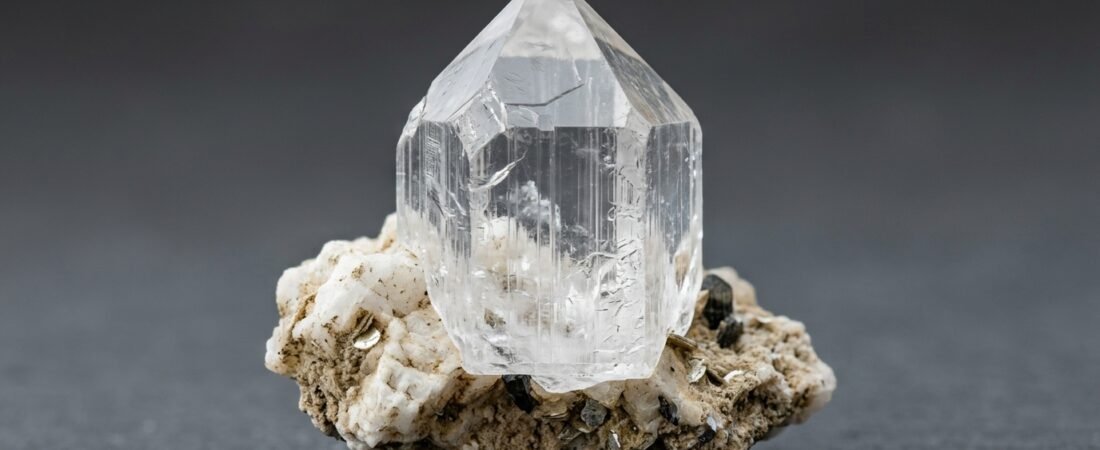
Among the many wonders of the mineral world, few stones capture attention quite like achroite. Transparent, pristine, and exceptionally scarce, this colorless variety of tourmaline occupies a singular position in the gemological landscape. Collectors prize it for its optical purity, healers revere it for its subtle energetic qualities, and jewelers value it for its understated elegance. Yet despite its remarkable characteristics, achroite remains largely unknown outside specialist circles. This guide covers everything you need to know — from its geological origins and metaphysical reputation to its market value and practical care — so you can approach this extraordinary stone with confidence and clarity.
What Is Achroite and Why Is It So Rare?
The name achroite derives from the ancient Greek word achroitos, meaning “without color.” It refers specifically to the colorless or near-colorless end-member of the elbaite tourmaline group. While most tourmalines owe their vivid hues to trace elements such as iron, manganese, copper, or chromium, achroite forms under conditions where these chromophores are conspicuously absent. The result is a stone of remarkable transparency — one that resembles diamond or white topaz at first glance but carries a distinct crystalline identity all its own.
What makes achroite genuinely rare is the precision of its formation requirements. Tourmaline is, by nature, a complex boron silicate mineral with a chemical composition that accommodates an extraordinary range of elemental substitutions. Achieving true colorlessness within that framework demands an unusually pure geochemical environment, which occurs only under very specific conditions. Most tourmaline-bearing pegmatites contain at least trace amounts of coloring agents, making specimens of genuine achroite a statistical anomaly in nature’s workshop.
The Geological Formation of Achroite Crystal
Achroite forms primarily within granitic pegmatites — coarse-grained igneous rocks that develop in the final stages of magma crystallization. As the cooling melt becomes progressively enriched in water, boron, lithium, and other volatile elements, the conditions favor the growth of complex silicate minerals, including tourmaline. Elbaite, the lithium-aluminum-rich species to which achroite belongs, crystallizes in the inner zones of these pegmatites, often alongside other collector favorites such as rubellite and indicolite.
The specific absence of iron and manganese in the surrounding fluid is what allows achroite crystals to develop without coloration. This geochemical purity is uncommon. Even minute concentrations of iron — sometimes as low as a few hundred parts per million — are sufficient to impart a yellowish or bluish tint. Confirmed deposits of gem-quality achroite have been documented in Brazil, Madagascar, Afghanistan, and parts of Namibia, though truly fine, facet-grade material remains scarce across all localities. The crystals themselves are typically prismatic with the characteristic striated surface texture shared across the broader tourmaline group.
How Achroite Differs From Other Tourmaline Varieties
The tourmaline group encompasses a broad family of minerals, and it helps to understand where achroite fits within that spectrum. Rubellite is the pink-to-red variety colored by manganese; indicolite ranges from pale blue to deep teal through the influence of iron; watermelon tourmaline displays a bicolor zoning of pink and green; and paraíba tourmaline — perhaps the most commercially celebrated — achieves its electric neon hue from copper and manganese.
Achroite shares its elbaite species classification with many of these varieties but distinguishes itself through its complete absence of chromophoric elements. In practice, this creates a stone that behaves quite differently in the marketplace and in aesthetic terms. Where paraíba or chrome tourmaline command premiums for their saturated color, achroite’s appeal lies in its optical clarity and rarity. It is also worth noting that colorless tourmaline should not be confused with white schorl or colorless liddicoatite — both are mineralogically distinct, though visually similar to the untrained eye. Proper gemological identification is essential when dealing with any specimen labeled as achroite.
Achroite Healing Properties and Metaphysical Benefits
Within crystal healing and metaphysical traditions, achroite occupies a unique niche. Because it carries no inherent color, it is considered a neutral and universal conduit — a stone that amplifies intention without filtering it through a specific energetic frequency. Many practitioners regard colorless stones as among the most versatile tools in a healing practice, and achroite is no exception. Its reputed properties center on clarity, purification, and the removal of energetic blockages across all dimensions of wellbeing.
It is important to note that these metaphysical properties are part of a longstanding cultural and spiritual tradition rather than scientifically validated claims. Nevertheless, the significance that generations of healers and crystal enthusiasts have attributed to achroite forms an important part of its overall identity as a gemstone.
Emotional and Spiritual Healing With Achroite Gemstone
Achroite is most commonly associated with purification of the mind and spirit. Practitioners believe that its pristine transparency mirrors an inner clarity it helps cultivate — dissolving confusion, mental clutter, and emotional residue that obscure authentic perception. For individuals navigating periods of transition or uncertainty, it is often recommended as a grounding companion that encourages honest self-assessment without the distortion of fear or ego.
On a spiritual level, achroite is said to activate and align the crown chakra, which governs higher consciousness, divine connection, and universal wisdom. Unlike some stones associated with this chakra, achroite is considered gentle in its action — supportive rather than overwhelming. It is also linked in various traditions to the concept of karmic cleansing, with the belief that its energetic neutrality allows it to dissolve deeply held patterns that no longer serve the individual. Whether approached from a spiritual or purely symbolic perspective, its association with light, openness, and renewal gives it a compelling metaphysical identity.
How to Use Achroite in Meditation and Energy Work
Incorporating achroite into a meditation practice is straightforward, and its versatility makes it adaptable to many different approaches. One of the most common methods is to hold a polished achroite crystal or faceted stone in the non-dominant hand during seated meditation, using its cool, neutral energy as a focal point for stillness and mental clarity. Some practitioners place it on the crown of the head while lying in a relaxed position, intending to open receptivity to higher guidance.
In energy work such as Reiki or chakra balancing, achroite is often used as a clearing agent at the beginning of a session. Healers may pass the stone through the aura or place it above the client’s head to create an environment of openness before introducing other, more targeted stones. For those working with crystal grids, achroite functions effectively as a central amplifier — its colorless nature allowing it to support and magnify the intentions set by surrounding stones without competing energetically. Regular cleansing of the stone is recommended between uses, as it is believed to absorb and hold the energetic impressions it encounters.
Achroite Gemstone Value, Pricing, and Buying Guide
Understanding the commercial landscape surrounding achroite requires a clear-eyed look at both supply and demand dynamics. Because the stone is considerably rarer than most colored tourmaline varieties, its market operates differently from more established gemstones. Demand remains modest but consistent, driven primarily by collectors, metaphysical practitioners, and discerning jewelry buyers who appreciate understated rarity over flashy presentation. Pricing reflects this niche positioning — neither as high as fine paraíba tourmaline nor as accessible as common colored stones of similar transparency.
Factors That Affect Achroite Price and Quality
As with any gemstone, the four traditional quality factors — color, clarity, cut, and carat weight — determine value. In the case of achroite, “color” means the degree of colorlessness. The finest specimens are completely water-clear, with no residual tint of yellow, gray, or brown. Even a slight warm or cool cast reduces desirability, as the defining characteristic of a premium achroite is absolute transparency.
Clarity is the second critical factor. Eye-clean stones with no visible inclusions are considerably more valuable than included specimens, particularly given that achroite’s colorlessness removes the visual masking effect that color can provide in other gems. Cut quality matters significantly as well — a well-executed faceted stone will display exceptional brilliance, enhancing the stone’s inherent appeal and justifying a higher price point. Carat weight, as always, has a multiplying effect; large, clean, colorless tourmaline crystals are exceedingly uncommon, and stones above two carats in fine quality command a notable premium. Current market prices for quality faceted achroite range from approximately $50 to several hundred dollars per carat, depending on all of the above variables and the provenance of the material.
How to Identify Authentic Achroite and Avoid Fakes
The risk of misidentification or deliberate misrepresentation is real in the colorless gemstone market. Several stones resemble achroite closely enough to confuse buyers who are not equipped with gemological knowledge. White topaz, colorless beryl (goshenite), phenakite, white sapphire, and even high-quality cubic zirconia can all pass for achroite in casual inspection. The key to authentic identification lies in measurable physical properties.
Achroite has a refractive index ranging from approximately 1.614 to 1.666 and displays strong double refraction, which an experienced gemologist can detect using a refractometer. Its specific gravity falls between 3.00 and 3.10, which distinguishes it from topaz (3.53) and beryl (2.72). The characteristic striated prismatic crystal habit is also a useful diagnostic feature when examining rough material. For buyers without access to professional equipment, the safest approach is to purchase from reputable dealers who provide gemological certificates from recognized laboratories such as GIA, AGL, or Gübelin. When buying online, insist on detailed documentation and a clear return policy before committing to any significant purchase.
How to Care for and Use Achroite in Jewelry and Daily Life
Achroite is a durable stone suitable for a range of applications in jewelry and personal use. Tourmaline registers a hardness of 7 to 7.5 on the Mohs scale, which places it comfortably above everyday abrasive materials but below corundum and diamond. With proper care, an achroite gemstone will maintain its clarity and surface integrity for generations, making it a practical as well as aesthetically refined choice for wearable pieces.
Best Practices for Cleaning and Storing Achroite Crystals
Routine cleaning is best accomplished with warm water, a few drops of mild dish soap, and a soft-bristled brush — a standard toothbrush works well. Gently scrub the surface and rinse thoroughly to remove any soap residue, then pat the stone dry with a clean, lint-free cloth. Ultrasonic cleaners should be approached with caution, as tourmaline occasionally contains inclusions or internal fractures that can be expanded by ultrasonic vibration. Steam cleaning carries similar risks and is generally not recommended.
For storage, keep achroite pieces separate from harder gemstones such as sapphire or diamond, which can scratch the surface if stones are stored together carelessly. A fabric-lined jewelry box with individual compartments, or soft pouches for each piece, provides adequate protection. Prolonged exposure to direct sunlight is not a major concern for colorless stones (unlike, say, amethyst or rose quartz, which can fade), but avoiding extreme temperature fluctuations is still advisable for long-term preservation of the crystal structure.
Popular Achroite Jewelry Styles and Settings
The colorless nature of achroite makes it exceptionally versatile in jewelry design. Its transparency allows it to complement virtually any metal tone — yellow gold adds warmth and vintage character, white gold or platinum creates a contemporary and minimalist aesthetic, and rose gold provides a soft, romantic contrast. The stone performs particularly well in designs that prioritize the intrinsic optical properties of the gem rather than bold color statements.
Solitaire rings featuring a well-cut achroite are among the most elegant expressions of the stone, allowing it to be appreciated for its clarity and brilliance without distraction. Pendant settings, particularly bezel or prong mounts that expose maximum light entry, highlight the gem’s refractive qualities beautifully. Collectors who favor raw or natural crystal forms often seek achroite specimens for wire-wrapped pendants or display pieces, preserving the mineral’s natural prismatic structure. For those who wish to wear achroite as part of a metaphysical practice, simple cabochon pendants or tumbled stone bracelets offer accessible and wearable options.
Conclusion
Achroite is a gemstone that rewards attention. Its rarity is geological fact, its beauty is quietly commanding, and its place within both the collector and wellness communities is well established. Whether you are drawn to it for its pristine optical character, its metaphysical associations with clarity and purification, or simply its status as one of nature’s more improbable creations, it merits serious consideration. Approach the market informed, verify authenticity through reputable channels, and care for the stone with diligence — and you will have acquired not merely a gemstone, but a genuinely uncommon piece of the natural world.
Discover More from Didier Lancelot
Amazon Author page: amazon.com/author/didierlancelot
Narmer Store: narmerstore.org
AI and Technology Ebooks
- Creative AI: Animated Drawings, Manga & Illustrations
- Build a Game with AI: The No-Code Guide
- AI Image Generation Made Easy
- Build a Website with AI: The No-Code Guide
- How to Connect AI to Your Blog: The Ultimate Automation Guide
- AI Productivity Habits: Get More Done in Less Time
- AI Avatars Made Easy
- The Book of AI Prompts: 100+ Proven Prompts
- Make Music with AI: Suno, Udio and AI Music Generators
- Click to Cash
- The Automated Edge: Outwork, Outpace, and Outperform with AI
- AI Side Hustle: How to Make Money with ChatGPT and AI Tools
- Work Smarter with AI
Health, Lifestyle and Home Ebooks
- Hidden Superfoods: The World’s Most Powerful Healing Foods
- Spanish Food: The Complete Cookbook for Authentic Home Cooking
- The Science of Happiness Explained
- The Psychology of Success
- The Secret Sauce of Consistency: What the Experts Don’t Tell You About Fitness
- The Complete Home Bartender’s Guide: Link 1 | Link 2
- Natural Beauty, Made Simple: Easy DIY Organic Skincare Recipes
- Garden Made Simple: Easy, Beginner-Friendly Techniques
- The Dog Training Bible