
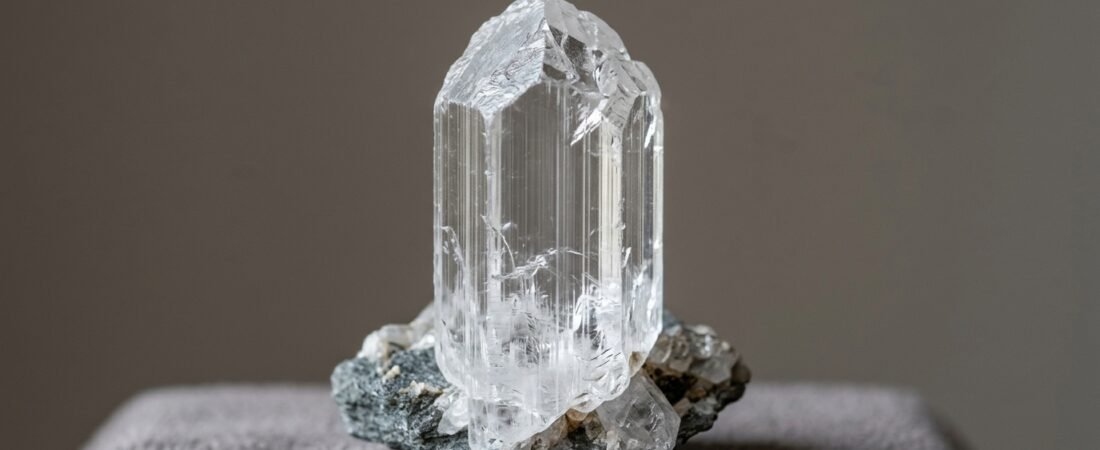
In the vast and colorful world of tourmaline, one variety stands apart precisely because of what it lacks: color. Achroite, the exceedingly rare colorless form of tourmaline, occupies a unique position in gemology — prized by collectors for its scarcity, by spiritual practitioners for its clarity of energy, and by jewelers for its quiet, luminous elegance. Despite its understated appearance, this stone carries a depth of character that rewards closer examination. Whether you are a gemstone enthusiast, a crystal healing practitioner, or simply someone drawn to rare and beautiful minerals, understanding achroite offers a fascinating glimpse into the geological and metaphysical extremes that the mineral kingdom can produce.
What Is Achroite and Why Is It So Rare?
Achroite takes its name from the Greek word achromos, meaning “without color.” It belongs to the tourmaline group, a complex family of boron silicate minerals known for displaying one of the widest color ranges of any gemstone species. While tourmalines routinely appear in deep greens, vivid pinks, electric blues, and rich reds, achroite emerges entirely transparent — free of the trace elements that typically saturate its siblings with pigment. This absence is, paradoxically, what makes it so extraordinary.
True achroite is among the rarest gemstones available on the market today. Most tourmaline deposits yield stones with at least some coloration, even if faint. Finding a specimen that is genuinely colorless — not merely pale or washed-out, but truly devoid of hue — requires exceptional geological conditions and a significant degree of chance. This rarity places it in the same conversation as other coveted collector gems, including alexandrite and demantoid garnet.
The Geological Formation of Achroite Crystal
Tourmaline forms through the crystallization of boron-rich hydrothermal fluids within igneous and metamorphic environments, particularly in granite pegmatites. These pegmatites act as geological laboratories where slow cooling and concentrated mineral solutions allow crystals to grow to remarkable sizes and complexity. The color of any given tourmaline depends almost entirely on the trace elements present during formation — iron produces blues and greens, manganese yields pinks and reds, and chromium generates vivid greens.
Achroite forms in pegmatite environments where these chromophoric elements — those responsible for imparting color — are either absent or present in quantities too negligible to register visually. The result is a crystal of exceptional optical purity. The primary sources for achroite include granitic pegmatite deposits in Brazil, Madagascar, and parts of Afghanistan, though gem-quality colorless tourmaline crystals of significant size emerge only rarely from any of these localities. Each specimen that does appear is effectively the product of a precise and unlikely confluence of chemical conditions.
How Achroite Differs From Other Tourmaline Varieties
The tourmaline group encompasses a broad spectrum of named varieties, many of which have achieved mainstream recognition. Rubellite dazzles with its deep raspberry and ruby-like tones. Indicolite draws collectors with its teal and dark-blue hues. Watermelon tourmaline, with its concentric rings of pink and green, has become iconic in the gemstone world. Paraíba tourmaline, discovered in Brazil in the 1980s, commands extraordinary prices for its neon blues and greens caused by copper content.
Achroite sits at the opposite extreme of this chromatic spectrum. Where most tourmaline varieties are celebrated for their intensity of color, achroite is distinguished by its complete absence of it. In terms of physical structure, it shares the same trigonal crystal system and complex chemical composition — a sodium or calcium aluminum borosilicate with hydroxyl groups — as all tourmalines. Its hardness registers at 7 to 7.5 on the Mohs scale, offering reasonable durability. However, its value proposition is entirely different: rather than the vibrancy that collectors seek in paraíba or rubellite, achroite offers transparency, purity, and extraordinary rarity within the context of rare tourmaline varieties.
Achroite Meaning, Healing Properties, and Spiritual Benefits
Beyond its geological significance, achroite has long attracted attention in spiritual and metaphysical traditions. Its colorless transparency is widely interpreted as a symbol of clarity, truth, and the unimpeded flow of energy. Many practitioners regard it as a stone that amplifies intention without adding its own energetic “noise” — a kind of spiritual blank canvas that enhances whatever work surrounds it.
Emotional and Physical Healing Properties of Achroite
The achroite healing properties recognized in crystal healing traditions are closely tied to its visual purity. Practitioners often associate colorless stones with the clearing of mental fog, emotional turbulence, and energetic blockages. Achroite is believed to support honest self-reflection, helping individuals confront patterns of thought or behavior that are no longer serving them. Its energy is described as gentle but clarifying — less forceful than clear quartz, yet deeply perceptive.
On an emotional level, achroite is said to encourage transparency in relationships, supporting open communication and reducing the tendency to conceal true feelings. It is also associated with releasing anxiety rooted in overthinking, allowing the mind to settle into a cleaner, more receptive state.
From a physical healing perspective — and it is important to note that crystal healing is a complementary practice and should not replace professional medical care — achroite is traditionally linked to the nervous system and to conditions associated with tension and stress. Some practitioners work with it to support restful sleep and to ease the physical symptoms of chronic anxiety, such as muscular tightness or irregular breathing. Its association with the crown and higher chakras also connects it to headache relief and neurological balance in metaphysical frameworks.
Achroite Metaphysical Properties and Chakra Connections
The achroite metaphysical properties most consistently referenced across traditions relate to its affinity with the crown chakra, the energy center located at the top of the head that governs spiritual connection, higher consciousness, and universal awareness. A colorless stone that refracts light without imparting its own color is seen as a natural ally for this chakra — one that facilitates clarity of spiritual perception without distortion.
Some traditions also connect achroite to the soul star chakra, a transpersonal energy point located above the physical body and associated with divine alignment and past-life awareness. Working with achroite in meditation is believed to facilitate access to deeper layers of consciousness, enabling practitioners to receive insight without the interference of ego-based thinking.
The achroite stone benefits extend to its use as an amplifier of other stones’ properties. Much like clear quartz, its transparent nature is thought to magnify the energies of surrounding crystals, making it a valuable addition to any healing grid or altar. Because it does not impose a specific energetic signature of its own, it can integrate harmoniously into diverse healing practices and intentions.
How to Identify, Buy, and Value Achroite Gemstone
Acquiring genuine achroite requires both knowledge and caution. The gemstone market is not immune to mislabeling, and because colorless stones are common in many mineral families, distinguishing true achroite from similar-looking alternatives demands attention to detail. Understanding what to look for — and what to be skeptical of — is essential before making any purchase.
Key Characteristics to Look for When Buying Achroite
The most fundamental characteristic of the achroite gemstone is its complete absence of color in combination with the structural hallmarks of tourmaline. When examining a specimen, look for the strongly striated surface that runs parallel to the length of the crystal — a feature common to all tourmaline varieties and one of the most reliable visual identifiers. Under magnification, tourmaline crystals often display characteristic needle-like inclusions or growth tubes running along the c-axis.
Refractive index provides another means of identification. Tourmaline exhibits a refractive index ranging from approximately 1.614 to 1.666, with notable birefringence — meaning light splits into two rays as it passes through the crystal. A qualified gemologist can confirm this using a refractometer. Specific gravity for tourmaline typically falls between 2.98 and 3.20, offering another measurable property to verify identity.
When purchasing achroite, consider the following:
- Request a gemological certificate from a recognized laboratory such as the GIA or GRS to confirm the stone’s identity and natural origin.
- Verify that the stone is genuinely colorless and not merely pale pink, yellow, or gray — these are distinct tourmaline varieties and should not be marketed as achroite.
- Examine clarity carefully. While inclusions are common in natural tourmalines, excessively included stones will significantly impact both value and visual appeal.
- Source from reputable dealers with transparent supply chains, particularly those who can provide provenance information regarding the deposit of origin.
Be wary of colorless topaz, white sapphire, or even synthetic material being offered under the achroite name. Each of these stones has distinct optical and physical properties that distinguish them from tourmaline, and a trained gemologist can differentiate them with relative ease.
Achroite Price Factors and Market Value Guide
Establishing a definitive achroite value requires consideration of several interrelated factors, each of which can dramatically influence what a given specimen commands on the market. Because achroite is so uncommon, standardized pricing benchmarks are less established than they are for more widely traded gems, which means that educated buyers have a distinct advantage.
Clarity plays a critical role. Eye-clean stones — those free of visible inclusions when viewed without magnification — are considerably more desirable and command premiums accordingly. Cut quality matters as well. A well-proportioned faceted achroite that maximizes light return and brilliance will always outperform a poorly cut stone of similar size and clarity.
Carat weight has an outsized effect on price in achroite. Because large gem-quality specimens are exceptionally rare, stones exceeding two or three carats can command prices far disproportionate to smaller examples. A one-carat fine achroite might range from several hundred to over a thousand dollars per carat depending on origin and quality, while exceptional larger stones can exceed these figures significantly.
Origin also influences value within collector circles. Brazilian and Afghan specimens with documented provenance may carry premiums compared to stones of uncertain origin. As with most rare gemstones, the combination of exceptional clarity, fine cut, notable size, and verified natural origin produces the highest market valuations for the achroite price range.
How to Use and Care for Your Achroite Crystal
Owning an achroite crystal — whether as a faceted gem, a raw specimen, or a piece of jewelry — comes with the responsibility of proper maintenance. Tourmaline is a relatively durable mineral, but it benefits from thoughtful care to preserve both its physical integrity and, according to crystal healing traditions, its energetic qualities.
Best Ways to Cleanse and Charge Achroite
In crystal healing practice, regular cleansing is considered essential to maintaining a stone’s effectiveness. Achroite, as a stone associated with clarity and transparency, is thought to be particularly receptive to methods that mirror these qualities.
Moonlight cleansing is among the most widely recommended approaches. Placing achroite beneath the light of a full moon overnight — either outdoors or on a windowsill — is believed to clear accumulated energies and restore the stone’s natural vibration. This method is gentle and poses no risk to the crystal’s physical structure.
Sound cleansing using singing bowls or tuning forks is another effective and safe method. The vibrational frequencies generated by these instruments are thought to dislodge stagnant energy from the crystal’s field without any chemical or mechanical contact. For those who work with intention-based practices, brief meditation while holding the stone and visualizing white or golden light passing through it is also considered a valid form of energetic reset.
Avoid prolonged exposure to direct sunlight, as intense UV radiation can potentially alter the optical properties of some gemstones over time. Water cleansing is generally considered safe for tourmaline due to its hardness, but saltwater should be used sparingly and the stone should be rinsed thoroughly afterward, as salt can gradually affect surface luster.
To recharge achroite’s energy, placing it in proximity to clear quartz clusters or selenite slabs is a common practice. Selenite, in particular, is regarded as a self-cleansing stone that simultaneously revitalizes other crystals placed near it — making it an ideal companion for achroite.
Using Achroite in Jewelry and Crystal Healing Practices
Achroite’s visual neutrality makes it remarkably versatile in jewelry design. Its colorlessness allows it to complement any metal — white gold and platinum enhance its icy brilliance, while yellow gold creates a warm contrast that gives the stone an antique elegance. It can be faceted into a wide range of cuts, from classic ovals and cushions to more contemporary geometrics, and its transparency allows light to move through it in ways that reward skilled cutting.
In fine jewelry, achroite functions beautifully as a center stone for those who prefer understated luxury — a piece that draws attention through its rarity rather than its color. It also works well as an accent stone alongside colored gems, where its neutrality prevents visual competition and instead amplifies the surrounding palette.
In crystal healing practices, achroite is commonly used during meditation by holding it in the non-dominant hand or placing it at the crown of the head while lying down. Its association with mental clarity makes it a useful companion during practices aimed at breaking through mental resistance, accessing creative insight, or deepening meditative stillness.
Crystal grids incorporating achroite often position it at the center point, leveraging its amplifying properties to magnify the combined intention of the grid’s design. When paired with stones of specific energetic properties — rose quartz for emotional healing, black tourmaline for grounding, amethyst for spiritual attunement — achroite is thought to unify and enhance the collective energy without overriding any single component.
For those new to working with achroite, simply keeping a polished specimen on a desk or meditation altar can serve as a daily reminder of the values it symbolizes: clarity of thought, honest expression, and openness to truth in all its forms.
Conclusion
Achroite occupies a singular place in the gemstone world — invisible in its coloration yet anything but invisible in its significance. Its geological rarity, born from the precise absence of the trace elements that color its tourmaline relatives, makes each genuine specimen a remarkable find. Its metaphysical associations with clarity, truth, and energetic amplification give it enduring appeal among spiritual practitioners. And its adaptability in both jewelry and healing contexts ensures that those fortunate enough to acquire it can integrate it meaningfully into their lives.
Whether you are drawn to achroite as a collector’s specimen, a healing tool, or a statement of refined taste in jewelry, understanding its nature — geological, optical, and energetic — allows you to appreciate it fully. In a world that often prizes the vivid and the loud, there is something quietly compelling about a stone that commands attention through pure transparency.
Discover More from Didier Lancelot
Amazon Author page: amazon.com/author/didierlancelot
Narmer Store: narmerstore.org
AI and Technology Ebooks
- Creative AI: Animated Drawings, Manga & Illustrations
- Build a Game with AI: The No-Code Guide
- AI Image Generation Made Easy
- Build a Website with AI: The No-Code Guide
- How to Connect AI to Your Blog: The Ultimate Automation Guide
- AI Productivity Habits: Get More Done in Less Time
- AI Avatars Made Easy
- The Book of AI Prompts: 100+ Proven Prompts
- Make Music with AI: Suno, Udio and AI Music Generators
- Click to Cash
- The Automated Edge: Outwork, Outpace, and Outperform with AI
- AI Side Hustle: How to Make Money with ChatGPT and AI Tools
- Work Smarter with AI
Health, Lifestyle and Home Ebooks
- Hidden Superfoods: The World’s Most Powerful Healing Foods
- Spanish Food: The Complete Cookbook for Authentic Home Cooking
- The Science of Happiness Explained
- The Psychology of Success
- The Secret Sauce of Consistency: What the Experts Don’t Tell You About Fitness
- The Complete Home Bartender’s Guide: Link 1 | Link 2
- Natural Beauty, Made Simple: Easy DIY Organic Skincare Recipes
- Garden Made Simple: Easy, Beginner-Friendly Techniques
- The Dog Training Bible