
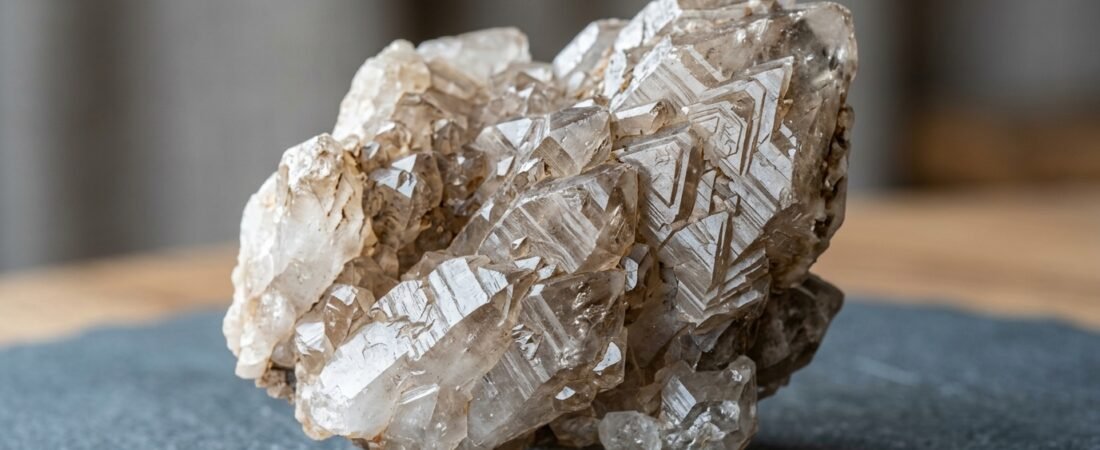
Few crystals command attention quite like elestial quartz. With its intricate layered surfaces, skeletal formations, and ancient geological character, this remarkable stone has captivated collectors, healers, and spiritual practitioners for decades. Unlike the smooth, polished appearance of many popular crystals, elestial quartz wears its complexity openly — every ridge, termination, and etched pattern telling part of a longer story written over millions of years.
This guide covers everything you need to know: what elestial quartz actually is, how it forms, what spiritual traditions associate with it, how to work with it practically, and how to find a genuine specimen worth adding to your collection. Whether you are encountering this crystal for the first time or deepening an existing practice, you will find thorough and accurate information throughout.
What Is Elestial Quartz and How to Identify It
Elestial quartz is a naturally occurring variety of quartz crystal distinguished by its complex, multi-layered terminations and etched or engraved surface patterns. The name derives from the word “celestial,” a nod to the otherworldly aesthetic these crystals project. They are sometimes called skeletal quartz, alligator quartz, or jacaré quartz — the latter term coming from the Brazilian Portuguese word for caiman, a reference to the reptilian texture visible on many specimens.
What sets elestial quartz apart from other quartz varieties is not its chemical composition, which remains silicon dioxide like all quartz, but the extraordinary way it grows. These crystals develop through repeated episodes of crystallization, producing stacked and overlapping terminations across the entire body of the stone rather than at a single apex. The result is a crystal that looks almost architectural — layered, complex, and deeply textured.
Physical Characteristics and Formation of Elestial Quartz
Elestial quartz forms when crystal growth is interrupted and then resumes multiple times, often due to changes in the surrounding geological environment such as shifts in temperature, pressure, or the availability of silica-rich fluid. Each interruption leaves a record on the crystal’s surface, creating the characteristic stepped terminations and etchings that define the variety. This process can span thousands or even millions of years, which contributes to the sense of depth these crystals carry.
The physical characteristics that distinguish elestial quartz include:
- Layered or skeletal terminations: Multiple termination points emerge across the body of the crystal rather than converging at one tip.
- Etched surfaces: The exterior of the crystal displays geometric markings, grooves, and indentations created by partial dissolution and re-growth cycles.
- Inclusions and phantoms: Many elestial specimens contain internal phantoms — ghost outlines of earlier growth stages — as well as mineral inclusions such as smoky coloration, chlorite, or iron oxides.
- Irregular, organic shape: Unlike faceted or cleanly tapered quartz points, elestials tend to appear asymmetric and sculptural.
Most elestial quartz comes from Brazil, particularly from the state of Minas Gerais, though specimens have also been found in Madagascar, Romania, and the United States. Brazilian material tends to be smoky or clear, while specimens from other origins may show different colorations or inclusion patterns.
Different Types and Varieties of Elestial Quartz
Elestial quartz appears in several distinct forms, each with its own aesthetic and energetic character. Understanding the varieties helps both collectors and practitioners make more intentional choices.
Smoky elestial quartz is perhaps the most common type. The smoky coloration results from natural irradiation of aluminum-containing quartz and ranges from pale grey to deep brown-black. These specimens tend to have a grounding, earthy quality that many crystal workers find stabilizing.
Clear or window elestial quartz presents the layered terminations in transparent or translucent material. The internal structure of these pieces is often visually stunning, with light traveling through multiple planes and revealing phantom formations and inclusions.
Amethyst elestial quartz, sometimes called skeletal amethyst, displays the characteristic elestial growth pattern in violet-purple material. These specimens are rarer and tend to be highly prized among collectors.
Chlorite elestial quartz incorporates green chlorite inclusions within the crystal body, adding a verdant tone to the layered structure. Citrine elestials also exist, though they are less frequently encountered.
It is worth noting that elestial quartz shares some visual similarities with other complex quartz types. Spirit quartz, for example, also features multiple terminations, but its secondary crystals cover a central point in a distinctly different pattern. Understanding these distinctions helps when selecting or identifying specimens.
Elestial Quartz Meaning and Spiritual Significance
The spiritual reputation of elestial quartz is substantial, and its meaning runs deeper than the aesthetic appeal of its surface. In metaphysical traditions, this crystal is often described as one of the most complex and high-vibrational stones available, believed to hold ancient wisdom and to facilitate profound transformation. Its layered growth is seen as a physical metaphor for the layered nature of consciousness, karmic experience, and spiritual evolution.
Many practitioners regard elestial quartz as a record keeper — a stone that carries energetic imprints from the earth’s history and, by extension, from the collective human experience. This perspective draws on the crystal’s visible geological record, where each growth layer represents a distinct period of time and change.
Metaphysical Properties and Healing Benefits of Elestial Quartz
The metaphysical properties attributed to elestial quartz are wide-ranging, reflecting the belief that its complex structure allows it to work across multiple levels simultaneously. It is important to present these as long-standing beliefs within crystal healing traditions rather than clinically proven effects — they represent a rich spiritual framework rather than medical science.
Within that tradition, elestial quartz is believed to support deep emotional healing by bringing suppressed feelings, old wounds, and unresolved patterns to the surface for acknowledgment and release. Practitioners describe it as a crystal that does not allow avoidance — it is said to gently but persistently illuminate what needs to be addressed.
The elestial quartz healing properties most frequently cited by crystal workers include:
- Emotional clearing: Believed to assist in releasing grief, trauma, and emotional stagnation accumulated over long periods of time.
- Spiritual awakening: Often used by practitioners seeking to accelerate their intuitive development or deepen their spiritual awareness.
- Mental clarity: Thought to cut through confusion and support clearer thinking, particularly in complex life situations.
- Karmic healing: In traditions that work with the concept of karma, elestial quartz is associated with understanding and resolving deep-seated patterns carried across lifetimes.
- Connection to higher guidance: Many users report a sense of expanded spiritual connection when working with this crystal, describing it as a bridge between ordinary consciousness and higher states of awareness.
Those drawn to lithium quartz for its calming influence may find elestial quartz a complementary tool — where lithium quartz soothes, elestial quartz is believed to excavate, creating space for genuine transformation rather than simple relief.
Elestial Quartz Chakra Connection and Energy Work
In chakra-based energy work, elestial quartz is most strongly associated with the third eye chakra and the crown chakra, though many practitioners consider it capable of engaging the entire chakra system simultaneously. Its layered structure is thought to resonate with the multi-dimensional nature of the energy body, allowing it to address blockages at multiple levels rather than targeting one specific area.
The third eye connection reflects the crystal’s traditional association with inner vision, intuitive insight, and the ability to perceive patterns and meanings beneath the surface of experience. Working with elestial quartz at the brow center is believed by many practitioners to enhance psychic sensitivity and support visionary states during meditation.
At the crown chakra, elestial quartz is associated with the dissolution of limiting beliefs and the expansion of spiritual awareness. Some energy workers describe it as a conduit for downloading higher-frequency information, particularly during periods of significant personal or spiritual transition.
For practitioners who work with grounding alongside expansion, smoky elestial quartz is especially valued. The smoky coloration brings an earth connection that balances the crown and third eye activation, preventing the disconnection that can sometimes result from intensely upward-directed energy work.
How to Use Elestial Quartz in Daily Life and Practice
One of the most important things to understand about elestial quartz is that it tends to work differently from many other crystals. Rather than providing a subtle, ambient influence, many users describe it as an active presence — a stone that appears to initiate shifts and surface material even when placed passively in a space. This quality makes thoughtful, intentional use particularly worthwhile.
Elestial quartz is not typically worn as jewelry in the way that smaller, smoother crystals are, largely because most specimens are substantial in size and irregular in form. Its primary applications are meditation, energy work, altar placement, and environmental use in personal or sacred spaces.
Elestial Quartz for Meditation, Protection, and Manifestation
Meditation is where most practitioners find elestial quartz most effective. Holding a specimen during seated practice is believed to deepen the meditative state and facilitate access to subconscious material, past-life impressions, or spiritual guidance. Many find that sitting quietly with the crystal held in both hands — allowing the mind to settle without forcing a particular outcome — yields the most meaningful experiences.
For those who use elestial quartz for protection, the underlying belief is that its high vibrational frequency creates a field that deflects lower-frequency energies. Placing it at the entrance of a home, near a workspace, or at the perimeter of a meditation area is a common practice among energy workers who use crystals for spatial clearing and protection.
In manifestation work, elestial quartz is understood to operate at a deep level — addressing not just the surface desire but the underlying beliefs and patterns that may be obstructing it. Some practitioners use it in manifestation rituals specifically for breakthroughs that have long been resisted, treating it as a tool for dissolving root causes rather than attracting outcomes directly.
Practical ways to incorporate elestial quartz into daily life include:
- Placing it on a nightstand to support dream recall and subconscious processing during sleep.
- Using it as a focal point during journaling or reflective writing practices.
- Setting it on an altar alongside other crystals as an anchor for intention work.
- Incorporating it into breathwork or body scan meditations, placing it on the body at the chest, forehead, or crown.
How to Cleanse and Charge Your Elestial Quartz Crystal
Given the intensity of the energetic work attributed to elestial quartz, regular cleansing is recommended by most crystal practitioners. The goal of cleansing, within this tradition, is to clear any accumulated energy and restore the crystal to a neutral, receptive state.
Several methods are commonly used:
- Sound cleansing: Using a singing bowl, tuning fork, or bell near the crystal is a widely recommended method. Sound vibration is considered one of the safest and most effective approaches, particularly for large or inclusion-rich specimens.
- Moonlight: Placing elestial quartz under the light of a full moon — ideally outdoors or on a windowsill — is a popular method for both cleansing and recharging.
- Smoke or incense: Passing the crystal through the smoke of sage, palo santo, or incense is another traditional approach. This method works well for irregular shapes that are difficult to submerge.
- Visualization: Some practitioners use intentional visualization, imagining white or golden light filling the crystal and clearing any accumulated energy. This requires no physical tools and can be done anywhere.
Avoid prolonged water submersion, particularly with smoky or inclusion-rich specimens, as water can penetrate fractures and damage the crystal over time. Similarly, extended direct sunlight can fade the coloration of naturally colored elestials.
Charging elestial quartz involves placing it in a location where it can absorb natural or intentional energy: sunlight for short periods, moonlight overnight, or near other cleansed and charged crystals. Many practitioners simply hold the charged crystal and set a clear intention, aligning their purpose with what they wish the stone to support.
How to Choose and Where to Buy Elestial Quartz
Finding quality elestial quartz requires some knowledge and discernment, particularly as the market for crystals has expanded and the potential for misrepresentation has grown alongside it. Whether shopping in person at a gem show or browsing an online shop, certain principles help ensure a worthwhile purchase.
Tips for Identifying Authentic Elestial Quartz
Authentic elestial quartz is identified by its natural, geological complexity rather than manufactured perfection. Unlike cut and polished stones, genuine elestials are raw or minimally worked, and their surface etchings and layered terminations are the product of natural growth rather than human intervention.
Key indicators of authenticity include:
- Natural surface texture: Real elestial quartz has organically etched surfaces with irregular grooves and recesses. If a surface looks artificially carved or suspiciously uniform, examine it more carefully.
- Consistent internal structure: When held to light, genuine elestials reveal natural inclusions, phantoms, and internal veiling consistent with geological formation. A completely flawless interior in an otherwise complex specimen may warrant scrutiny.
- Weight and density: Natural quartz feels substantial. Resin imitations are often lighter and warmer to the touch than stone.
- Provenance: Reputable sellers can typically indicate the origin of their specimens. Brazilian, Madagascan, or Romanian origins are most common for elestial quartz.
It is also worth knowing what elestial quartz is not. Some sellers may label complex or irregularly formed quartz specimens as elestial when they do not genuinely meet the definition. A true elestial quartz displays multiple terminations across the body of the stone, not just at the tip, along with the characteristic etched or skeletal surface pattern.
Elestial Quartz Price, Value, and What to Look For
The price of elestial quartz varies considerably depending on size, clarity, color, inclusion type, and origin. Small to medium-sized smoky elestials from Brazil are the most widely available and typically the most affordable, often ranging from fifteen to seventy-five dollars for raw specimens of reasonable quality. Larger, more visually dramatic pieces — particularly those with well-defined phantoms, unusual inclusions, or exceptional transparency — can command significantly higher prices, sometimes several hundred dollars or more.
Amethyst and citrine elestials are generally priced higher than smoky varieties due to their relative scarcity. Specimens from less common origins, such as Romania, may also carry a premium for collectors interested in geographic diversity.
When evaluating value, consider the following:
- Visual complexity: A specimen with clearly visible layered terminations, well-defined etchings, and interesting internal features offers more character and is typically valued accordingly.
- Size relative to detail: Larger specimens are not always more valuable if they lack the defining characteristics. A smaller but highly detailed elestial often outperforms a large but underdeveloped piece.
- Condition: Natural chips and irregularities are expected and generally acceptable. However, significant damage to key features such as primary terminations may reduce both aesthetic and perceived energetic quality.
- Seller reputation: Purchasing from established gem dealers, reputable metaphysical shops, or trusted online platforms with clear return policies reduces the risk of misrepresentation.
Collectors interested in exploring related quartz varieties alongside their elestial pieces may find it useful to compare with other complex forms. Spirit quartz, for example, offers a similarly multi-terminated structure with its own distinct energetic tradition, making it a natural companion piece for those building a quartz-focused collection.
Conclusion
Elestial quartz occupies a singular place in the world of crystals — not because of flashy coloration or dramatic clarity, but because of its extraordinary geological biography and the depth of meaning that both science and spiritual tradition find within it. Its layered terminations and etched surfaces are a visible record of time, change, and interrupted growth, qualities that resonate profoundly with anyone navigating transformation in their own life.
Whether you are drawn to elestial quartz for its aesthetic complexity, its metaphysical reputation, or simply the sense of ancient presence it carries, engaging with it thoughtfully will always yield more than passive admiration. Choose your specimen with care, tend to it regularly, and approach your work with it with genuine intention. In return, this is a crystal that many practitioners describe as one of the most enduring and meaningful companions in their collection.
About the Author
Didier Lancelot is an independent author and creator of the Everyday AI Series, with books on wellbeing, natural living, cooking and practical technology. Explore all his books on his Amazon Author page or visit Narmer Store.