
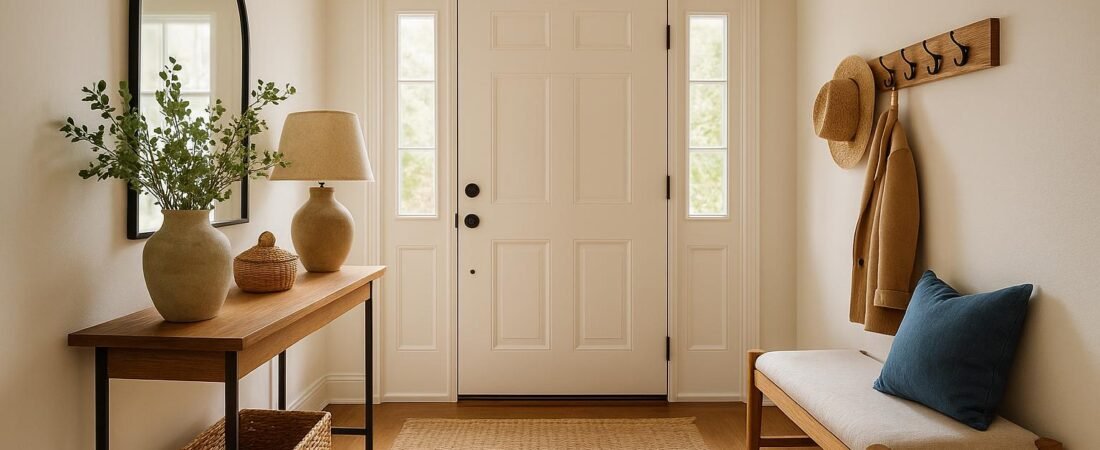
Your entryway sets the tone for your entire home long before guests see your living room or kitchen. It’s the first impression, the daily launch pad, and the landing zone when you walk through the door with arms full of bags and mail. The best entryway interior design combines personality with practical function, so the space looks intentional and still works hard every single day.
Use the ideas below to turn any entrance—large or small—into a welcoming, organized, and memorable part of your home.
Start With a Plan: How Do You Really Use Your Entry?
Before choosing paint colors or a new light fixture, get clear on how your entryway needs to work. Ask yourself:
- What actually lands here every day? Coats, shoes, backpacks, keys, dog leashes, packages, sports gear?
- How many people use this entry regularly? A single person has different storage needs than a family of five.
- What’s the traffic pattern? Do people walk straight through, turn a corner, or step into a larger foyer?
- What’s visible from the entry? Note colors and materials in the adjoining rooms that you’ll want to echo.
Design around these realities first. Once you’ve nailed the flow and storage, you can layer in style—with a focal point, lighting, and textures that make the space feel curated instead of chaotic.
Choose One Strong Focal Point
A memorable entryway usually has one clear visual anchor. It gives the eye a place to land and instantly communicates your design style.
Ideas for an Entryway Focal Point
- A large mirror: Classic, practical, and ideal for small or dark entryways because it bounces light around and visually doubles the space.
- Expressive artwork: A single oversized piece sets the tone—modern, traditional, playful, or minimal—without extra clutter.
- Distinctive wallpaper: A bold print or textured wallcovering can turn a small foyer into a jewel box moment.
Whichever you choose, keep everything around it pared back. If your artwork is dramatic, use simpler lamps and a restrained console display. If the wallpaper is busy, opt for a clean-lined mirror and minimal accessories. One standout feature plus quiet supporting players always looks more sophisticated than several elements competing for attention.
Make the Color Feel Connected to the Rest of the Home
Entryway color does heavy lifting: it can make a small space feel inviting, a dark hallway brighter, or a grand foyer more intimate. The key is to connect your choices to what’s happening in adjacent rooms so the transition feels intentional.
Color Strategies for Different Entryways
- Small or enclosed entries: A bold color or pattern can give a tiny foyer personality. Deep blues, rich greens, or warm terracottas feel especially welcoming in compact spaces.
- Dark, narrow hallways: Light neutrals—off-whites, greiges, soft taupes—reflect more light and help the space feel more open and airy.
- Open-plan entries: If your door opens straight into the living or dining area, choose a color that either matches or gently shifts from the main space so it feels like part of one cohesive story.
To keep things connected, repeat at least one element from the next room: a wood tone, metal finish, accent color, or fabric texture. For example, pick up the oak from your living room shelves in your entry console, or echo a navy sofa with a navy runner or artwork near the door.
Layer the Lighting for Warmth and Function
Good entryway lighting is both welcoming and practical. One overheard bulb isn’t enough if you want the space to feel inviting—or to actually find your keys.
How to Layer Entryway Lighting
- Ceiling fixture: Start with a quality overhead light—pendant, flush mount, or chandelier—appropriately scaled to the space. This sets the overall mood.
- Wall sconces: If wall space allows, sconces can flank a mirror, console, or artwork, adding flattering, eye-level light and architectural interest.
- Table or console lamp: A lamp on a console brings soft glow and makes the entry feel like a room instead of a pass-through. It also signals “welcome home” when switched on at night.
Aim for at least two light sources in most entryways. Use warm bulbs (around 2700–3000K) to avoid a harsh, overly bright feel, and consider dimmers if your foyer connects to more formal or relaxed living spaces.
Give Everyday Items a Clear Home
The fastest way to make an entryway look messy is to have no plan for the everyday clutter. Functional storage is what keeps your design from being undone by real life.
Smart Entryway Storage Ideas
- Hooks for vertical storage: Wall hooks or a slim coat rack keep frequently used coats, hats, bags, and dog leashes off the floor and easy to grab.
- Shoe storage: Use a closed shoe cabinet, under-bench baskets, or a low shelf for the pairs you actually wear most. Avoid a pile near the door.
- Hidden drawers or cubbies: Built into a console or custom millwork, they’re ideal for sunglasses, gloves, chargers, and other small items that otherwise float around.
- Mail and paperwork: Add a wall-mounted sorter, tray, or small file box. Create a dedicated spot so mail doesn’t spread across every surface.
Work backward from what tends to accumulate now. If your kids drop backpacks on the floor, add low hooks or cubbies. If you’re constantly looking for keys, make space for a specific catchall tray. Design the storage to serve existing habits rather than fighting them.
Add a Useful Landing Spot
Every well-designed entry has a surface where you can drop things the second you walk in. The right landing spot keeps chaos contained and makes coming and going smoother.
Landing Spot Options by Space Size
- Standard-entry or foyer: A narrow console table or cabinet is ideal. Top it with a tray or bowl for keys, a small lamp, and maybe one decorative object.
- Very tight or apartment entry: Use a wall-mounted shelf, floating ledge, or a shallow cabinet that holds essentials without blocking the walkway.
- Back-door or family entry: A sturdy bench plus a row of hooks above it can serve as both landing zone and drop spot for daily gear.
Prioritize circulation; if a full console makes the space feel cramped, scale down. It’s better to have a slim solution that’s easy to move around than a beautiful piece that you bump into every day.
Use Seating When It Earns Its Space
Seating in an entryway should be more than decorative. It needs to justify the floor space by adding real function or visual gravitas.
When and How to Use Entry Seating
- Benches with storage: Perfect in small to medium entryways. Look for styles with drawers, a lift-up seat, or room beneath for baskets and shoes.
- Chairs or stools: In a narrower hallway, a single accent chair, stool, or ottoman can provide a spot to sit without feeling bulky.
- Central seating or table in a large foyer: A round table with stools tucked underneath, or a sculptural bench in the center of a grand space, can make the room feel like a destination instead of a corridor.
If you never sit down to put on shoes and the space is tight, skip seating altogether. Use that footprint for something you will appreciate daily—like additional storage or a larger mirror.
Bring in Texture and Life
Once the big elements are in place, texture and living accents make your entry feel warm and personal. The aim is inviting, not over-decorated.
Finishing Touches That Work Hard
- Durable rugs and runners: Choose a flatweave or low-pile rug that can handle heavy traffic and is easy to clean. Pattern helps disguise dirt between cleanings.
- Greenery or flowers: A potted plant, small tree in a basket, or a simple vase of fresh or faux stems adds height, color, and life.
- Personal objects: A framed photo, a favorite coffee table book, or a meaningful travel memento can make the space feel like yours without overwhelming it.
Keep entryway surfaces edited. Try a simple formula: one functional element (like a tray), one source of height (lamp or vase), and one personal accent. When you notice piles creeping in, reset to this baseline.
Match the Design to the Footprint
Not all entryways are created equal. Designing to scale is what makes an entry feel intentional, whether you’re working with a tiny apartment hall or a generous front foyer.
If You Have a Small or Narrow Entry
- Favor slim, shallow furniture (often 10–14 inches deep) to maintain comfortable walking space.
- Use vertical storage—hooks, tall mirrors, narrow shelving, or wall cabinets—to get items off the floor.
- Lean into mirrors, light colors, and good lighting to keep the area from feeling cramped.
If You Have a Large Foyer
- Use larger-scale pieces—oversized art, a central round table, or a substantial console—to avoid a “furniture floating in a void” feeling.
- Create zones: a seating or conversation area, a clear path from door to other rooms, and a defined storage or drop zone.
- Consider architectural details like moulding, paneling, or statement lighting to give the volume of the space more character.
The goal in both cases is the same: the entry should feel like a real room that belongs to your home’s overall story, not a leftover passageway.
Bringing It All Together
A great entryway interior design doesn’t happen by accident. Start with how you live: decide what the space needs to store and how people move through it. Then choose one strong focal point, layer in thoughtful lighting, and add the right mix of storage and landing spots. Finish with texture, greenery, and a few personal touches.
When you follow that order—function first, personality next, editing always—you create an entry that makes a polished first impression and keeps working beautifully on even the busiest days.
Discover More from Didier Lancelot
Amazon Author page: amazon.com/author/didierlancelot
Narmer Store: narmerstore.org
AI and Technology Ebooks
- Creative AI: Animated Drawings, Manga & Illustrations
- Build a Game with AI: The No-Code Guide
- AI Image Generation Made Easy
- Build a Website with AI: The No-Code Guide
- How to Connect AI to Your Blog: The Ultimate Automation Guide
- AI Productivity Habits: Get More Done in Less Time
- AI Avatars Made Easy
- The Book of AI Prompts: 100+ Proven Prompts
- Make Music with AI: Suno, Udio and AI Music Generators
- Click to Cash
- The Automated Edge: Outwork, Outpace, and Outperform with AI
- AI Side Hustle: How to Make Money with ChatGPT and AI Tools
- Work Smarter with AI
Health, Lifestyle and Home Ebooks
- Hidden Superfoods: The World’s Most Powerful Healing Foods
- Spanish Food: The Complete Cookbook for Authentic Home Cooking
- The Science of Happiness Explained
- The Psychology of Success
- The Secret Sauce of Consistency: What the Experts Don’t Tell You About Fitness
- The Complete Home Bartender’s Guide: Link 1 | Link 2
- Natural Beauty, Made Simple: Easy DIY Organic Skincare Recipes
- Garden Made Simple: Easy, Beginner-Friendly Techniques
- The Dog Training Bible