
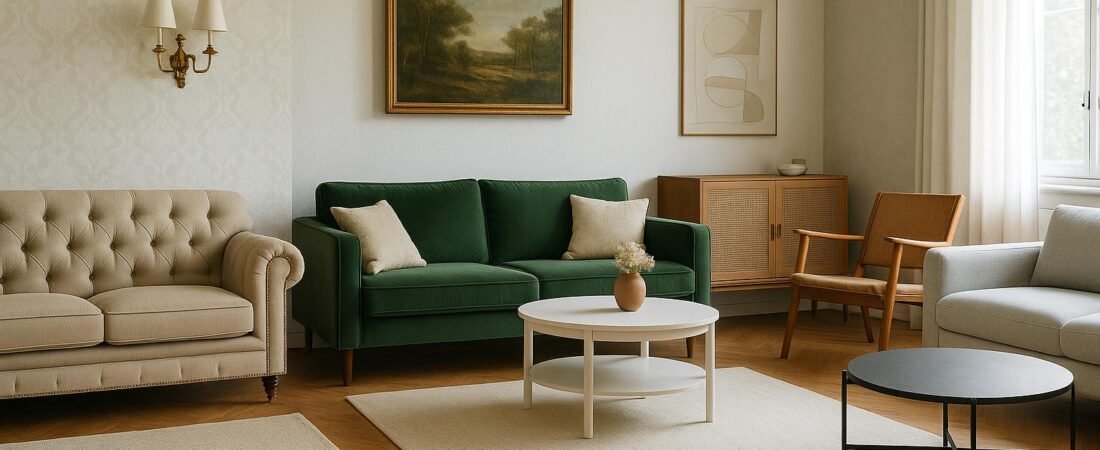
Interior Design Styles Explained: From Classic to Contemporary
Walk into ten beautiful homes and you’ll probably see ten different ways to “do” interior design. Some feel formal and timeless, others sleek and minimal, and many mix elements from several styles. Understanding interior design styles isn’t about memorizing labels; it’s about recognizing the repeatable design systems behind them—how color, materials, furniture shapes, and mood work together.
This guide breaks down the major interior design styles from classic to contemporary, shows how they differ, and explains how they now blend in real homes. By the end, you’ll be able to look at a room and instantly understand the style decisions behind it—and make smarter choices for your own space.
What Is an Interior Design Style, Really?
Think of an interior design style as a repeatable recipe:
- Color palette – which colors dominate the space
- Materials – woods, metals, fabrics, stone, glass, etc.
- Furniture shapes – curved or straight, ornate or simple, heavy or airy
- Overall mood – formal or casual, cozy or sleek, quiet or bold
Change any one ingredient and you get a slightly different flavor; change all of them and you’ve stepped into a different style. Most well-designed rooms today aren’t locked into one rigid category—they blend elements from multiple styles while still feeling cohesive.
Three Big Families of Interior Design Styles
Most popular interior design styles fall into three broad buckets:
- Classic / Traditional – formal, symmetrical, timeless
- Modern / Minimal – clean-lined, functional, uncluttered
- Warm Contemporary / Blended – current, softer, layered, and highly mixable
Let’s look at each group and the key interior design styles within them.
Classic & Traditional Styles
Traditional / Classic Interior Design
Best for: Lovers of timeless elegance, symmetry, and a slightly formal feel.
Palette: Rich, warm neutrals (creams, taupes, beiges) with deeper accent tones like navy, forest green, burgundy, or chocolate brown.
Materials: Darker stained woods (mahogany, walnut, cherry), classic stone, wool and silk rugs, linen, damask or floral fabrics, sometimes touches of brass or antique gold.
Furniture shapes: Curved arms, rolled backs, carved legs, tufted upholstery, skirted sofas, wingback chairs, and traditional casegoods (chests, buffets, credenzas).
Mood: Symmetrical, orderly, and refined. Rooms often feel composed and “finished,” with pairs of lamps, matching end tables, and centered artwork. The mood is more formal and timeless than trendy.
Traditional design is ideal if you want your interior to feel like it could have looked good 20 years ago and will still look good 20 years from now. Even when updated with lighter palettes and simpler fabrics, it still leans on balance, structure, and a sense of history.
Transitional: The Bridge Between Traditional and Modern
Best for: People who want something classic but not fussy; modern but not stark.
Palette: Soft neutrals—warm whites, greiges, taupes—often with a quiet contrast (charcoal, navy, chocolate, or muted blues and greens).
Materials: Medium-tone woods, simple stone, textured neutrals (bouclé, linen, cotton), matte or brushed metals in black, bronze, or brass.
Furniture shapes: Clean but comfortable: square or slightly rounded arms, simple silhouettes, minimal carving or ornament, often with generous cushions.
Mood: Calm, inviting, and polished. Transitional interiors feel tailored and cohesive without being rigid. There’s often a balance of straight and curved lines, with enough ornament to avoid sterility but not so much that it feels old-fashioned.
Transitional design is one of the most widely used whole-home styles because it’s approachable and flexible. You can pair a classic rug with a modern sofa, or a traditional console with contemporary art, and it all still feels intentional.
Modern & Minimal Styles
Modern Interior Design (Not the Same as Contemporary)
Best for: Fans of mid-20th-century design and crisp, edited spaces.
Key distinction: Modern refers to a defined historical style (rooted in early- to mid-20th-century design), while contemporary means “of the moment” and constantly evolves.
Palette: Neutral bases (white, black, gray, beige) with limited accent colors; contrast is often high—black-and-white combinations are common.
Materials: Glass, steel, polished or natural wood, leather, stone, and man-made surfaces like laminate and lacquer. Ornament is minimal; surfaces are generally smooth.
Furniture shapes: Clean, straight lines, low profiles, and a focus on function. Furniture often has slim legs, angular forms, and little to no decorative carving.
Mood: Streamlined, functional, and a bit architectural. There’s a sense of clarity and order, with every piece earning its place. Art and statement lighting often provide the drama.
Mid-Century Modern
Best for: Those who love retro character, warm wood, and iconic design.
Palette: Warm woods with neutrals plus accent colors like mustard, teal, olive, rust, or terracotta. In 2026, deeper earth tones like chocolate, burgundy, and spicy reds feel especially current.
Materials: Walnut and teak, molded plastic, leather, tweed-like fabrics, glass, and metal. Surfaces are usually smooth with a subtle sheen rather than high gloss.
Furniture shapes: Organic curves and clean lines together—think tapered legs, low-slung sofas, rounded edges, and simple silhouettes. Iconic pieces (Eames chairs, tulip tables, credenzas) define the look.
Mood: Retro yet surprisingly timeless. Mid-century modern interiors feel warm and relaxed but still orderly and design-forward. They’re a natural fit for open-plan spaces and smaller homes alike.
Minimalist Interior Design
Best for: People who value clarity, space, and very intentional living.
Palette: Muted neutrals: whites, soft grays, pale beiges. Occasionally a single accent color is used sparingly.
Materials: Smooth, uncluttered surfaces—plaster, lacquer, light wood, stone, glass, and metal. Decoration is reduced to a few carefully chosen pieces.
Furniture shapes: Very simple, often rectilinear or gently rounded, with zero “extra” details. Built-ins are common to hide storage and minimize visual noise.
Mood: Quiet, calm, and highly controlled. Every object has a purpose; empty space is treated as a design element. The room feels open and uncluttered, sometimes austere.
Current design trends are moving away from stark, ultra-minimal interiors and toward softer, more layered minimalism. You’ll see more texture, warmer neutrals, and curves even in otherwise pared-back spaces.
Warm Contemporary & Blended Styles
Contemporary Interior Design
Best for: Anyone who wants their interior to feel current, fluid, and unbound by one era.
Key idea: Contemporary design is “of the now”. It’s not one fixed look—it shifts as tastes and technology evolve.
In the mid-2020s, contemporary interiors are characterized by:
Palette: Softer neutrals (warm whites, oatmeal, mushroom, greige) with warm, moodier accents: chocolate brown, burgundy, terracotta, rust, deep greens, and dusty blues.
Materials: A mix of natural and refined: light and mid-tone woods, stone, textured plaster, bouclé, linen, wool, ceramic, and softened metals (brushed nickel, bronze, black, and aged brass).
Furniture shapes: Curves and rounded silhouettes are key: arched doorways, barrel-back chairs, waterfall edges, and softened corners. Straight lines are still present but balanced with more organic forms.
Mood: Edited but welcoming. Spaces feel open and fresh, yet layered with texture and personality. There’s often a curated mix of new pieces, vintage finds, and crafted objects.
Scandinavian Interior Design
Best for: Those who love bright, airy, and functional spaces with a cozy edge.
Palette: Light and fresh: white, soft gray, pale beige, and light wood with subtle pastel or muted color moments.
Materials: Pale woods (oak, birch), cotton, linen, wool, and sheepskin, often with woven baskets and ceramic accents. Surfaces tend to be matte rather than shiny.
Furniture shapes: Simple, practical, and often slightly rounded. Slim legs, gently curved backs, and unfussy lines keep things visually light.
Mood: Calm, optimistic, and livable. Scandinavian design emphasizes comfort (hygge), natural light, and uncluttered practicality. It’s a natural base for many modern apartments and smaller homes.
Japandi: Japanese–Scandinavian Fusion
Best for: Minimalists who still want warmth, texture, and a sense of sanctuary.
Palette: Earthy neutrals: warm whites, stone, sand, mushroom, charcoal, and inky blacks, with occasional muted greens or browns.
Materials: Natural and tactile: light and mid-tone woods, bamboo, rattan, linen, cotton, wool, handmade ceramics, and natural stone. Black accents often ground the space.
Furniture shapes: Low-slung, simple, and often rectilinear with softened edges. Think bench-style seating, slim-lined tables, and unobtrusive storage.
Mood: Calm, meditative, and grounded. Japandi brings together Japanese restraint and Scandinavian warmth, making it one of the defining “quiet luxury” looks of the 2020s and still prominent in 2026 trend forecasts.
Industrial Interior Design
Best for: Loft dwellers, urban spaces, and anyone drawn to raw, edgy character.
Palette: Grays, charcoals, blacks, and browns; often anchored by exposed materials like brick and concrete. Warmth comes via leather, wood, and strategic lighting.
Materials: Exposed brick, concrete, steel, iron, reclaimed wood, and simpler textiles like canvas or leather. Ductwork and beams are often left visible.
Furniture shapes: Straightforward and sturdy: metal-framed pieces, chunky wood tables, leather sofas, and simple barstools. Factory- and warehouse-inspired lighting is common.
Mood: Gritty-meets-chic. Industrial interiors feel urban, open, and a little dramatic. The best ones balance the harder elements with softer textiles and warm lighting so they still feel inviting.
Bohemian / Eclectic Interior Design
Best for: Collectors, creatives, and maximalists at heart.
Palette: Often rich and layered—warm neutrals plus jewel tones, earthy hues, or playful brights. In 2026, moody tones (burgundy, terracotta, deep green, chocolate) feel especially on point.
Materials: Lots of textiles and pattern: kilim or Moroccan rugs, throws, cushions, tapestries, lace, fringe, cane and rattan, worn leather, and global or vintage pieces. Handcrafted items are key to making it feel authentic rather than chaotic.
Furniture shapes: Mixed and matched across eras: a carved wooden chair next to a modern sofa, a vintage trunk as a coffee table, layered rugs under a mid-century sideboard.
Mood: Personal, artistic, and relaxed. Eclectic spaces feel like they’ve been built up over time through travel, collecting, and experimentation. The best ones still have a clear color story or repeated materials tying everything together.