
Interior Design Trends You’ll See Everywhere This Year
In 2026, interior design is officially over its all-white, hyper-minimalist phase. The spaces taking over your feed now are warmer, richer, and far more personal. Think: color-drenched rooms, collected objects, soft curves, and tactile finishes you actually want to touch.
Instead of striving for “perfect” showrooms, designers are creating homes that feel lived in, layered, and deeply comfortable. Below, you’ll find the biggest interior design trends you’ll see everywhere this year, plus practical ideas for bringing each one into your own space.
1. Color Drenching & Deeper, Moodier Palettes
White walls aren’t gone, but they’ve lost their monopoly. In 2026, color is back in a big way—especially rich, enveloping hues.
What’s trending now
- Color-drenched rooms where the walls, trim, doors, and sometimes even ceilings are painted the same shade for a cocooning effect.
- Moody neutrals like mushroom, taupe, and olive-gray instead of stark black-and-white contrast.
- Deep, warm tones such as burgundy, chocolate brown, cognac, terracotta, and inky blues or greens.
- Jewel tones—emerald, sapphire, plum—used in smaller doses on upholstery, drapery, or cabinetry.
How to use this trend at home
- Start with a single room. A bedroom, dining room, or powder bath is ideal for trying a deeper palette without committing your whole home.
- Paint the trim and doors. Even if you keep lighter walls, painting the trim and doors in a richer tone instantly updates the space.
- Layer tone-on-tone. Mix various shades of the same color (e.g., forest green walls with sage textiles and bottle-green glass) for depth.
- Balance with texture. When you go darker with color, add plenty of linen, wool, wood, and woven elements so the room feels warm, not heavy.
2. Layered Maximalism (Without the Clutter)
Minimalism’s clean lines are giving way to “maximalism with restraint”—spaces that feel full and expressive, but still intentional and edited.
What it looks like in 2026
- Curated collections of books, art, ceramics, and travel finds on shelves and consoles.
- Pattern mixing—stripes with florals, checks with paisleys—anchored by a cohesive color story.
- Layered textiles like stacked rugs, oversized throws, and piles of cushions in varied fabrics.
- “Collected over time” styling rather than matching sets and showroom-perfect arrangements.
How to layer like a pro
- Pick a palette and stick to it. Choose 3–4 main colors and repeat them across patterns and accessories to keep the room unified.
- Edit once you’ve styled. Add everything you love, then remove 20–30% so the room feels full but not chaotic.
- Vary scale. Combine small-scale prints (pinstripes, tiny florals) with larger motifs (bold botanicals, wide stripes) for visual interest.
- Use surfaces wisely. Keep everyday zones like coffee tables partly clear and lean into vertical storage, shelves, and walls for display.
3. Curves & Sculptural Silhouettes
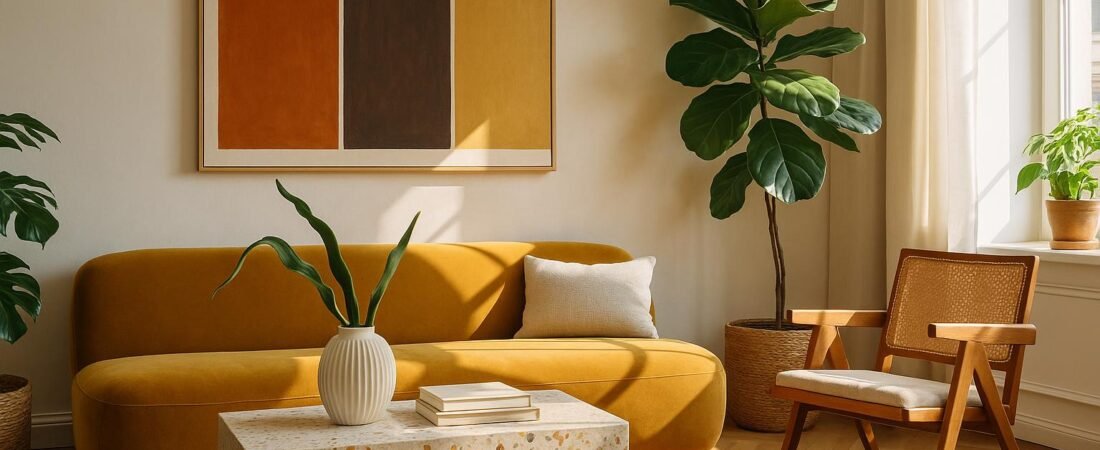
Curved furniture has been popular for a few seasons, and it’s not disappearing—just evolving. Instead of only cloud-like sofas, 2026 favors sculptural pieces that feel a bit more tailored and architectural.
Key elements of this trend
- Rounded sofas and chairs with gentle curves rather than sharp right angles.
- Sculptural accent chairs and stools that double as functional art.
- Curved edges on tables and millwork—think waterfall edges, arched doorways, and rounded corners.
- Channeling and soft geometry on headboards, banquettes, and upholstered walls.
How to bring in curves
- Swap a single piece. A curved accent chair or rounded coffee table will soften an otherwise boxy room.
- Lean into arches. If a remodel is on the table, arched openings, niche shelving, or arched interior windows feel current yet timeless.
- Use lighting as sculpture. Choose a wavy floor lamp, a mobile-style chandelier, or globe pendants to introduce soft shapes overhead.
4. Texture-Forward & Tactile Finishes
Visual flatness is out. This year is all about texture you can see and feel, from fluted surfaces to handcrafted tiles.
Textural details you’ll be seeing
- Fluted and reeded millwork on kitchen islands, bathroom vanities, sideboards, and built-ins.
- Layered textiles like bouclé, wool, velvet, nubby linens, and chunky knits.
- Handmade finishes—zellige and other artisanal tiles, limewash and plaster walls, hand-thrown pottery.
- Patinated metals (brass, bronze, copper) instead of ultra-polished chrome everywhere.
Easy ways to add tactile richness
- Mix at least three textures per room. For example: linen sofa, wool rug, leather ottoman, and a marble or wood coffee table.
- Upgrade a flat surface. Add fluting to a plain island, swap in reeded glass cabinet doors, or choose a ribbed side table.
- Layer rugs. Place a patterned wool rug over a larger jute or sisal base for instant depth.
- Change your hardware. Replace standard pulls and knobs with mixed-metal, hammered, or leather-wrapped versions.
5. Heritage Revival: Vintage, “Grandma Chic,” & Character Details
Cold, anonymous spaces are out; homes with history are in. Even in new builds, designers are weaving in details that feel storied and bespoke.
What’s driving the heritage trend
- Antiques and vintage finds mixed with contemporary pieces for contrast.
- Traditional architectural details like crown molding, picture rails, ceiling medallions, and paneled doors.
- Wallpaper—from tiny florals and chintz to bold murals and stripes—used in hallways, bedrooms, and powder rooms.
- Heirloom-style upholstery such as skirted sofas, slipcovered chairs, and tailored drapery.
How to add character (even in a new build)
- Hunt for one standout vintage piece. A dining table, chest of drawers, or statement mirror can anchor an entire room.
- Invest in molding. Box paneling on a single wall, upgraded baseboards, or a ceiling medallion around your light fixture adds instant charm.
- Try wallpaper strategically. Use it on the ceiling, inside a built-in, or in a small powder room for big impact without overwhelming your home.
- Mix eras intentionally. Pair an antique dresser with a modern lamp and abstract art so the room feels fresh, not museum-like.
6. Natural & Organic Modernism
The pull toward nature is stronger than ever, but it’s less “farmhouse rustic” and more refined, organic modernism. The goal: serene spaces that still feel warm and grounded.
Natural elements that are trending
- Warm wood tones—oak, walnut, and ash in natural or mid-range stains rather than cool gray.
- Terracotta and clay in tiles, planters, lamps, and tableware.
- Woven materials like rattan, cane, seagrass, and raffia on furniture, lighting, and baskets.
- Paper lanterns and fabric shades that diffuse light softly.
- Organic shapes and motifs—botanical prints, stone forms, and freeform tables or mirrors.
Ways to bring the outside in
- Layer natural textures. Combine wood, stone, linen, and rattan in every room for a cohesive, grounded feel.
- Update lighting. Swap a harsh overhead fixture for a paper lantern or natural-fiber pendant.
- Add greenery. Real plants (or high-quality faux) soften modern lines and connect your space to nature.
- Use earthy palettes. Sand, clay, moss, and stone-inspired colors pair beautifully with bolder accents.
7. Book-Led & Library-Focused Spaces
In a digital-first world, books are becoming powerful design elements. In 2026, rooms centered around reading, collecting, and displaying are surging in popularity.
How this trend shows up
- Built-in bookcases that stretch wall-to-wall or floor-to-ceiling.
- “Book drenching”—shelves fully loaded, color-blocked, or styled in dense, intentional arrangements.
- Reading corners and mini libraries in primary bedrooms, hallways, and underused nooks.
- Library-style details such as ladder rails, swing-arm sconces, and tufted or slipcovered reading chairs.
Simple ways to design with books
- Create a hero wall. Dedicate one wall to shelving—built-in or modular—and treat it as the focal point of the room.
- Style in layers. Combine vertical and horizontal stacks, add a few objects (bookends, bowls, framed photos), and vary heights for rhythm.
- Carve out a reading nook. A comfortable chair, good light, a side table, and a throw are all you need.
- Use books as color. Group spines by color for a bold, graphic statement, or keep them more neutral for a quieter look.
8. Lifestyle-Driven, Comfort-First Rooms
The biggest shift of all: design is being led by lifestyle rather than pure aesthetics. It’s not about a space that photographs well; it’s about a space that works beautifully for the way you actually live.
Where we’re seeing this most
- Kitchens as living hubs with generous islands, seating nooks, open shelving for everyday items, and warm finishes.
- Primary bedrooms treated like mini suites, complete with seating, soft lighting, and more intentional storage.
- Wellness spaces—from yoga corners and meditation nooks to spa-inspired bathrooms and cold plunge zones in some homes.
- Flexible rooms that can quickly shift between work, play, guests, and downtime.
Designing for real life
- Start with function. List what you actually do in each room (work, relax, entertain, exercise) and design around those activities first.
- Prioritize comfort. Choose supportive seating, generous rugs, blackout shades where needed, and layered lighting over trend-only pieces.
- Build in storage. Closed cabinets, benches with hidden compartments, and baskets keep visual noise down without forcing minimalism.
- Zone your space. Use rugs