
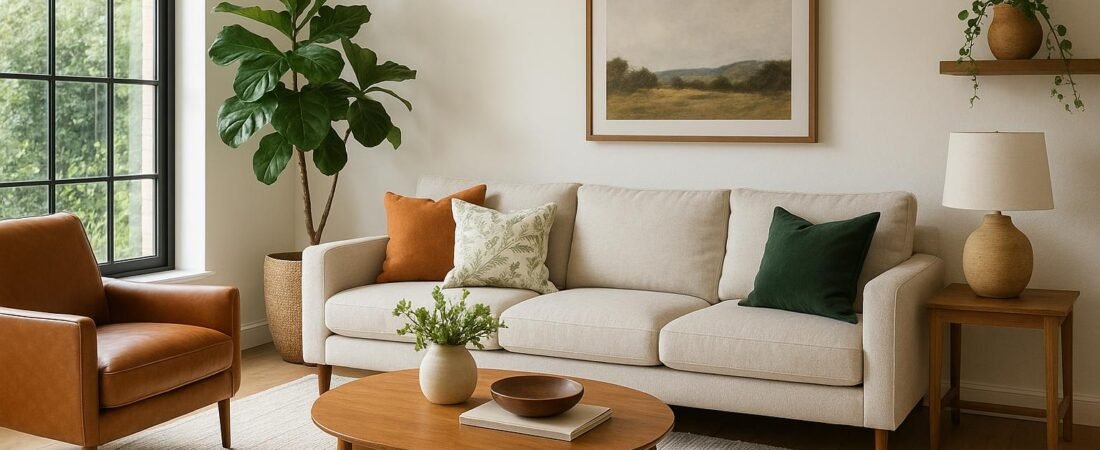
Your living room is the hardest-working space in your home. It’s where you unwind at the end of the day, host friends, watch movies, play with kids, and sometimes even work. A beautiful living room isn’t just about matching cushions and a stylish sofa; it’s about creating a space that truly fits the way you live.
Below, you’ll find practical living room interior design ideas that work for almost any home or style. Use them as a roadmap to design a space that’s comfortable, flexible, and full of personality.
Start With How You Actually Use Your Living Room
Before you buy a single cushion or paint a wall, get clear on your living room’s job.
- Do you mostly relax and watch TV?
- Do you entertain often and need seating for guests?
- Do kids use the room for play?
- Do you need a quiet reading corner or a work-from-home spot?
List your top three activities, then prioritize them. This will guide every decision that follows—layout, furniture, color, and lighting. A living room that’s designed around your real life will always feel more inviting than one styled only for show.
Plan the Layout Around People, Not Just the TV
Good living room layout design starts with people: where they sit, talk, and move. The TV, fireplace, or view can be a focal point, but they don’t have to be the only one.
Create Conversation-Friendly Seating
Arrange your seating so people can face each other comfortably without shouting across the room.
- Pull furniture in from the walls: Even in small rooms, floating the sofa a few inches can make the space feel more intentional and cozy.
- Form a U or L shape: Combine a sofa with chairs or a sectional and an accent chair to create a natural conversation zone.
- Use a coffee table with the right reach: Aim for about 40–50 cm (16–20 inches) between the sofa and table so drinks and books are within easy reach.
Define Zones in Larger or Open-Plan Spaces
In open-plan living rooms or larger spaces, zoning gives structure and intimacy.
- Use area rugs: Place a rug under the main seating group to visually anchor the space. A second rug can define a reading nook or play area.
- Back-of-sofa solutions: Put a console table or low shelf behind a sofa to subtly mark the edge of a zone.
- Angle furniture: Slight angles can help differentiate zones without blocking sightlines.
Choose Furniture That Fits Your Floor Plan
Furniture should fit the room you have, not the room you wish you had. Scale and proportion are crucial in living room design.
For Compact Living Rooms
- Consider modular or multifunctional pieces: Think nesting tables, an ottoman that doubles as a coffee table, or a sofa bed for guests.
- Use slim profiles: Choose sofas and chairs with slimmer arms and raised legs to keep the room feeling light and open.
- Mind the walkways: Leave at least 75–90 cm (30–36 inches) for main circulation paths so the room doesn’t feel cramped.
For Larger Living Rooms
- Avoid “furniture islands”: A lonely sofa in the middle of a big room will feel awkward. Add additional seating, a generous rug, or a second zone.
- Create multiple seating areas: A main conversation area plus a reading corner, a game table, or a spot by the window keeps the room flexible and welcoming.
- Balance the scale: Larger rooms can handle deeper sofas, generous coffee tables, and taller bookcases, as long as they are arranged thoughtfully.
Use Color to Set the Mood
Color is one of the most powerful tools in living room design. It shapes mood, makes a space feel larger or cozier, and helps tie the room together.
Lean Into Nature-Inspired Shades
Earthy neutrals and nature-inspired colors are especially versatile and timeless:
- Soft neutrals: Warm whites, taupes, and stone greys create a calm backdrop for almost any style.
- Greens and browns: Olive, sage, forest green, and rich browns add depth and connect your living room to the outdoors.
- Muted blues: Dusty or slate blues bring serenity without feeling cold.
Introduce Personality With Color Highlights
- One bold wall: A feature wall in a deeper tone behind the sofa or fireplace can add drama without overwhelming the room.
- Colorful art or textiles: Cushions, throws, and artwork are easy ways to change the color story over time.
- A statement sofa or chair: If you love color, a vivid sofa or accent chair can be the star of the room.
Always test paint in your actual living room. Place swatches on different walls and observe them in morning, afternoon, and evening light before committing.
Layer Lighting for Comfort and Flexibility
A well-lit living room is never about a single ceiling fixture. Layered lighting lets you switch from bright and energizing to soft and cozy with minimal effort.
Combine Ambient, Task, and Accent Lighting
- Ambient lighting: Ceiling fixtures, recessed lights, or large pendants provide overall illumination.
- Task lighting: Floor and table lamps next to sofas and chairs are essential for reading, working, or hobbies.
- Accent lighting: Picture lights, wall sconces, or LED strips on shelves add depth and highlight artwork or architectural features.
Use Lighting as a Design Feature
- Statement pendant or chandelier: In taller or larger rooms, a standout light can act as a focal point.
- Warm bulbs: Aim for warm white (around 2700–3000K) in living rooms to avoid a harsh, clinical feel.
- Dimmer switches: Dimmers instantly make your lighting more versatile—ideal for movie nights or relaxed evenings.
Add Texture for Warmth and Depth
Texture is what makes a living room feel layered and inviting rather than flat and “catalog-perfect.” Mixing materials creates visual interest and a sense of coziness.
- Rugs: Even over hard flooring, a rug anchors the seating area and softens sound. Choose sizes that allow the front legs of sofas and chairs to sit on the rug.
- Textiles: Combine different cushion fabrics (linen, velvet, wool, cotton) with throws and curtains to add richness.
- Natural materials: Wood, rattan, jute, stone, and ceramics bring warmth and a more relaxed, organic feel.
- Contrasts: Balance smooth surfaces (glass, metal) with softer ones (upholstery, knits) to keep the room from feeling flat.
Make a Small Living Room Feel Bigger
Even the most compact living room can feel open and airy with a few smart design choices.
- Space-saving furniture:
- Opt for a loveseat or slim sectional instead of an oversized sofa.
- Choose nesting tables or a small round coffee table that’s easy to move.
- Vertical storage: Use tall bookcases, wall-mounted shelves, or built-in units to draw the eye up and free floor space.
- Mirrors: Place a mirror opposite a window to reflect light and visually double the space.
- Higher curtains: Hang curtain rods closer to the ceiling and extend them wider than the window to make both the window and room feel larger.
- Limit clutter: Keep surfaces edited. A few larger decor pieces often look better than many small items.
Add Character Gradually for a Collected Look
The most inviting living rooms feel like they’ve evolved over time, not been bought all at once from a single showroom.
- Mix old and new: Pair a modern sofa with a vintage coffee table or an antique side chair to add soul and contrast.
- Display meaningful items: Family photos, travel finds, books, and art give your living room a story.
- Use artwork thoughtfully: Hang art at eye level, group smaller pieces into a gallery wall, and mix frames for visual interest.
- Bring in plants: Even one or two well-placed plants can add color, life, and texture to the room.
There’s no need to “finish” your living room in a weekend. Building character over time results in a space that feels more authentic and uniquely yours.
Refresh Your Living Room on a Budget
You don’t need a full renovation to dramatically improve your living room design. A few targeted changes can have a big impact.
- Rearrange what you have: Try a new layout, swap chairs or side tables with another room, or rotate art pieces.
- Regroup accessories: Style books, vases, and decor in intentional clusters rather than spreading them thinly everywhere.
- Update soft furnishings: New cushion covers, a different throw blanket, or a fresh rug can change the mood instantly.
- Refresh lighting: Replace old lampshades, add a floor lamp, or update a dated ceiling fixture.
- Paint selectively: Repaint a tired TV unit, side table, or a single accent wall for a noticeable yet affordable update.
A Simple Step-by-Step Plan to Design Your Living Room
If you’re starting from scratch—or completely rethinking your space—use this practical order of operations:
- 1. Measure the room: Note the length, width, ceiling height, and positions of doors, windows, radiators, and sockets.
- 2. Define main activities: Decide what must happen in the space (TV watching, entertaining, kids’ play, reading, working).
- 3. Select a focal point: Choose the primary feature—TV, fireplace, view, or artwork—and plan your main seating around it.
- 4. Plan the seating layout: Sketch two or three possible furniture arrangements before you commit.
- 5. Choose key furniture pieces: Start with the sofa and main chairs, then add the coffee table and storage.
- 6. Build your color palette: Pick wall colors, then layer in upholstery, rug, and curtain tones that complement them.
- 7. Layer lighting: Add at least three types of light (ambient, task, accent) with appropriate switches or dimmers.
- 8. Add texture and accessories: Rugs, cushions, throws, art, plants, and personal items are the final layer that makes the room feel like home.
Bringing It All Together
Every successful living room—regardless of size, budget, or style—has a few things in common: it’s planned around the people who use it, it balances comfort with character, and it includes flexible elements that can evolve over time.
Start with how you want to live in the space, then let layout, furniture, color, lighting, and texture support that vision. Keep the room from becoming a static showroom by adding personal pieces gradually and allowing it to grow with you. The result will be a living room that not only looks beautiful in photos, but actually works beautifully in everyday life.