
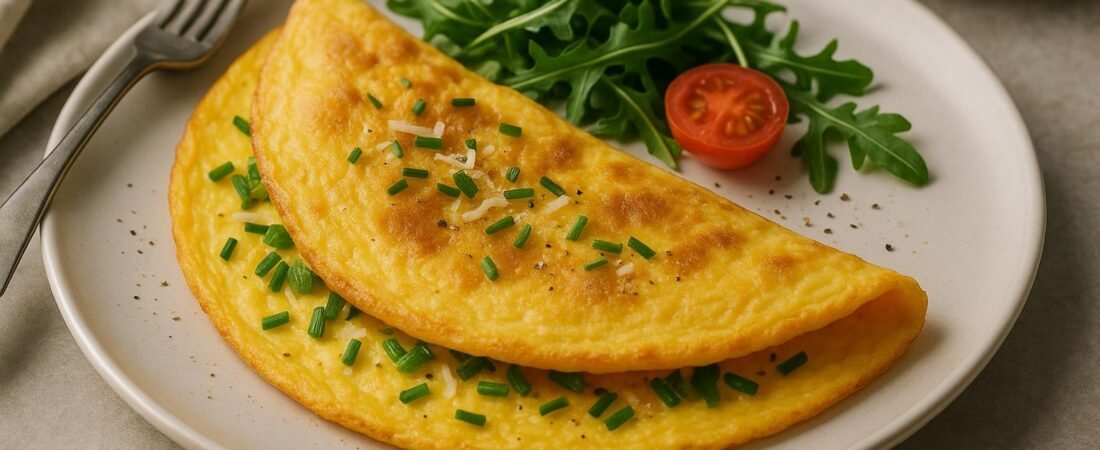
The omelette is a deceptively simple dish: just eggs, heat, and a few carefully chosen additions. Yet within this modest formula lies one of the most versatile and refined preparations in everyday cooking. Whether folded around herbs and cheese for a quick breakfast or filled with seasonal vegetables for a light dinner, a well-made omelette embodies both comfort and culinary technique. This guide explores its history, global variations, precise method, and nutritional value, so you can reliably prepare an exceptional omelette at home.
What is an Omelette?
An omelette is a dish made from beaten eggs cooked in a pan, usually folded around a filling such as cheese, vegetables, meats, or herbs. Unlike scrambled eggs, which are stirred throughout cooking, an omelette is allowed to set into a cohesive, tender layer. Its appeal lies in the contrast between a delicate exterior and a soft, often slightly creamy interior.
Although commonly associated with breakfast, a homemade omelette is remarkably adaptable. It can serve as a fast lunch with a green salad, a protein-rich post-workout meal, or a late-night snack. With just a few staple omelette ingredients in the refrigerator, you can assemble a satisfying dish in minutes.
History and Origins of Omelettes
The precise origin of the omelette is difficult to trace, as cooking beaten eggs in fat is a technique that likely emerged independently in multiple cuisines. However, written references and culinary traditions point strongly to France as the birthplace of the modern, refined form we recognize today.
The word “omelette” itself derives from the French “omelette” (earlier “amelette” or “alemette”), which appears in 16th–18th century texts. French cooks elevated the humble egg by emphasizing texture and technique—gentle heat, careful folding, and minimal browning—to produce a tender, uniform result. This approach spread through Europe and, later, to North America.
Legendary tales also surround the dish. One well-known story describes Napoleon Bonaparte stopping in a village in southern France, where an innkeeper served him an omelette. Impressed, he allegedly ordered that all the eggs in the village be gathered to prepare a massive version for his troops. Whether true or not, the story illustrates the omelette’s longstanding reputation as a dish that is both economical and worthy of distinction.
Popular Variations Around the World
While the classic French omelette remains the benchmark for many chefs, cultures around the globe have developed their own distinctive omelette variations, each reflecting local tastes and ingredients.
- French Omelette: Soft, pale, and barely colored, with a fine, custard-like texture. Typically filled with herbs, cheese, or finely chopped mushrooms, then rolled or folded into a neat, slightly oval shape.
- Spanish Tortilla (Tortilla Española): A thick, hearty preparation of eggs, potatoes, and often onions, cooked slowly in olive oil. Served in wedges at room temperature, it is a staple of tapas bars across Spain.
- Italian Frittata: Similar in composition to an omelette recipe but cooked more slowly and finished either in the oven or under a broiler. Ingredients such as vegetables, cured meats, and cheeses are incorporated directly into the eggs rather than added as a separate filling.
- Japanese Tamagoyaki: A delicately layered, slightly sweet rolled omelette. Beaten eggs are seasoned with dashi, soy sauce, and sugar, then cooked in thin layers and rolled into a rectangular log, often sliced and served in bento boxes or as sushi topping.
- Indian Masala Omelette: A vibrant, spiced version featuring onions, tomatoes, green chilies, and fresh coriander, sometimes with turmeric and other spices. Often eaten with toast or stuffed into flatbreads.
- Thai Khai Jiao: A crispy, deeply golden omelette made with fish sauce and sometimes starch for extra crunch. Commonly served over rice with chili sauce.
Across these diverse styles, the unifying theme is adaptability. The omelette becomes a canvas for local flavors, demonstrating how a single technique can yield remarkably different results.
How to Make the Perfect Omelette
Mastering a perfect omelette is less about complex technique and more about precision, timing, and restraint. The following guidelines focus on the classic French-inspired method: tender, barely colored, and softly set, with a cohesive but creamy interior.
Essential Ingredients for a Classic Omelette
For one standard omelette (one generous serving), you will need:
- Eggs: 2 to 3 large eggs. Very fresh eggs yield better structure and flavor.
- Fat: 1–2 teaspoons of butter, preferably unsalted. Clarified butter or a neutral oil can be used, but butter provides the best flavor.
- Salt: A pinch, added to the beaten eggs. Fine salt disperses more evenly.
- Freshly ground black or white pepper: Added to taste, either in the eggs or at the end.
Optional fillings (use sparingly to avoid overloading):
- Cheese: Gruyère, Emmental, cheddar, goat cheese, or feta, finely grated or crumbled.
- Herbs: Chives, parsley, tarragon, or dill, finely chopped.
- Vegetables: Mushrooms, spinach, peppers, onions, tomatoes—always cooked and well-drained before using.
- Meats: Ham, smoked salmon, bacon, or sausage, fully cooked and chopped into small pieces.
For the most balanced omelette recipe, aim for no more than 2–3 tablespoons of filling per omelette. Too much stuffing prevents even cooking and makes folding difficult.
Step-by-Step Cooking Instructions
The method below provides a clear approach for anyone learning how to cook an omelette to professional standards.
- 1. Prepare the fillings.
Cook any vegetables or meats in advance, season them lightly, and let them cool slightly. Grate or crumble cheese and chop herbs. Keep everything within reach of the stove. - 2. Beat the eggs.
Crack 2–3 eggs into a bowl. Add a pinch of salt (about 1/8 teaspoon) and a small grind of pepper. Beat with a fork or small whisk until the whites and yolks are fully combined and slightly frothy, but do not over-whip. Overbeating can introduce too much air and lead to a dry texture. - 3. Heat the pan.
Place a nonstick or well-seasoned 20–23 cm (8–9 inch) skillet over medium to medium-low heat. Add the butter. When it melts and begins to foam but is not browning, tilt the pan to coat the surface evenly. - 4. Add the eggs.
Pour the beaten eggs into the center of the pan. Immediately use a heatproof spatula to stir the eggs in small circles while moving the pan back and forth. This creates fine curds and ensures even cooking. - 5. Shape the base.
When the eggs start to thicken but remain moist, stop stirring. Gently shake the pan to distribute the eggs in an even layer. Use the spatula to nudge any thicker areas toward the edges so the surface is uniformly thin. - 6. Add the filling.
Sprinkle your chosen fillings in a line slightly off-center or over one half of the omelette. The top should still look slightly glossy and undercooked; the residual heat will finish it. - 7. Fold the omelette.
Tilt the pan so the omelette slides toward the handle side. Use the spatula to lift the edge nearest you and fold it over the filling, creating a half-moon shape. For a more traditional French presentation, you can roll it in thirds: fold one side toward the center, then tip the pan so the omelette rolls onto the plate seam-side down. - 8. Finish and serve.
The interior should remain soft, not dry. Remove from the pan slightly before it seems fully set; carryover heat will complete the cooking. Optionally, brush the top with a little extra butter and garnish with fresh herbs. Serve immediately.
Following these steps consistently will yield a reliable, restaurant-quality result and transform a simple homemade omelette into a refined centerpiece for any meal.
Tips and Tricks for Omelette Success
Even experienced cooks sometimes struggle with consistency. Small details—the size of the pan, the vigor of beating, or how long the eggs stay on the heat—can dramatically affect the outcome. The following guidance helps prevent common problems and promotes a tender, fluffy omelette.
Common Mistakes to Avoid
- Using a pan that is too large or too small.
A large pan spreads the eggs too thin and encourages overcooking; a tiny pan produces a thick, rubbery center. For 2–3 eggs, an 8–9 inch (20–23 cm) pan is ideal. - Cooking over high heat.
Excessive heat causes rapid browning and toughens the protein in the eggs. Aim for gentle to moderate heat so the omelette sets without scorching. - Overloading the filling.
Too much filling prevents the eggs from setting into a cohesive layer and makes folding almost impossible. Limit additions to a modest amount and distribute them evenly. - Overcooking.
Leaving the omelette on the heat until it is completely firm results in a dry, spongy texture. Remove it while the center still looks slightly moist; it will finish cooking off the heat. - Neglecting seasoning.
Failing to season the eggs themselves leads to a flat flavor, even if the filling is well-seasoned. Salt and pepper should be added directly to the beaten eggs. - Using inadequate fat or a poor-quality pan.
Sticking is the enemy of a clean fold. Use a good nonstick or well-seasoned skillet and enough butter or oil to create a thin, even film.
Expert Tips for Fluffy Omelettes
If your goal is a particularly light and airy result, several professional techniques can enhance volume without compromising structure:
- Beat just enough, but not excessively.
Incorporate air by whisking briskly for 20–30 seconds until the eggs are uniform and slightly foamy. Over-whisking can make the cooked texture dry and crumbly. - Use a touch of dairy for softness (optional).
A tablespoon of milk, cream, or crème fraîche per omelette can yield a tender outcome. Use sparingly; too much liquid interferes with setting and can make the center watery. - Control the heat carefully.
Start with medium heat to set the bottom, then lower it if the eggs threaten to brown. A fluffy omelette relies on gentle coagulation rather than intense searing. - Stir, then still.
The initial circular stirring creates fine curds and a uniform consistency. Allowing the mixture to rest afterward gives structure while preserving lightness. - Fold with confidence.
Hesitation can cause tearing. Use deliberate, smooth motions; if the omelette resists folding, the pan may be too dry or the eggs may have set too much. - Serve immediately.
Omelettes lose steam and volume quickly. Have plates, garnishes, and accompaniments ready before you start cooking.
Applying these methods will elevate the texture, turning a basic egg dish into a consistently fluffy omelette that rivals professional standards.
Nutritional Benefits of Omelettes
Beyond technique, an omelette offers notable nutritional advantages. It provides high-quality protein, essential vitamins, and beneficial fats, and it can be easily tailored for different dietary needs, from low-carb to vegetarian and beyond.
Health Benefits of Eating Omelettes
From a nutritional perspective, an omelette is both efficient and dense in essential nutrients. Key aspects of omelette nutrition include:
- High-quality protein: Eggs contain all nine essential amino acids in balanced proportions, supporting muscle repair, satiety, and general tissue health.
- Vitamins and minerals: Eggs are rich in vitamins B2 (riboflavin), B12, D, and choline, as well as selenium and iodine. These nutrients support energy metabolism, brain function, immune health, and thyroid function.
- Healthy fats: A moderate amount of fat from the yolk contributes to hormone production and aids the absorption of fat-soluble vitamins (A, D, E, and K). Using appropriate cooking fats, such as butter or olive oil, can further enhance the nutritional profile.
- Satiety and weight management: The combination of protein and fat promotes fullness, which can help reduce unnecessary snacking and support balanced energy intake.
Concerns about cholesterol in eggs have been substantially revised in recent years. For most healthy individuals, moderate egg consumption does not significantly raise blood cholesterol levels. However, those with specific conditions, such as familial hypercholesterolemia, should seek individual medical advice.
Customizing Omelettes for Different Diets
One of the greatest strengths of a healthy omelette is its adaptability. With thoughtful selection of fillings and fats, it can suit a broad range of dietary preferences and requirements.
- Low-carbohydrate or ketogenic diets:
Emphasize high-fat, low-carb fillings: cheese, avocado, smoked salmon, bacon, spinach, mushrooms, or leafy greens. Cook in butter, ghee, or olive oil. Avoid starchy additions like potatoes and bread on the side. - Vegetarian diets:
Combine eggs with a variety of vegetables—peppers, onions, zucchini, tomatoes, spinach—and cheeses such as feta or goat cheese. Herbs add flavor without extra calories. For lacto-ovo vegetarians, this represents an excellent source of protein. - High-protein diets:
Increase egg whites relative to whole eggs (for example, 1 whole egg plus 2–3 whites) and incorporate lean proteins such as grilled chicken, turkey, or cottage cheese. This enhances protein intake while keeping fat moderate. - Lower-fat approaches:
Use a nonstick pan with minimal oil, opt for mostly egg whites with one yolk for flavor, and focus on vegetable fillings. Choose reduced-fat cheeses carefully, as they can melt less smoothly than full-fat versions. - Dairy-free needs:
Omit cheese and butter, cooking instead with olive oil, avocado oil, or another plant-based fat. Add richness with avocado, sautéed mushrooms, or dairy-free cheese alternatives. - Gluten-free diets:
Most omelettes are naturally gluten-free as long as fillings and flavorings (such as processed meats or sauces) do not contain hidden gluten. Always verify packaged ingredients if strict avoidance is required.
By adjusting ingredients and preparation methods, an omelette can meet varied health goals without sacrificing flavor or satisfaction.
Conclusion
The omelette is more than a simple egg dish; it is a versatile technique that bridges everyday convenience and classical culinary practice. Understanding its origins underscores the care and precision that have shaped the modern form. Exploring international styles reveals just how many directions this humble preparation can take.
With quality ingredients, controlled heat, and attention to texture, anyone can learn how to cook an omelette that is both elegant and reliable. Avoiding common mistakes and applying expert tips for a fluffy interior transforms the result from merely acceptable to memorable. At the same time, thoughtful choices in fillings and fats can turn an ordinary preparation into a nutritionally balanced, healthy omelette suited to a wide range of diets.
Whether you prefer a minimalist version with herbs or a more elaborate creation packed with seasonal vegetables, mastering the omelette offers a foundation for countless meals. Once the basic technique becomes instinctive, the dish adapts readily to your tastes, schedule, and nutritional priorities—proving that a few eggs and a hot pan can yield remarkable results.
Discover More from Didier Lancelot
Amazon Author page: amazon.com/author/didierlancelot
Narmer Store: narmerstore.org
AI and Technology Ebooks
- Creative AI: Animated Drawings, Manga & Illustrations
- Build a Game with AI: The No-Code Guide
- AI Image Generation Made Easy
- Build a Website with AI: The No-Code Guide
- How to Connect AI to Your Blog: The Ultimate Automation Guide
- AI Productivity Habits: Get More Done in Less Time
- AI Avatars Made Easy
- The Book of AI Prompts: 100+ Proven Prompts
- Make Music with AI: Suno, Udio and AI Music Generators
- Click to Cash
- The Automated Edge: Outwork, Outpace, and Outperform with AI
- AI Side Hustle: How to Make Money with ChatGPT and AI Tools
- Work Smarter with AI
Health, Lifestyle and Home Ebooks
- Hidden Superfoods: The World’s Most Powerful Healing Foods
- Spanish Food: The Complete Cookbook for Authentic Home Cooking
- The Science of Happiness Explained
- The Psychology of Success
- The Secret Sauce of Consistency: What the Experts Don’t Tell You About Fitness
- The Complete Home Bartender’s Guide: Link 1 | Link 2
- Natural Beauty, Made Simple: Easy DIY Organic Skincare Recipes
- Garden Made Simple: Easy, Beginner-Friendly Techniques
- The Dog Training Bible