
why some people need less sleep compare to others
Discover why some people thrive on just 4–6 hours of sleep. Explore the genetics, brain science, and lifestyle factors behind short sleepers — and whether you really are one.
why some people need less sleep
short sleepers, sleep genetics, DEC2 gene, natural short sleeper, sleep needs
Introduction
You’ve probably met one — the colleague who clocks five hours and still outperforms everyone, or the relative who’s been up since 4 a.m. and seems perfectly fine. Meanwhile, you crawl through the day after eight hours and a double espresso.
So why do some people need less sleep than others? The answer isn’t willpower, caffeine, or grit. It’s largely written into their DNA. A small slice of the population are true short sleepers — and understanding what sets them apart helps the rest of us figure out how much sleep we actually need.
How Much Sleep Does the Average Person Really Need?
The National Sleep Foundation recommends 7 to 9 hours for most adults. But “average” hides a wide spectrum:
- Long sleepers thrive on 9+ hours
- Average sleepers function best at 7–9 hours
- Short sleepers feel fully rested on 6 hours or less — without coffee, naps, or weekend catch-up
The key word is thrive. Sleeping less than you need and getting away with it isn’t the same as genuinely needing less.
The Genetics of Short Sleepers
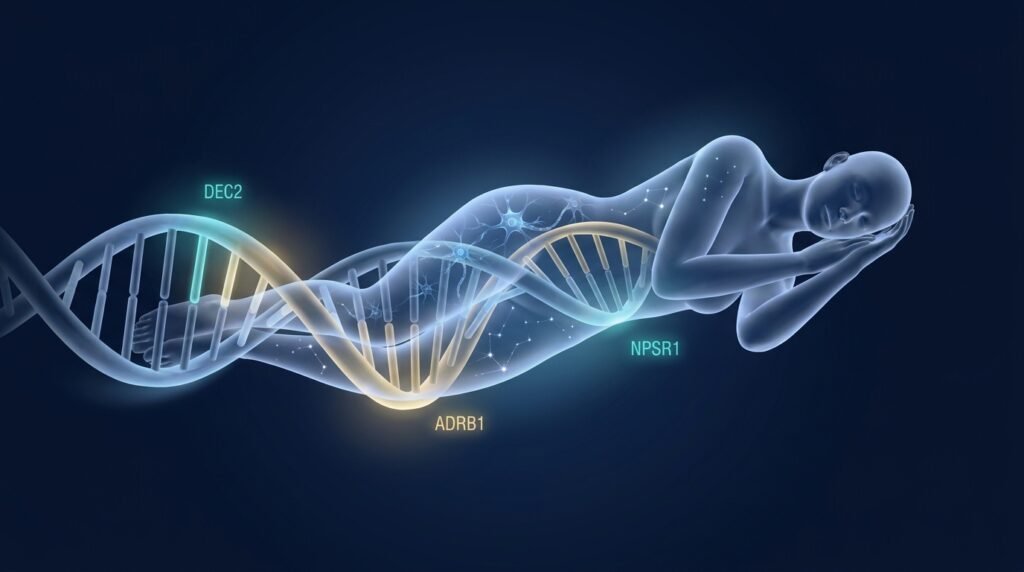
Illustration of DNA strands and the DEC2 gene linked to natural short sleepers.
In 2009, researchers at the University of California, San Francisco identified the first “short sleep gene”: a mutation in DEC2 (BHLHE41). People carrying it average around 6.25 hours of sleep — and show no signs of the cognitive decline, mood issues, or health problems that sleep deprivation usually causes.
Since then, scientists have identified additional genes linked to natural short sleep:
- ADRB1 — affects neurons in the dorsal pons, a brainstem region involved in REM sleep
- NPSR1 — linked to resilience against memory deficits during sleep loss
- GRM1 — recently identified, influences glutamate signaling and sleep efficiency
These mutations are rare. Estimates suggest fewer than 1–3% of the population are genuine genetic short sleepers.
Why Short Sleepers Aren’t Just “Sleep-Deprived Pretenders”
The crucial distinction: real short sleepers sleep efficiently, not just briefly. Their brains appear to:
- Enter deep sleep faster — more time in restorative slow-wave and REM stages
- Clear metabolic waste more quickly — including beta-amyloid, the protein linked to Alzheimer’s
- Resist the cognitive damage that chronic sleep restriction causes in everyone else
Studies on sleep-restricted volunteers consistently show that most people think they’ve adapted to less sleep — but objective tests reveal slower reaction times, worse memory, and impaired judgment. Short sleepers don’t show these deficits. https://orenga.myspreadshop.com/woman+playing+saxophone-A668a7e6fdb32e840eba9240e?productType=813&sellable=zve8DpGAVOSxRo0pa9BN-813-8&appearance=2
What Influences Sleep Need Beyond Genetics?
Even without a rare gene variant, several factors shift how much sleep you personally require:
Age
Newborns need 14–17 hours. Teenagers need 8–10. After age 65, sleep typically becomes shorter and more fragmented — though the need doesn’t drop as much as people assume. https://www.teepublic.com/t-shirt/50082230-hedgehog?store_id=2851997
Chronotype
“Night owls” and “morning larks” don’t necessarily need different amounts of sleep, but their internal clocks dictate when that sleep should happen. Forcing yourself against your chronotype creates a deficit even if you hit eight hours.
Activity Level and Physical Stress
Endurance athletes often need 9+ hours during heavy training cycles. Recovery sleep is a real, measurable phenomenon.
Mental Load and Stress
Cognitive work and emotional stress increase sleep demand — especially REM, which consolidates emotional memory.
Sleep Quality
Six hours of uninterrupted, deep sleep can outperform nine hours of fragmented, light sleep. Sleep apnea, alcohol, late-night screens, and irregular schedules all reduce quality even when quantity looks fine.
Are You Actually a Short Sleeper? A Quick Self-Check
True short sleepers can answer yes to all of these:
- I wake up naturally before an alarm, even on weekdays
- I don’t crash mid-afternoon or rely on caffeine to function
- I don’t sleep dramatically longer on weekends or vacations
- This pattern has held since adolescence or earlier
- At least one parent has a similar pattern
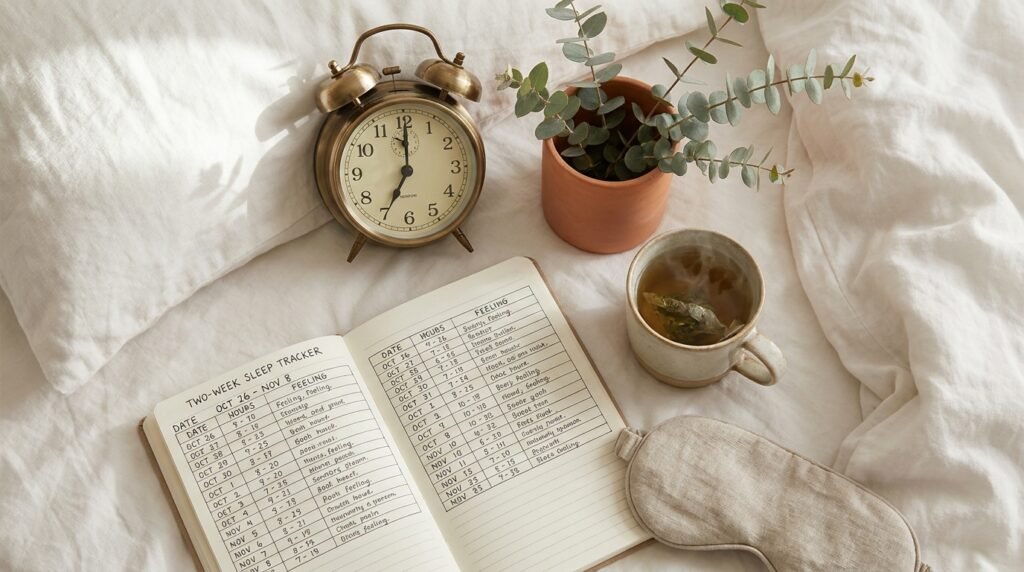
Flat-lay of a sleep tracker journal, alarm clock, and tea representing how to discover your natural sleep need.
If you only meet some of these — especially if you sleep in on weekends or feel groggy without coffee — you’re likely sleep-restricting, not naturally short-sleeping. That distinction matters: chronic restriction is linked to cardiovascular disease, type 2 diabetes, weakened immunity, and higher mortality risk.
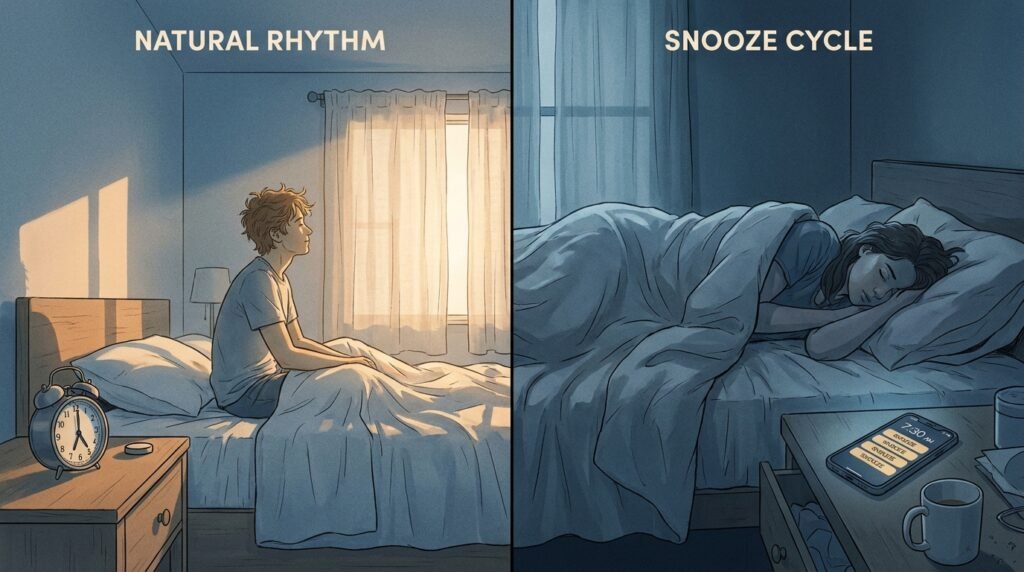
Comparison of a natural short sleeper waking refreshed at dawn versus an average sleeper struggling to wake up.
The Hidden Cost of Pretending to Be a Short Sleeper
In a culture that romanticizes hustle, “I only need four hours” became a status symbol. But research is brutally clear:
- Sleeping under 6 hours regularly raises all-cause mortality by roughly 12%
- It correlates with higher dementia risk in midlife
- It reduces vaccine effectiveness, glucose tolerance, and testosterone
- It impairs decision-making to a level comparable with legal intoxication
Unless you’ve won the genetic lottery, less sleep isn’t a productivity hack. It’s a slow tax on your brain and body.
How to Find Your Real Sleep Need
Rather than guessing, run a two-week experiment on vacation or a low-stress stretch:
- Go to bed when sleepy — no screens, no alarm
- Let yourself wake naturally
- Track total sleep time after the first 3–4 days (the initial nights pay off accumulated debt)
- By the end of week two, your average is your biological sleep need
Most people are surprised — they need 30–90 minutes more than they’re getting on workdays.
FAQs
Is needing less sleep genetic?
Yes, in rare cases. Mutations in genes like DEC2, ADRB1, NPSR1, and GRM1 allow a small subset of people to function fully on 4–6 hours. For everyone else, sleep need is mostly stable and sits in the 7–9 hour range.
Can you train yourself to need less sleep?
No. You can train yourself to tolerate less sleep, but performance and health markers degrade even when you stop noticing. Sleep need is biological, not behavioral.
Why do older adults sleep less?
Aging changes sleep architecture — less deep sleep, more awakenings — but the underlying need declines only modestly. Many seniors are under-sleeping, not naturally short-sleeping.
Is 6 hours of sleep ever enough?
For genuine short sleepers, yes. For roughly 97% of adults, no — even if you’ve adapted to it.
Does napping make up for short nights?
Naps help with alertness and mood but don’t fully replace nighttime deep sleep. Use them as a supplement, not a substitute.
The Bottom Line
Some people genuinely need less sleep — but far fewer than claim to. If you’re rested, sharp, and steady on six hours without stimulants, you may be one of the rare short sleepers. If you’re not, your body isn’t asking for more discipline. It’s asking for more sleep.
The most productive thing most adults can do this year isn’t waking up earlier. It’s giving themselves permission to sleep enough. Achroite: The Complete Guide to Colorless Tourmaline
Top 10 Tips for Healthy Snacking
The Ultimate Chili Con Carne Guide: History & Recipes Tips
Cape Town Travel Guide: Adventure, History, and the Iconic Table Mountain
Top 5 Superfoods for Brain Power
why-some-people-need-less-sleep

Celestial Stackmaster
How to Play
Objective: Stack blocks as high as possible without missing the tower.
Controls: Click or Tap anywhere to drop the moving block onto the stack.
Pro Tip: Align the block perfectly with the one below to keep its full size; otherwise, the overhanging part will be sliced off!